Cooling Neighborhoods By White Roofs & More Trees

City Hall will be painting the city white this summer to protect people from the risks of high heat.

City officials, and other private and nonprofit partners launched The Cool Neighborhoods program Wednesday with paint brushes in hand. Under the initiative, the city will be working to lower building temperatures by painting their roofs a reflective white paint, planting trees to provide more shade and urging neighbors to check in on the elderly, poor and disabled when temperatures spike.

Daniel Zarrilli, the city’s chief resiliency officer, said the $106 million initiative is imperative because studies show the number of days New York City thermometers hit at least 90 degrees will double by 2020. Such hot conditions can lead to dehydration, heat stroke and other ill health effects.

“We need to be better prepared for that,” Zarrilli said.

One of the program’s largest components is the expansion of the city’s CoolRoofs service, where roofs are covered with the heat-reducing paint, at no cost to the owner.

City officials demonstrated the tactic, by spreading white paint onto the roof of the O’Hare Hall dorm at Fordham University. Lesley Massiah-Arthur, Fordham’s associate vice president of government relations and urban affairs, said the school will cover five more buildings on its Bronx campus soon, saying such steps will help the college work toward its goal of reducing the campus’ carbon footprint by 30%.

In all, some 2.7 million square feet of rooftops could fall under CoolRoofs’ paint rollers, according to the city Department of Small Business Services.

The city will spend $82 million planting trees along streets in the South Bronx, northern Manhattan and central Brooklyn, which have been particularly hard hit during heat waves, according to the city.

The Health Department will work with community groups in the targeted neighborhoods to come up with strategies to help elderly, poor and disabled people stay cool as part of its “Be a Buddy NYC” program.

“We know that many of the people who are vulnerable can be isolated,” said Corinne Schiff, the deputy commissioner of environmental health at the city’s Health Department.

MTA Short-Term Fix Will Cost $836 Million

The MTA will remove some seats in train cars on the L line and hire thousands of new workers as part of its vast, $836 million short-term plan to improve New York City’s failing subway system.

MTA chairman Joe Lhota unveiled the agency’s highly anticipated plan on Tuesday at MTA headquarters, promising more than 30 short-term projects to, in part, accelerate the repair of the MTA’s ancient signal system; overhaul its fleet of cars; and redevelop a strategy for communicating with passengers.

“There is no doubt that ... we are failing our customers,” Lhota said. “We’re having a record number of customers. We also have ancient infrastructure, combined with a lack of capital investment over the long haul. ... These three issues alone are the reasons why the subway system is failing its customers.”

Following the lead of other cities, like Boston, the MTA will begin a pilot program to remove seats from “some” cars of the 42nd Street Shuttle and L train, the latter of which has experienced a rapid growth in ridership due to the development around the line in Brooklyn, according to Lhota. The chairman estimated that removing seats will increase capacity by 25 riders per car.

Where possible, the agency will also be adding cars to traditionally shorter trains, like the C, to boost capacity as well.

“We need to find a way to get more people off the platform and into the subway cars,” Lhota said, noting that the seat removal pilot won’t start in the coming days or weeks. “We want to test it and we want to understand the best way to reconfigure our cars.”

Delays in the subway system have soared by about 200 percent in the past five years. The MTA’s short-term plan involves five core components — track and signal maintenance, car reliability, subway safety and cleanliness, customer communication and creating a critical management group — that together aim to address 79 percent of the major incidents that lead to delays.

That involves the hiring of 2,700 new workers to ramp up maintenance of tracks and train cars and improve response times to minor infrastructure breakdowns and incidents like sick passengers.

Here are the highlights from the MTA's short-term plan:

- The plan will start immediately and customers should see improvements within the year.

- 2,700 new workers will be hired to facilitate the execution of the MTA's plan.

- A new public, online dashboard will be set up so that riders can track subway improvements.

- "Raising fares is not an option" to pay for the plan, Lhota said.

- To offset overcrowding, cars will be added to trains on lines where platforms are long enough, like the C. Each additional car can hold about 145 more passengers. 

- The MTA will launch the seat removal pilot program on some L trains and 42nd Street Shuttle trains, which Lhota said would add 25 riders per car.

- To reduce breakdowns, the MTA will move to a new "seamless track." Only 50 percent of the system is currently using this type of track, Lhota said.

- The plan aims to cut incident response times from the current 45 minutes down to 15 minutes.

- A dedicated team will execute an expedited repair program that will fix 1,300 signals that were determined to be the most problematic by the end of 2018.

- The MTA will launch an emergency Water Management Initiative. Special teams will seal leaks, clean 40,000 street grates and eliminate debris clogging drains.

- Crews will clean the entire underground portion of the subway system to remove debris, reducing fire hazards.

- Track repairs will be expedited using 31 specialized teams to target places with the highest incidents of issues.

- An "aggressive" public awareness campaign will aim to educate riders on the consequences of littering, which can result in a fine as well as delaying trains.

- To reduce sick passenger delays, Lhota wants to add seven station EMTs, bringing the total up from five to 12.

- The MTA will revise communication protocols in order to provide clearer, more timely information to customers. Part of this plan will include an "overhaul" of digital platforms so they offer more personalized information on service changes.

News of the plan reignited the long-standing feud between Mayor Bill de Blasio and Gov. Andrew Cuomo and the MTA, a state agency, over financial support. Lhota and Cuomo have pressured de Blasio to split the $836 million price tag — a mix of new capital and operating funds — but the mayor has insisted that he would not give the MTA more city dollars until the agency spent its money more wisely.

The state has already pledged $8.3 billion toward the MTA’s five-year, $32 billion capital plan, while the city has offered $2.5 billion. De Blasio insists that the agency must do a better job prioritizing spending on subways and buses, which account for 88.8 percent of MTA riders.

“The MTA has to spend the money it (already) has effectively, efficiently and on a real schedule,” he said at an evening news conference on Tuesday, adding that money the state siphoned off for bridge light shows should be returned “immediately” to the agency’s budget. “The MTA has a huge amount of funding that is not being used effectively.”

Advocates are torn on who should foot the bill for the subway turnaround plan. John Raskin, the executive director of the Riders Alliance, said that since Cuomo oversees the MTA, he should provide the necessary funding or seek the money through new taxes or fees that could be instituted through the State Legislature.

Gene Russianoff, the chief spokesman for the NYPIRG Straphangers Campaign, said that, though governors are traditionally on the hook for the MTA, the subway’s service crisis makes matters “complicated.”

“It’s an inconvenient truth for Governor Cuomo,” said Russianoff, who was at MTA headquarters for the plan’s unveiling. “But it’s not unreasonable for a governor to say, ‘Look, in this crisis, let’s do this ... let’s get these programs out and then we’ll work things out long-term through the whole system.’ ”

The fight over funding goes without addressing the long-term second phase of the MTA’s subway improvement plan, which would be an $8 billion effort to more quickly modernize trains and signals.

Along with changing the culture within the agency, Lhota’s short-term plan calls for completely “transforming” how the MTA communicates with its riders. Ultimately, the chairman would like the agency to end the use of recorded announcements like “train traffic ahead” and “police activity,” which are sometimes used inaccurately as blanket excuses for train delays.

“We’re not doing a good job at all on a timely basis, a reliable basis in informing our customer for what they deserve,” Lhota said. “Let’s tell the people. They deserve to know exactly what’s causing the delay.”

Though leaving some wanting for details, advocates and board members agreed that the short-term strategies are proper steps toward improving service and the overall commuter experience.

“I am impressed by what’s been put forth in this plan. These are key quality of life issues that subway riders face,” said Veronica Vanterpool, executive director at the Tri-State Transportation Campaign and MTA board member. “It’s putting forth ideas that everyday users of the system can relate to and identify as real solutions.”

Prettiest NYC Homes That Hit The Market Last Week

Every week, Curbed covers dozens of market listings that vary in price, location, size, grandeur, quirkiness, and other distinct characteristics. If they managed to capture our attention, that means there’s definitely something special going on. But some of these homes are so lovely that they warrant a special kind of notoriety as some of the prettiest homes currently up for sale in New York City. And so, here it is: five listing that have that special "je ne sais quoi" that separates them from the rest. Happy gawking!

↑Now that she’s moving back to her native France, cosmetics entrepreneur Laura Mercier has decided to sell her stylish Walker Tower condo. The two-bedroom, two-bathroom Chelsea home is located on one of the higher floors of the 22-story Art Deco building, and offers up views of the Empire State Building. Read more...


↑In the East Village, a century-old home has benefited from an Annabelle Selldorf-led revamp, and though the circa-1900 bones are still there, the place has been transformed into a comfortable, modern dream home. Though it’s not quite a megamansion, the home is plenty big: it measures more than 5,000 square feet, with a whopping seven bedrooms and six bedrooms over its four floors. Read more...


↑Penthouse B sits on the 21st floor of the 1938 co-op building at 2 Sutton Place South, offering up generous rooftop terrace space and views towards the East River as well as Midtown’s architectural gems like the Empire State and Chrysler buildings. The apartment’s floorplan is unique, to say the least, and includes a small separate room accessed via a common hallway that can either be arranged as an office or a bedroom. Read more...


↑A three-bedroom Prospect Heights apartment with picture-perfect interiors may look like a million bucks, but it’s asking $935,000. The fourth floor apartment got a major update before it hit the market: fresh paint, new bathroom tile, and an added pop of color in the kitchen along with one heck of a staging make this place a charming contender in the desirable neighborhood. Read more...


↑Park Slope’s lavish $15 million brownstone is back on the market, albeit with a significant price cut, and a new sales team. Designed by C.P.H Gilbert, the American architect known for his designs of townhouses and mansions in late 19th and early 20th century, the home still holds on to some of the architect’s signature elements like the “ashlar cut brownstone,” facade. Read more...

Luxury Contracts Dip Below 20 For Fourth Consecutive Week

Luxury contracts lagged again last week, with the total asking price sales volume hitting just $122.6 million, according to the weekly report from Olshan Realty.

A total of 16 contracts were signed in the period from July 17 through July 23. Out of that 16, a total of 11 were for condominiums (with an average asking price of $7.6 million), two were for co-ops ($7.6 million) and three were for townhouses ($8.3 million).

The top contract was on apartment 16A at Foster + Partners-designed 551 West 21st Street, last asking $17.5 million, or $4,097 per square foot. The four-bedroom home spans 4,270 square feet and features 11-foot ceilings and a service entry. It first hit the market last September asking $19.5 million, according to StreetEasy.

The no. 2 contract was for a townhouse at 174 East 64th Street, asking $13.9 million. The five-story home has four bedrooms, five bathrooms across 7,500 square feet. Since 2015, it’s been reduced down from its original asking price of $16.9 million.

According to Olshan, the median asking price last week was $6.4 million. The average discount from original ask to last asking price was 9 percent. The average number of days on market was 577. 

Learn More

World's Most Expensive Bag $1.8M

The world’s most expensive bag probably wouldn’t attract the attention of any street style photographers or even Anna Wintour. And yet, the modest beta-cloth and polyester sac, whose only label says “Lunar Sample Return,” just fetched $1.8 million at Sotheby’s yesterday.

Of course the bag — which kind of resembles those free pouches you get when you spend over a certain amount at the Lancôme counter — has a pretty remarkable history. It was used by Neil Armstrong on Apollo 11 to collect samples from the moon. According to the Sotheby’s catalog, it is the only artifact from that trip that is not in the Smithsonian, and therefore is extremely valuable.

The reason it is (or was) available for purchase is that the bag was misidentified, and almost thrown in the garbage. It then found its way to the Kansas Cosmosphere and Space Center — or rather to the home of the center’s director, who was convicted of pilfering items from the museum and reselling them in 2003. The goods the US Marshall took from his home, including the bag, were then put up for auction, where a Chicago lawyer Nancy Lee Carlson, bought the bag for $995.

She then sent it to NASA, who confirmed that it was the very bag Armstrong used on that trip to collect moon samples. After a legal battle with the government (who argued that the bag had been stolen from them), Carlson was granted full ownership.

We now hope she uses at least some of her windfall to buy a slightly prettier bag.

Celebrity Couples We Hope Are Happening Right Now In 443 Greenwich Street

Every other week it seems, yet another celebrity buys an apartment at what has become the hottest building in the city: 443 Greenwich. While the units are (of course) big and beautiful, the building is also attractive because of the privacy it affords these celebrity tenants. Thanks to its underground motor court, they can zip in and out of the building undetected by the paps.

These celebs come from all walks of life and from all countries, but one thing we noticed is that many of them are also single. And honestly, we can think of no better place to conduct a secret love affair far from prying eyes than your own paparazzi-proof Tribeca tower.

So without further ado, we present to you our 100 percent fictitious, completely fantastical dream celebrity pairings that we really hope are happening right now in 443 among the known tenants.* Feel free to suggest your own in the comments.

Jennifer Lawrence (Apt. 6F) and Jake Gyllenhaal 

Sure, J.Law is currently dating director Darren Aronofsky, but that only proves she likes older men! And Gyllenhaal is like 1,000X better looking, so we think he is a good choice for her. They can talk about filming movies in the American heartland (“Brokeback Mountain” for him, “Winter’s Bone” for her), and can take a drive over to Brooklyn in their electric cars to hang out with Jake’s sister, Maggie. Plus their apartments are only one floor apart from each other! So maybe this couple isn’t happening yet, but we kind of hope it does in the future…

Harry Styles (Apt. 3J) and Rebel Wilson (Apt. 1C) 

Ok, so this one is a leeetle out there, but hear us out. Harry Styles is adorable, loves wearing feminist t-shirts and is beloved by millions of teenage girls/adult women. What better match for him than a partner who can make him laugh all the time like Rebel? We picture them playing pranks on Justin Timberlake in the indoor swimming pool and hosting singing sessions in the building’s basement. Plus their combined accents would just be too charming to handle.

Meg Ryan (Apt. 6C)  and Lewis Hamilton (PHA) 

Ryan is more than twenty years older than Hamilton, but she’s definitely got that cougar vibe. And Hamilton needs a mature lady to keep him grounded and help him beautifully decorate his new penthouse (after all, no single man can handle a $55 million apartment by himself). We imagine Hamilton taking Ryan on romantic and super fast jaunts upstate in his Mercedes, and Ryan introducing him to Tom Hanks, and possibly casting him in her next movie. Seems like a match made in penthouse heaven to us!

* We’ve excluded Blake Lively and Ryan Reynolds, and Justin Timberlake and Jessica Bielbecause they’re married. Though, to be fair, that’s never stopped anyone before!

Hyperloop One Between NYC and D.C. in 29mins.

In a tweet around 11:00am Thursday, Tesla CEO Elon Musk said he “just received verbal govt approval for The Boring Company to build an underground NY-Phil-Balt-DC Hyperloop.” The Hyperloop One plan will take passengers from NYC to D.C. in a mere 29 minutes via a high-speed tube moved by electric propulsion, with stations at each city center and “up to a dozen or more entry/exit elevators in each city,” according to Musk. In a response to a comment on his initial tweet, he said: “First set of tunnels are to alleviate greater LA urban congestion. Will start NY-DC in parallel. Then prob LA-SF and a TX loop.”

Musk started Hyperloop One in 2013 with many employees coming from SpaceX. When their plan was fully revealed in April, the company said it planned to hire a team of 500 engineers, fabricators, and scientists by the end of the year in order to start moving cargo by 2020 and people by 2021.

As 6sqft previously explained, “Passengers and cargo are loaded into a pod which gradually accelerates with electric propulsions through a low-pressure tube. Then, the pod lifts above the track using magnetic levitation and moves at airline speeds” of more than 700 miles per hour.

@elonmusk

Just received verbal govt approval for The Boring Company to build an underground NY-Phil-Balt-DC Hyperloop. NY-DC in 29 mins.

11:09 AM - 20 Jul 2017

Though Musk didn’t specify which agencies and/or states gave the approvals today, he has been talking to Chicago Mayor Rahm Emanuel about building a tunnel between O’Hare International Airport and downtown, and last month he spoke with L.A. Mayor Eric Garcetti about building a tube between Los Angeles International Airport and Union Station. In its entirety, the system would connect 80 percent of the country, making a cross-country trip just about five hours long.

In May, the company completed their first successful test ride in the Nevada desert. Saying that it was, “the first new mode of transportation since the Wright Brothers flew over the dunes near Kitty Hawk, N.C.,” Hyperloop coasted for 5.3 seconds at 70mph along the 1,640-foot-long “DevLoop” test track. Additionally, Musk’s tunneling venture the Boring Company has started test digging near the SpaceX headquarters in California. Unconfirmed reports have speculated that the project will cost between $84 and $121 million per mile.

MTA Considers Ban On Subway Eating.

After an upper Manhattan track fire this week reminded them that trash catches fire, the Metropolitan Transit Authority is considering limiting the all-too-familiar practice of stuffing one’s face with hot, messy food while riding the subway. The New York Times reports that MTA chairman Joseph J. Lhota said Tuesday that he’d like to curb inappropriate eating as a way to eliminate fires caused by the ensuing litter.

Lhota recounted an experience he’d had where a fellow straphanger attempted to scarf down a tray of Chinese food on the 2: “Inevitably, the rice fell,” he said. “It was all over the place. I want to avoid things like that.” The MTA has noted that cities like Washington, D.C. have deep-sixed the ricefall threat by completely banning metro meals due to “the labor and cost associated with maintaining the cleanliness of the transportation system as well as for safety reasons.” NYC’s current rules allow it though they prohibit–but don’t really enforce–a rule banning open-container liquids.
Though the number of subway track fires has dropped 90 percent since 1981, the authority is working to reduce them even more; to that end, subway officials are considering a recommendation that that riders eschew messy foods while in transit. Packaged goods, Mr. Lhota said, are “less disruptive.””It may be an education program about what types of foods really shouldn’t be brought on,” though he wasn’t ready to rule out the idea of a ban.

In 2012, Lhota, in a previous stint as MTA chairman, delicately sidestepped a similar ban saying he’d seen children eating breakfast on the train and that he feared a ban would affect minority communities. Gene Russianoff, leader of rider advocacy group Straphangers Campaign, thinks a ban on subway scarfing would be about as hard to enforce as a nail-clipping ban: “It’s not like I would hand out individual slices to Pizza Rat on the subway. But there are people who have no choice–they’re going from work to school.”

StreetEasy's Listings Drop By Half! The End Of StreetEasy.com?!?

The number of rental listings on StreetEasy plunged after the firm began charging brokers $3-per-day for posting on the site, data show.

The policy went into effect Tuesday, July 18, and appeared to cut the number of listings on the site by around half. While StreetEasy, which is owned by Zillow Group, does not release historical data on the number of listings, an internet archive called the Wayback Machine showed that there were roughly 30,700 rental listings on the site July 3. On Tuesday afternoon, another listing website called Leasebreak posted numbers indicating that listings had dropped to around 13,750.

StreetEasy said the dropoff was to be expected. While brokers were notified weeks ago that the charges were coming, many did not set up automatic payments, by Tuesday, so their listings were being scrubbed from the site.

"We anticipated that many agents would sign up after the deadline, once they realized their listings were no longer on StreetEasy, and today we're seeing agents opting in by the minute," Susan Daimler, StreetEasy General Manager, said in a statement.

By the end of the day, hours after the post by Leasebreak, the number of rental listings had climbed to around 15,500. The firm expects it to take weeks for the listings to stabilize, and does not expect the numbers to return to where they were, since many listings on the site were either outdated or not real.

"Stale inventory is getting weeded out," Daimler said. "We're excited about what this means for renters in New York City, who now have access to a database of legitimate, active and accurate NYC inventory."

Brokerages, on the other, hand, were less enthusiastic about the changes.

"This is just a continuation of the Zillow/StreetEasy business plan," Town Residential CEO Andrew Heiberger told The Real Deal. "It's no surprise. On the one hand, StreetEasy and Zillow deserve to be compensated for aggregating and distributing leads. On the other hand, this feels more like a tax on rental agents."

The fee does not apply to for-sale listings, yet......

Sell All NYC Listings HERE

The Manhattan Q2 Report

Q2 2017 Highlights

Contract activity in the second quarter was essentially flat compared to the same period last year as pricing metrics continue to test record highs. Equity markets, which are typically highly correlated with luxury residential sales in New York City, have also plateaued near all-time highs and interest rates remain suppressed despite three interest rate hikes from the Federal Reserve since December 2016. This macroeconomic environment is likely contributing to relative renewed strength in the high end of the market. Aspirational pricing led to increased buyer patience, however, as Time on Market increased 12% year-over-year to a median of 74 days.

Download Full report

Inventory

Overall available listings decreased 4% year-over-year to 9,390 units compared to 2Q16, driven by roughly equivalent drops in condo (-3% Y-o-Y) and co-op (-4% Y-o-Y) inventory. The overall number of available units above $10M decreased 11% year-over-year, a positive sign for the market. The number of condos in the $3M-$5M range increased 9% year-over-year, primarily driven by new development inventory at One Manhattan Square, 200 E 62, and 50 West. The median asking price of co-op inventory increased a substantial 10% year-over-year to reach the highest asking price at $1.1M.

Contracts Signed

The 2,980 condo and co-op contracts figure in 2Q17 was flat compared to 2Q16. The 16% year-over-year increase of condo contracts in the $5M-$10M category exceeded all other price brackets, and amazingly a contract was signed in this price category in 37 different new development properties, which indicates strong buyer interest in this price range. The largest year-over-year increase in the number of contracts signed occurred on the Upper East Side (+12% Y-o-Y), extending the trend from 1Q17, which we believe was primarily attributable to the opening of the Second Avenue subway. The median condo contract price of $1.8M was the second-highest on record, and the median co-op contract price of $879K represented the highest price on record. Please note that median prices of contracts signed represent last asking prices and do not take into consideration new development properties which decline to report sales.

Closings

The number of condo and co-op closings decreased 18% and 4% year-over-year, respectively, led by softness in closing activity for units priced under $1M (-14% Y-o-Y). However, the ultra-luxury condo market ($20M+) saw strong activity, increasing 20% year-over-year, attributable to high-priced closings at 56 Leonard and 432 Park Avenue. FiDi & BPC had a notably strong quarter with a 23% increase in the number of closings and a 49% increase in median closing price primarily attributable to over 30 closings at 50 West Street. Both condo and co-op closings achieved all-time high median prices.

Last Week’s Celebrity Home Swaps

Lipstick queen Kylie Jenner of the Kardashian clan is nearing a deal to sell her Calabasas home on Prado De Oro. The social media influencer and founder of Kylie Cosmetics purchased the Tuscan-style home in March 2015 for $2.6 million and gave the home a complete makeover, then listed it for $3.3 million.

Lena Dunham and her apartment building at 145 Hicks Street (credit: HBO and Google Maps)

Every “girl” needs to grow up sometime. “Girls” showrunner Lena Dunham has just sold off her starter apartment at 145 Hicks Street in Brooklyn Heights for $850,000.

Ian Schrager and his new apartment at 31 Washington Street in DUMBO (credit: Ian Schrager and Nest Seeker’s International)

Real estate developer and former Studio 54 co-owner Ian Schrager has just dropped $4.3 million on a condo unit at 31 Washington Street in Dumbo.

Katy Perry and her Los Feliz convent (Credit: Getty, Google Earth)

Now that Katy Perry has triumphed over the nuns in her quest to buy a Los Feliz convent, it seems she no longer needs her compound in the Hollywood Hills. The “Firework” pop songstress is shopping the two-house estate as a whisper listing for about $15 million.

Jeremy Piven and his new home on Hercules Drive (Credit: Redfin, Getty)

With 4,800 square feet of space, Jeremy Piven’s new pad is more than big enough to fit his entire entourage. The actor just bought the house in Hollywood Hills West for $6.8 million.

Harry Macklowe and his new house at 64 West End Road (credit: Getty and Douglas Elliman)

Harry Macklowe may be battling his wife of 57 years over their divorce in court, but his marital woes do not seem to be preventing him from living his best life. The developer has just bought himself a cozy mansion at 64 West End Road in East Hampton for $10.6 million.

Mamie Gummer and her apartment at 315 West 23rd Street (credit: CBS and Brown Harris Stevens)

Mamie Gummer, the daughter of Meryl Streep and a celebrated actress in her own right, has just listed her apartment at 315 West 23rd Street for $1.8 million, per city records.

Rosie O’Donnell and her apartment at 255 East 49th Street (credit: ABC and Stribling)

Rosie O’Donnell, the comedian and chief antagonizer of Donald Trump, has just shelled out $8 million for a triplex penthouse at 255 East 49th Street.

455 Main Street, Unit 11N


455 Main Street, Unit 11N

ROOSEVELT ISLAND, MANHATTAN

Alcove Studio  |  1 Bath

Offered At $699,000

CC: $493 / mo.  |  Condo   |  Doorman  


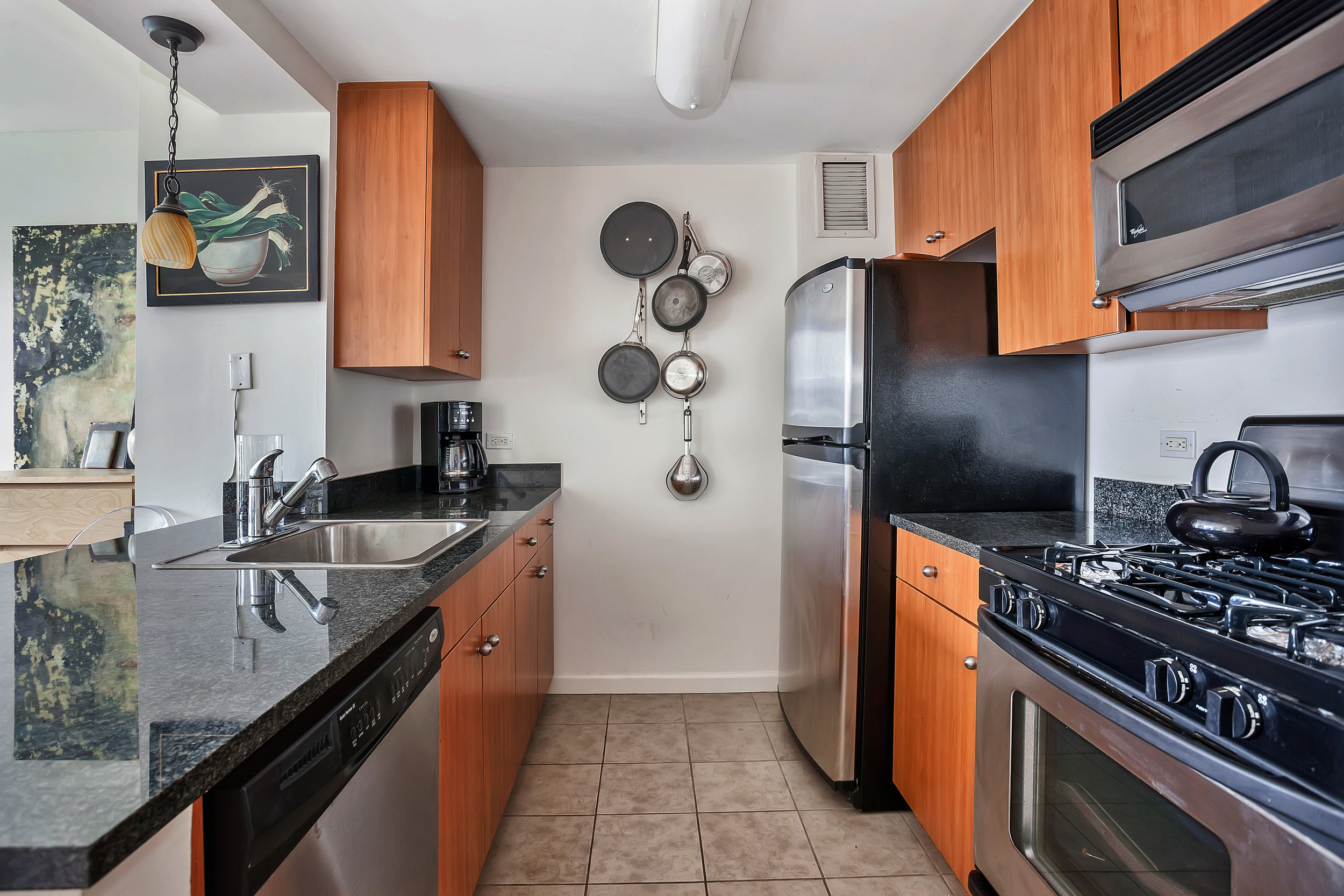
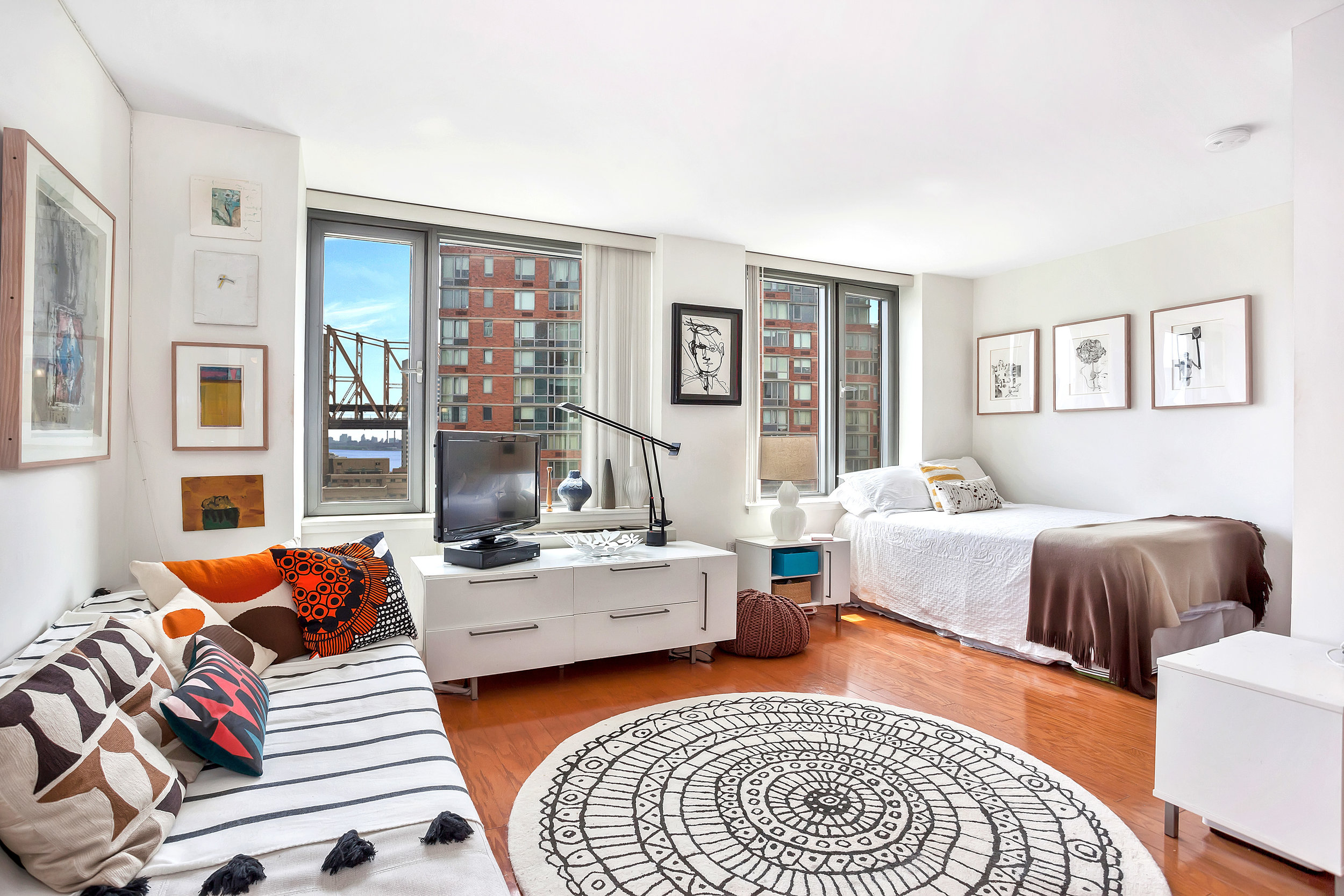
Enjoy serene waterfront living and breathtaking views in this gorgeous alcove studio in an amenity-rich Roosevelt Island condo building.

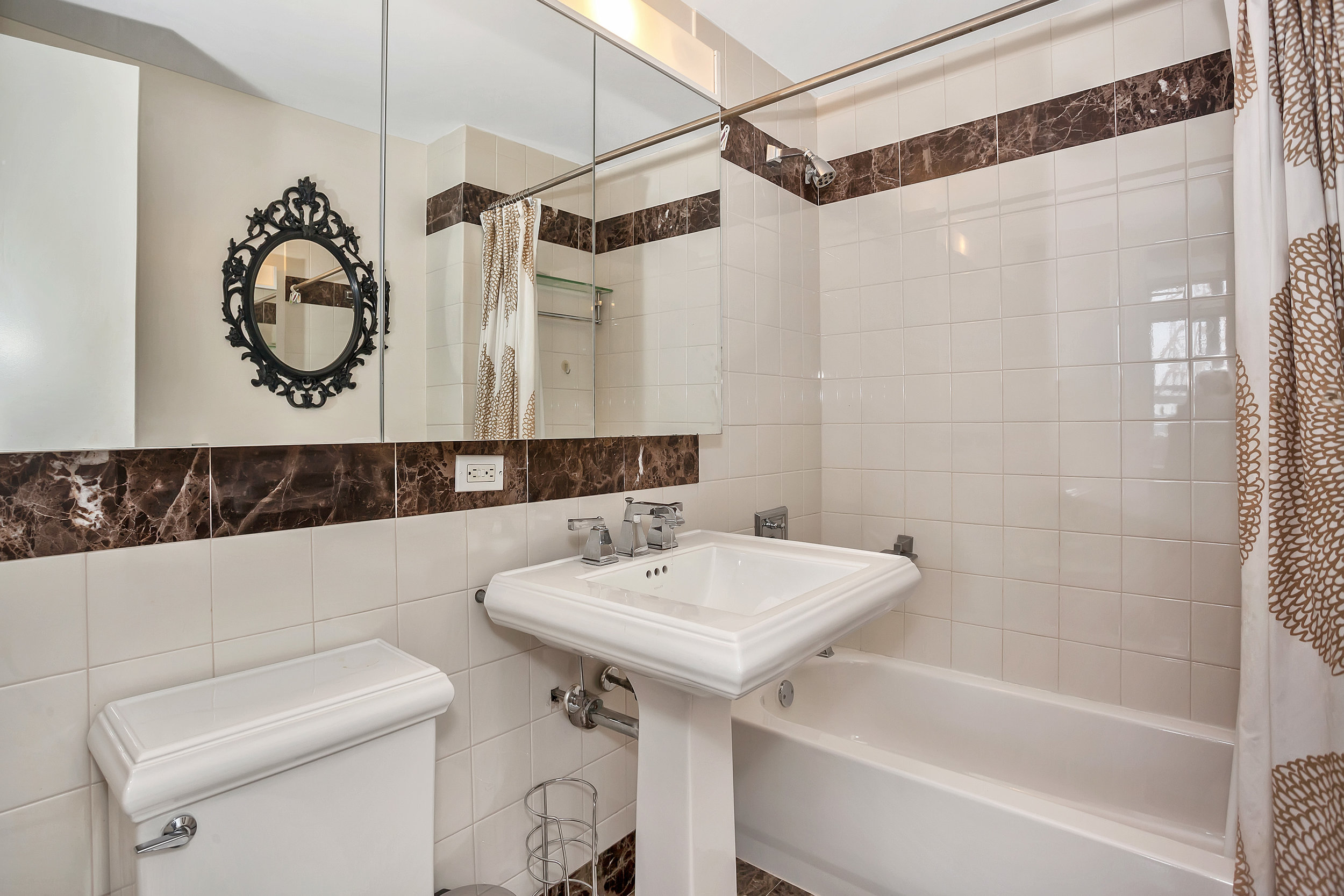
Ample golden sunlight and stunning views of the Queensboro Bridge and Manhattan will draw you into this sophisticated, well-appointed studio courtesy of a wide wall of windows. Revel in the fantastic open chef's kitchen with ample cabinetry, granite countertops and full-size stainless steel appliances that rival that found in most larger homes. The perfect alcove layout provides generous spaces for living, dining and sleeping, and the enviable oversized closet/dressing area leads to a sleek, designer bathroom. Flawless hardwood floors, fantastic storage space and an in-unit washer-dryer make this a home you'll love to live in.

Set in one of only two condominium buildings in the neighborhood, this home represents the perfect opportunity to take advantage of the grand opening of Cornell University's new Roosevelt Island tech campus. The building offers very low common charges and no taxes until 2025 making the overall monthly costs incredibly affordable. The apartment is a perfect primary residence or investor unit which can be delivered vacant or with the current tenant in place.

Riverwalk Place is a modern luxury condominium offering an array of top-notch amenities including full-time doorman service, live-in superintendent, fitness center, playroom, bike storage, central laundry room and a glorious indoor residents lounge with outdoor roof deck featuring picture-perfect city and water views. Those who have yet to experience the coveted Roosevelt Island lifestyle may be surprised by the number of restaurants and services available in the unique neighborhood. A Starbucks and Duane Reade are within feet of your front door, several restaurants and groceries stores dot the island, not to mention an array of phenomenal outdoor and recreation spaces. Transportation to and from Roosevelt Island is effortless with the F train across the street, the Tramway further on and multiple bus lines shuttling passengers into Manhattan, Queens and beyond.

Learn More

The City Added 24,293 Affordable Housing Units This Fiscal Year, The Most Since 1989

After more than three years into Mayor de Blasio’s $41 billion, 10-year affordable housing initiative, the city announced on Thursday that 24,293 affordable apartments and homes were secured in Fiscal Year 2017. Out of those units, 40 percent were for families earning less than $43,000 a year, with more than 4,014 homes for families of three earning less than $26,000 a year. According to city officials, the mayor’s Housing New York initiative aims to help an estimated half of a million people afford to live in New York City. Despite these promising numbers, the plan still fails New Yorkers with extremely low-income, by making their affordability benchmarks too high.

In FY17, 7,705 new apartments were financed and 16,588 homes were preserved, made possible by the city’s direct investment of $1 billion, according to the city. Direct city investment under the housing plan totals $2.8 billion and total bond financing to $5.5 billion. In an op-ed in the Daily News, de Blasio called affordable housing a public-private partnership. “We’re leveraging nearly $5 from other sources for every city dollar we spend,” de Blasio wrote. “We negotiate tough deals that maximize the affordable housing we get from every taxpayer dollar–in some cases securing twice as many apartments for the same investment as our predecessors.”

The city noted that under programs created by the City’s Department of Housing Preservation and Development and the Housing Development Corporation, this past Fiscal Year created the highest number of homes for formerly homeless families in New York’s history at 2,571. Last fiscal year, just 1,907 homes were created. During a press conference, de Blasio said, “This is how we keep New York, New York. This is how you keep the greatest city in the world what it is and what it always meant to be–a place for everyone.”

While data shows the mayor’s plan is technically working by creating more affordable housing, the city’s housing lotteries tend to favor middle-income earners, instead of low-income renters. Under Housing New York, the city sets about half of all affordable housing aside for those making between $42,951 and $68,720 annually. Just one third remains for New Yorkers making less than $42,950.

Critics say the city does not put aside enough housing for extremely low-income residents, with set income brackets too high for most to qualify. Renata Pumarol, deputy director at New York Communities for Change, told the Wall Street Journal:“If you go into any truly low-income neighborhood in New York, those numbers are absolutely laughable.”

For example, 6sqft recently wrote about a housing lottery for a building at 2264 Morris Avenue in the Fordham Heights neighborhood of the Bronx. The building will only accept applications from New Yorkers earning 60 and 100 percent of the area median income, ranging from an annual income of $32, 195 to $110,700. In 2015, the median household income in the same neighborhood, Community Board 5, was about $24,182, according to Census Reporter.

Plus, middle-income apartments frequent the city’s affordable housing lottery. At the Caesura in Fort Greene, New Yorkers earning 80 and 130 percent of the area median income can apply for units ranging from $886 per month “micro-units” to $2,715 per month two-bedrooms.

While New Yorkers of all income brackets seek housing they can afford, there continues to be a disconnect between what apartments the community can afford and what type of apartments show up in the housing lottery. The city uses federal income measures in their Housing New York plan, and officials have said creating units for extremely low-income residents is more difficult because it usually requires significant rental subsidies.

420 East 72nd Street, Unit 19C


420 East 72nd Street, Unit 19C

UPPER EAST SIDE, MANHATTAN

1 Bed  |  1 Bath  |  Private Terrace 

Offered At $879,000

Maintenance: $2,188 / mo.  |  Co-op   |  Doorman  


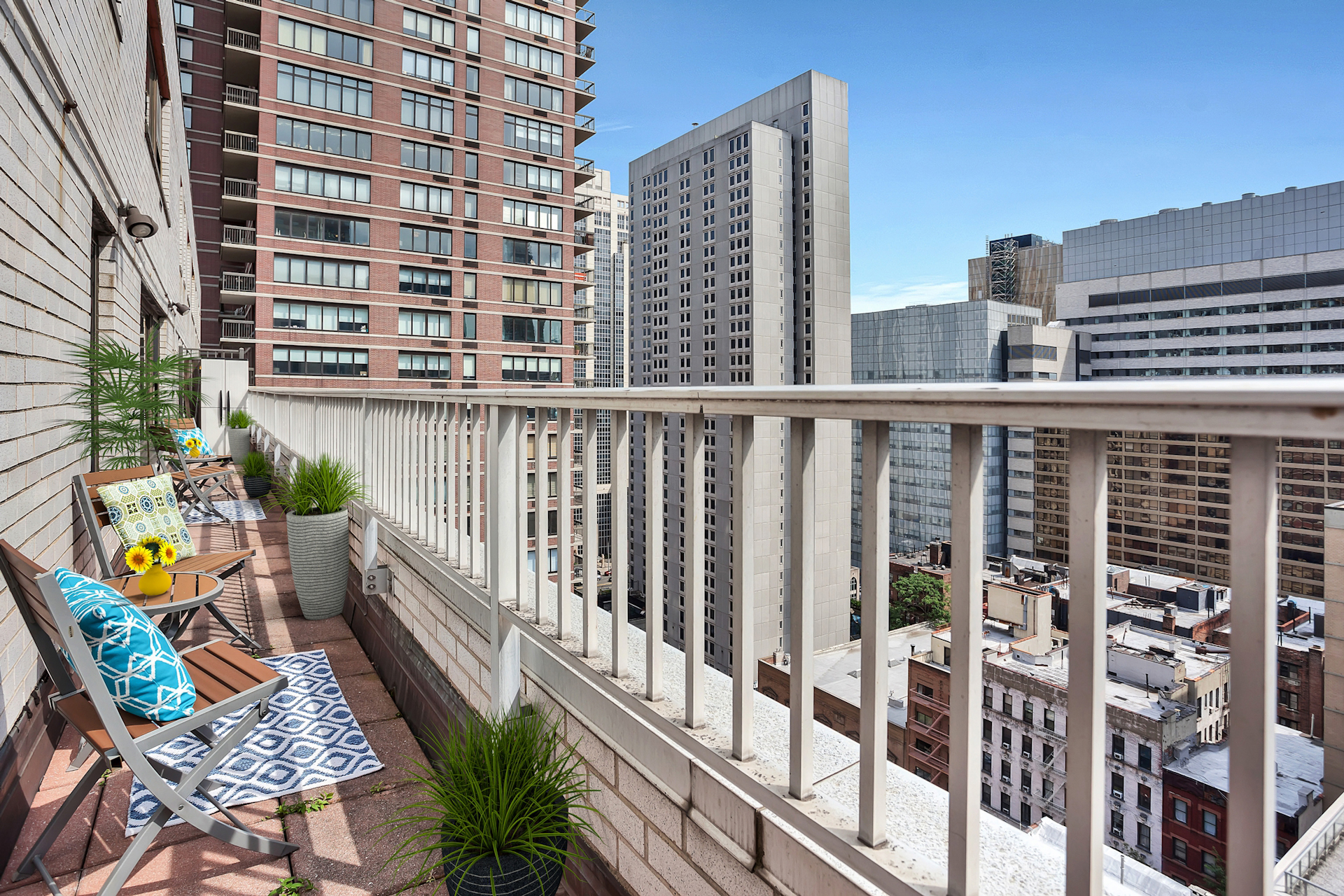
Come home to fine finishes, pin-drop quiet and open sky views from the astounding 48-foot-long terrace in this high-floor Lenox Hill one-bedroom located in a well run co-op building.

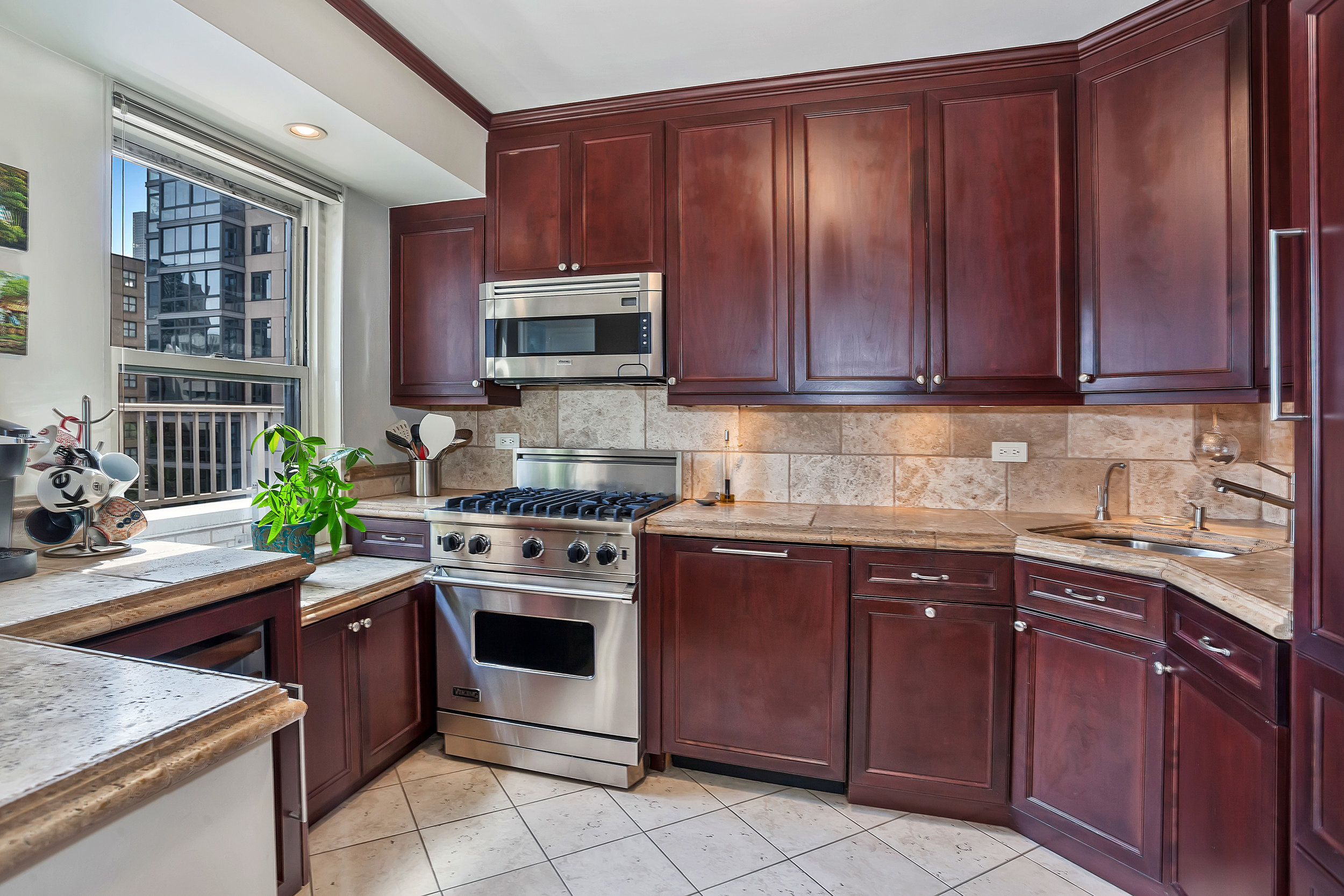
Elegant cherry cabinetry, fine stone details and substantial millwork are the hallmarks of this sophisticated and spacious 850 square foot home. The moment you arrive at the welcoming foyer, you'll be drawn to the oversized windows and terrace that runs the full width of the home, bathing your living spaces in golden southern light. The large open plan great room provides a generous footprint for living and dining, creating the perfect destination for entertaining or relaxing with the sights of the city as your dazzling backdrop. Alternatively, the large living and dining space can easily be converted to include a second bedroom. Nearby, the stylish open kitchen delights with abundant cabinet space, travertine stone countertops and a breakfast bar surrounding top-notch appliances, including a Viking stove and Sub-Zero refrigerator and wine cooler.

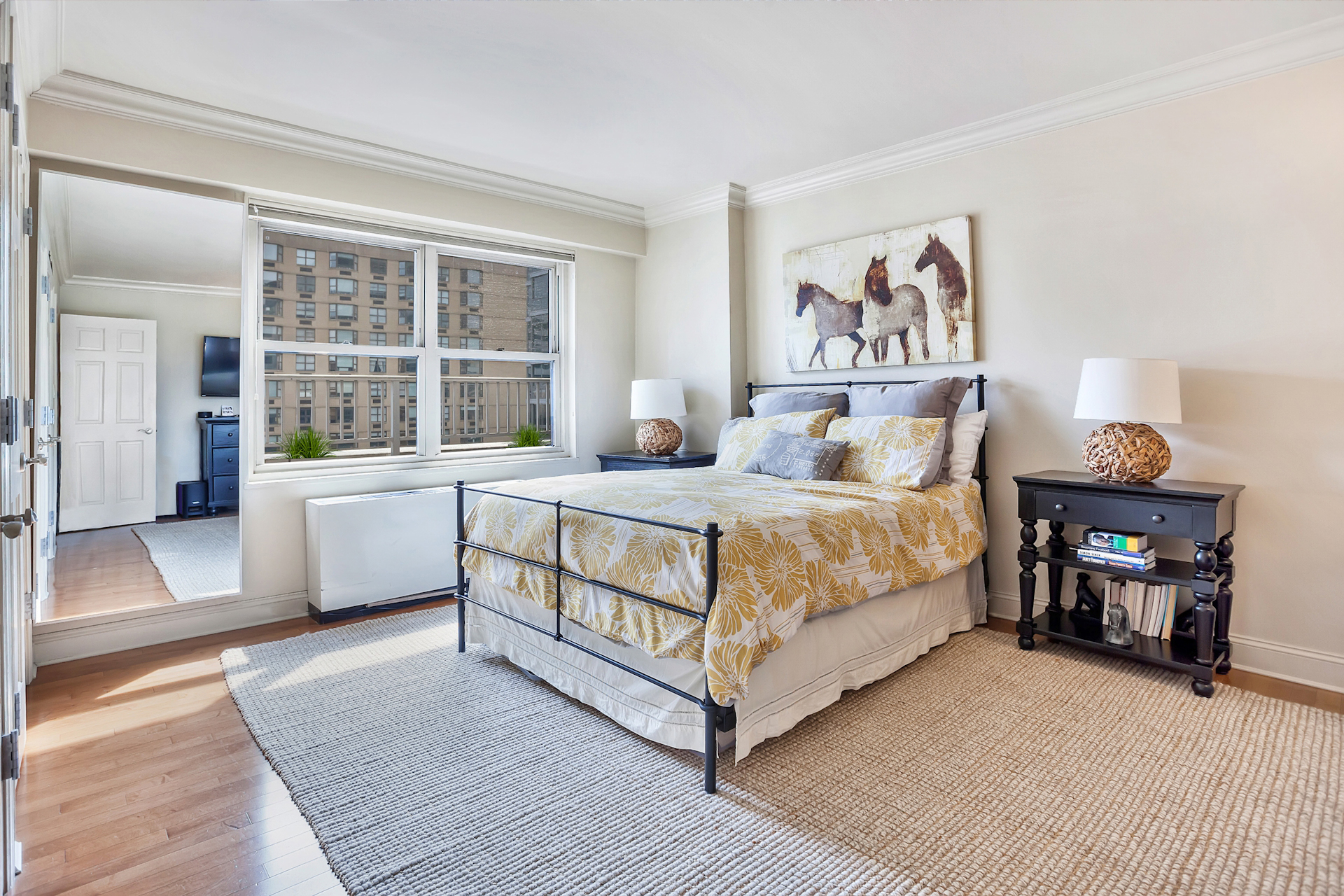
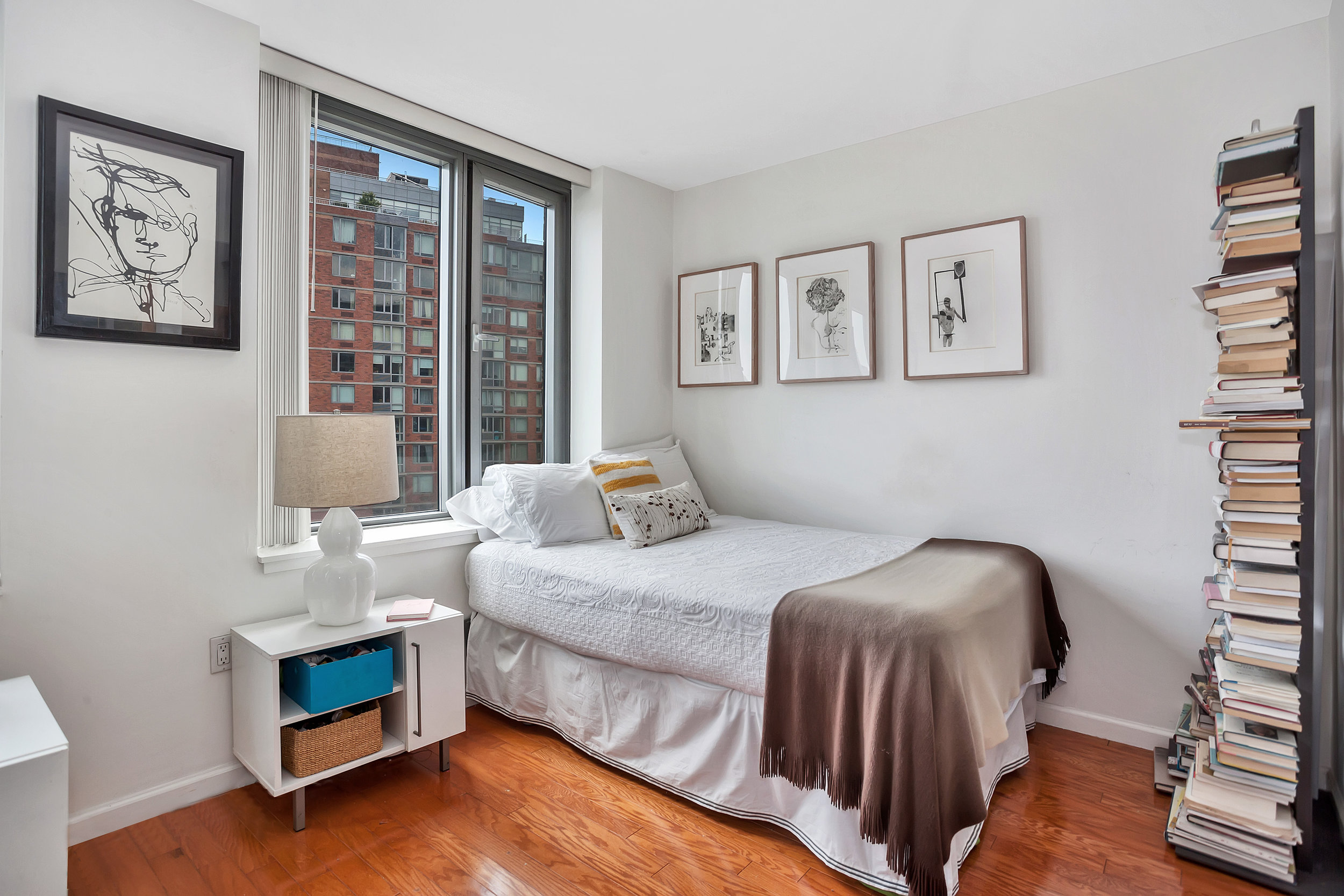
Gleaming hardwood floors usher you to the expansive bedroom that effortlessly accommodates a king-size bed and furniture, while the renovated bathroom strikes a luxurious tone with gorgeous tilework and storage. In fact, with three roomy closets positioned throughout the home, storage is never a concern in this immaculate and inviting home.

420 East 72nd Street is a full-service, post war co-op building offering 24-hour doorman, concierge, live in superintendent, laundry room and on-site garage. Guarantors, co-purchasers, pied-à-terres and pets are allowed. Nestled in the heart of the Upper East Side's Lenox Hill neighborhood, the building is less than two blocks from the East River Promenade and surrounded by the great restaurants, lively nightlife and convenient shopping and services the area is known for. Transportation is effortless with the new Q train one block away, crosstown bus service practically outside your door and the 6 train at 68th Street.

More Information

The Story Behind ‘Scabby The Rat’

Despite a nationwide decline in union membership, New York City continues to defy this trend. The number of city workers who belong to unions has risen for the last three years in a row, growing from 21.5 percent of all workers to 25.5 percent in 2016. And because of this high number of unionized employees, city residents have become even more familiar with Scabby the Rat–one of the most recognizable symbols of unions. The giant inflatable rodent, with its sharp buck teeth and beady red eyes, has been a staple of union construction protests in NYC and across the country for decades, and if there’s a development project that enlists nonunion labor in New York, expect to see Scabby out on the street.

For over 40 years, NYC unions have used rats as a symbol of protest. Workers who used to replace union workers during a labor strike were historically called “rats” or “scabs,” explaining the origins of the moniker. The first reference in print of using an inflatable rat at a union protest appeared in a 1976 New York Times article about a sanitation worker strike. However, it wasn’t until 1990 that the inflatable Scabby the Rat as we know it today came about.

Peggy and Mike O’Connor, who own Big Sky Balloons and Searchlights Inc., can be credited with designing the menacing looking rat. The Illinois-based company owners told Vice about the first time an organization called them seeking an inflatable rat. The idea first came from organizers Ken Lambert and Don Newton from District Council 1 of the International Union of Bricklayers and Allied Craftworkers. “Mike and the organizers were going back and forth, saying, ‘We need it more snarly,’” Peggy said. “They wanted a mean, ghastly looking kind of rat.” Since then, the design of Scabby remains the same.

While the original Scabby design is the most popular, the O’Connors have developed a variety of protest balloons for unions to employ. There are currently seven different sizes of Scabby; a six-foot rat costs $2,585 and a 25-foot rat costs $9,295. In addition to customizing Scabby–customers can choose different colors and long or short claws–Big Sky Balloons sell “fat cats,” “greedy pigs,” and “union bug” inflatables.

And Scabby isn’t going anywhere. In 2011, the National Labor Relations Board ruled that Scabby represents a form of symbolic speech protected by the First Amendment. Later in 2014, a federal judge in Brooklyn backed the right of local laborers’ union to use the rat in a protest. Today, Scabby (who has Twitter account devoted to him @ScabbyTheRat) can be found at strikes, protests and outside of places where unions want to direct their message.

5 Surprisingly Spacious Manhattan Two-Bedrooms For Under $750K

5 surprisingly spacious Manhattan two-bedrooms for under $750K

The two-bedroom apartments offer space at a relatively low price

BY AMEENA WALKER  JUL 7, 2017, 1:15PM EDT

Welcome to a semi-regular feature, Price Points, in which we pick a relatively low asking price and a type of apartment, then scour StreetEasy to find the best available options around the city. Today's task: Manhattan two-bedrooms asking under $750,000.


↑ If you’re willing to take the trek up to Washington Heights, this 987-square-foot condo delivers bang for your buck. The two-bedroom, two-bathroom home, asking $750,000, features massive windows, dark hardwood floors, a sleek windowed kitchen, and a balcony that overlooks Highbridge Park. [Floorplan]


↑ On the Upper West Side, a 700-square-foot co-op is going for $745,000. The listing description touts this as an “affordable starter” home with 10-foot ceilings, oak floors, a small but modern kitchen, and a washer/dryer. The two-bedroom, one-bathroom unit is also less than a block away from Riverside Park. [Floorplan]


↑ For $735,000, there’s this prewar co-op in Morningside Heights with lovely period details. Exposed brick walls, high ceilings, a stylish kitchen, and plenty of windows are among its details. We’ll admit that the second bedroom is small but it could make a good kid’s room or home office. [Floorplan]


↑ A colorful two-bedroom condo located on Harlem’s Striver’s Row is asking an even $600,000. The 760-square-foot apartment comes with large windows, hardwood floors, a sizable kitchen, and the option to install your own washer/dryer machine.


↑ Finally, in Yorkville, a simple and spacious co-op wants $695,000. The living room boasts lovely arched entryways and decently-sized rooms; the kitchen, while small, is clean and efficient. [Floorplan]


Manhattan Resale Inventory Fell For The First Time In 3 Years

Listing inventory for Manhattan slipped in the second quarter of the year, with the steepest drop at the high end of the market.

Overall in the borough, listing inventory fell by just under a percent, according to the quarterly report from Douglas Elliman. Resale inventory, which represents 83 percent of the Manhattan market, dropped by more than 1 percent in the first decline since the start of 2014. In the luxury market — which represents sales above $4.8 million — inventory dropped by 11 percent, with resale inventory in that sector falling by nearly 23 percent.

Jonathan Miller, CEO of appraisal firm Miller Samuel and author of the report, said inventory is falling because overpriced listings are now expiring.

“It’s a good development for the high end because you don’t have this heavy volume of incorrectly priced listings,” he said. “There’s less of that distraction on the market.”

It’s more evidence that prices are shifting to reflect the market, according to Miller, who said over the past few quarters sales in the borough have increased, indicating that sellers are becoming more willing to meet buyers.

Manhattan’s median apartment price hit almost $1.2 million in the quarter. It was not only a year-over-year increase of more than 7 percent but also a record. The new development median price was $3.3 million, a 23 percent jump over last year, while the resale median price was $975,000. For condominiums, the median price was nearly $1.9 million, a 19 percent increase on last year, while the median price of a co-op was $793,750. For the luxury market — the top 10 percent of all apartment sales — the median price was $6.8 million, a nearly 4 percent increase over last year.

About 14 percent of all market transactions had bidding wars, showing the market is still “tight” — though the majority of bidding wars are at the lower end of the market. In the studio market, 16 percent of the sales closed above the list price, while just 7 percent homes with four or more bedrooms sold for more than their list price. In the third quarter of 2015, 31 percent of sales closed above their list price, a record of at least nine years.

“The market is nowhere near as insane as it was in 2015. But it’s still brisk … which makes sense because inventory is falling and sales are rising,” said Miller.

Overall, the listing discount from last list price was just over 6 percent, according to the report. However, at the luxury end of the market, the listing discount was much steeper at more than 10 percent. That’s the highest it’s been since the fourth quarter of 2010.

“It doesn’t mean that market is coming down,” said Miller. “The aspirational prices era is over.”

WATCH: NYC Real Estate’s Week In Numbers

A 478,000-square-foot lease at 4 World Trade Center, a $200 million bridge loanfor 520 Fifth Avenue and a $271 million loan package for the Moynihan Train Hall. In real estate, it’s all about the numbers.

This past week, The Real Deal reported on New York City’s score in a new report looking at the barriers to commercial real estate supply, the amount that Chinese investment in overseas real estate could drop by in 2017 and the price for which Banco Santander is looking to sell a 51 percent stake in its $34 billion portfolio.

To see some of the biggest news of the past week in 10 numbers, watch the video above.

Rebel Wilson Moves Into Celebrity-Packed TriBeCa Building

Rebel Wilson has joined the likes of Jake Gyllenhaal, Meg Ryan, Justin Timberlake, Jennifer Lawrence and Blake Lively and moved into what appears to be Manhattan’s most celebrity-filled building.

The Australian-born “Bridesmaids” and “How to Be Single” actress has picked up a two-bedroom apartment for $2.95 million at 443 Greenwich Street, a luxury condominium in TriBeCa that is attracting an endless stream of A-listers.

Property records listed The Blue Bay Trust as the buyer of the apartment, the same vehicle that Wilson used to buy her two homes in L.A. In addition to her acting and business skills — she just launched her own clothing line — she must be a savvy negotiator as she paid $1 million less than the asking price.

Of her decision to buy on the East Coast, she said last week at a party marking the debut of her Rebel Wilson x Angels collection, which caters to a plus-size consumer: “I just love New York and since I’m filming a movie here this summer I thought I may as well buy a place.”

443 Greenwich Street’s amenities include a 71-foot indoor swimming pool, children’s playroom, a 5,000-square-foot roof terrace, a fitness center, a hamam and a temperature-controlled wine cellar.

The building has also been dubbed paparazzi-proof thanks to its underground motor court — perhaps that’s why it is attracting all these celebrities.

In the last two months alone, Ryan, Gyllenhaal and Harry Styles have all been revealed as buyers at the building, each paying in the region of $9 million for their new homes.

There are seven homes at the building for sale, according to Streeteasy, with the most expensive being marketed for $55 million, $4 million more than when it was first put up for sale in 2014.

Wilson also owns two homes in Los Angeles. She bought a four-bedroom house in the Hollywood Hills in 2014 for $2.2 million and a brand new five-bedroom West Hollywood property two years later for just shy of $3 million, according to PropertyShark.