Business Insider

Restaurants In China Are Replacing Waiters With Robots

Chinese restaurants started to replace their workers with robots as early as 2006. Though some have proven pretty incompetent, they're still cheaper than human wait staff — the approximate $1,200 up-front cost per robot is just a couple months' salary for an average server in China (though robot prices vary).

Robot waiters seem to have taken off in China because they're novel and fun, rather than for their efficiency. Many robots in Chinese restaurants appear anthropomorphic and toy-like — The Wall Street Journal writes that the Chinese even refer to their robots as jiqiren (机器人), literally meaning "machine people."

Here's a look at seven Chinese restaurants that have replaced some of their staff with robo-waiters.

These ten robot waiters serve customers in Chengdu, China, carrying dishes around and giving simple greetings to customers.

They cost around $11,310 each when they were bought in 2014.

Under Armour Is Taking Over Old FAO Schwarz Space

Under Armour is opening a new store in Manhattan, in the building FAO Schwarz used to call home, the company announced on Tuesday morning.

According to CNBC, the company will take hold of the 53,000 square-foot space in 2018.  

While the opening of one store doesn't always make headlines, CNBC notes that this new store will fuse experiences, such as work-out classes, with traditional shopping.

CEO Kevin Plank said on a recent earnings call that the new space will be "t he single greatest retail store in the world."

Under Armour already has a boost in that it sells activewear, one of the few categories for which consumers will pay a premium.

Under Armour posted another quarter of sales growth, making it the 25th consecutive quarter with over 20% revenue growth, the company noted.

Wealthy New Yorkers Are Purchasing Vacation Homes Down The Block

You may not immediately think to purchase a vacation home in the same city as your permanent residence, but more and more real estate agents are saying this is a growing trend among homebuyers.

The Wall Street Journal recently reported examples of this phenomenon in major cities across the US, including couples with two homes in Miami and Los Angeles. 

But why spend the money for another place just a few miles away?

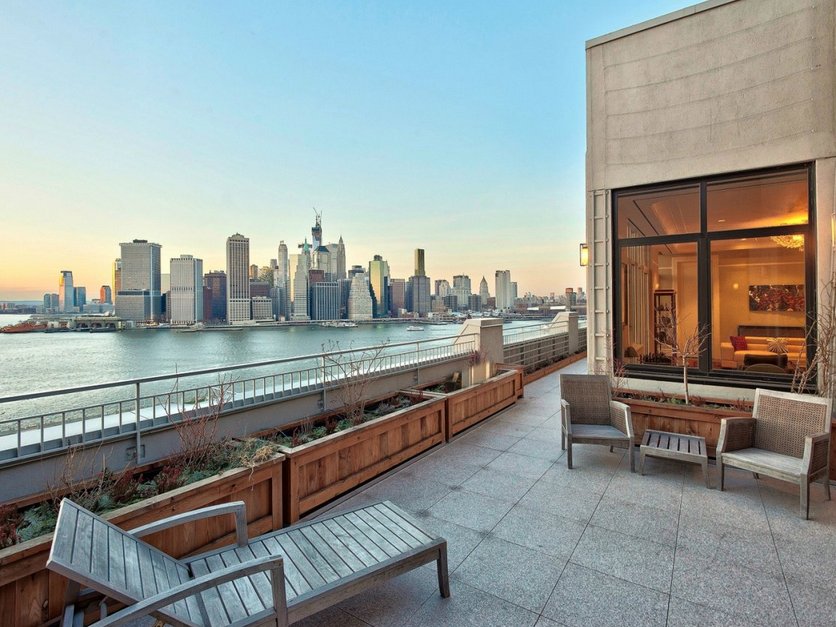
Victoria Shtainer, a New York City-based realtor with Compass, said that some of her clients purchasing homes in Brooklyn say they want a change of scenery from their Manhattan neighborhoods.

"It's a different feeling and a different mindset," Shtainer said to Business Insider. "You feel like you're away from your everyday problems and work and you are able to take yourself to a different place."

Buying another home in a different borough allows homeowners to experience a new neighborhood's nightlife and restaurants. Instead of rushing back to their permanent address, they'd have more freedom to spend the night or the weekend at their second home. She said her clients enjoy changing their everyday routine.

"You go to the same streets, same doorman," Shtainer said. "Here, you have all your things in a different place and you transform yourself."

Gill Chowdhury, a New York City-based broker with Douglas Elliman Real Estate, said he has clients who are based uptown, but who are using a second home in Tribecca as a "test run" before purchasing a larger home in the same neighborhood.

"They want to get a better sense of the neighborhood, more so than just going in the neighborhood and going home everyday, but really to experience and immerse themselves in what it's actually like to live downtown," Chowdhury said.

This lifestyle, of course, comes at a price. Shtainer describes these clients as people who "have disposable income."

"It's a luxury that few of us can afford, but they love it," Shtainer said. "They would not have it any other way."

Sotheby's International Realty

Chowdhury also acknowledges that clients must be of a certain economic background to be able to purchase second homes.

"There are various reasons why people with the money would want to and end up making that decision," he said. "I think for the most part that there's that 'staycation' aspect."

Shtainer has also seen clients who might want a beach vacation, but who don't want to go too far from Manhattan.

"There's people that live in the city and they have a summer residence in Brooklyn on the water," Shtainer said. "You could take the train and be there in 45 minutes and you're on the boardwalk, you're beachfront, and you spend the whole weekend on the water."

A home on the beach in Brooklyn is not only closer, but is also much cheaper than purchasing a home in the Hamptons.

"They want to be beachfront, and these apartments are affordable because they are under $1 million, and you have the beach downstairs," Shtainer said. "To replicate this in the Hamptons, you need at least $5 million, plus it's more of a commute."

Zillow/140 Oceana Dr.

To separate the living experiences in clients' permanent homes and vacation homes, Shtainer said the homes often have a very distinct feel to them.

"One house has a beachy feel, compared to the home in Manhattan with a modern feel to it," she said. "The second home is usually more casual."

So if you're a New Yorker looking for a "staycation" experience without the cost or travel time to the Hamptons, perhaps a second home nearby is a new purchase you should consider.