For Just $4m You Can Live In A Castle Just Outside The City

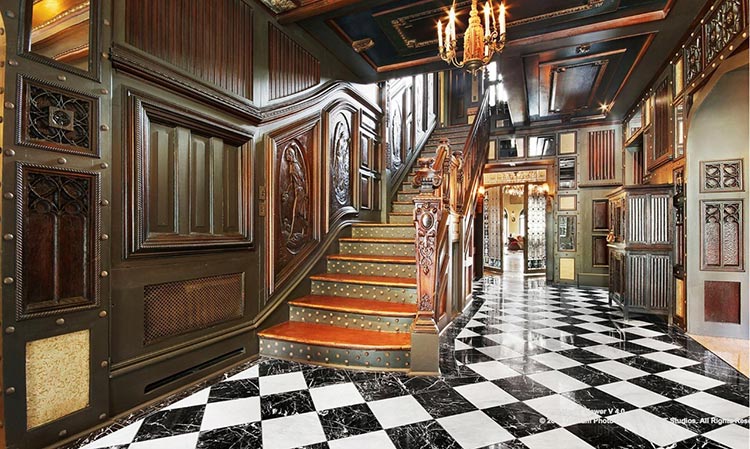
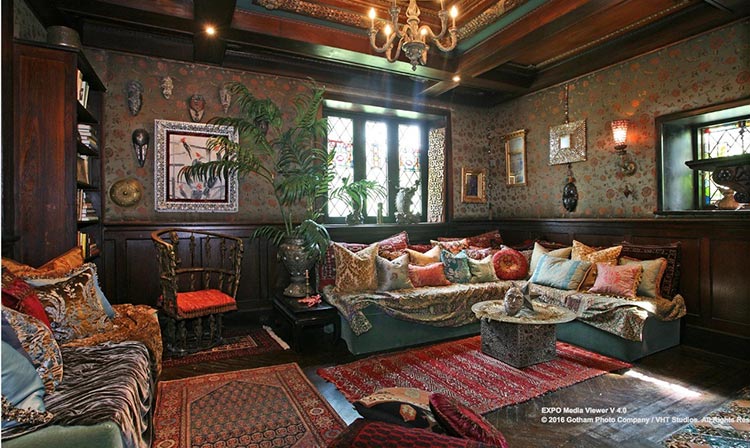
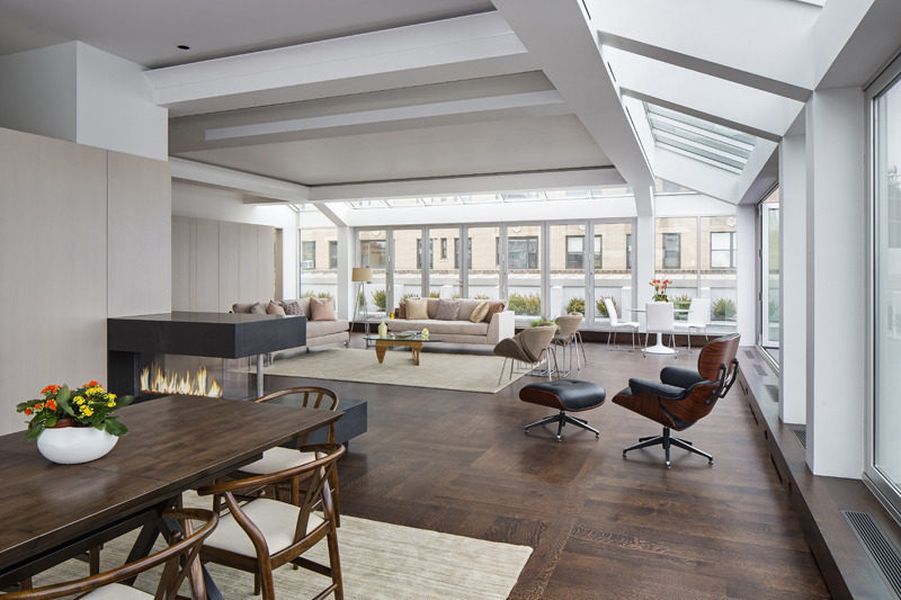
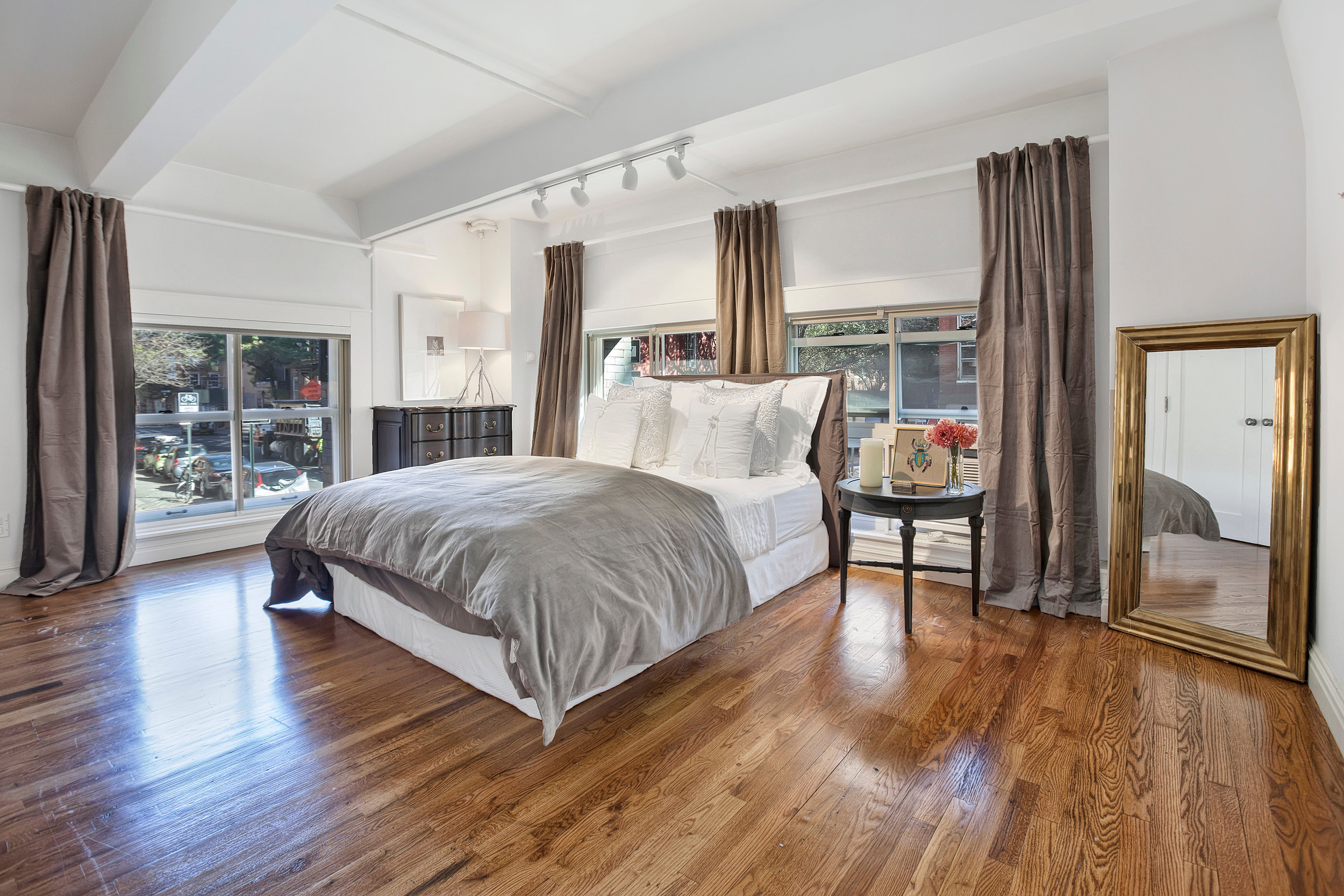
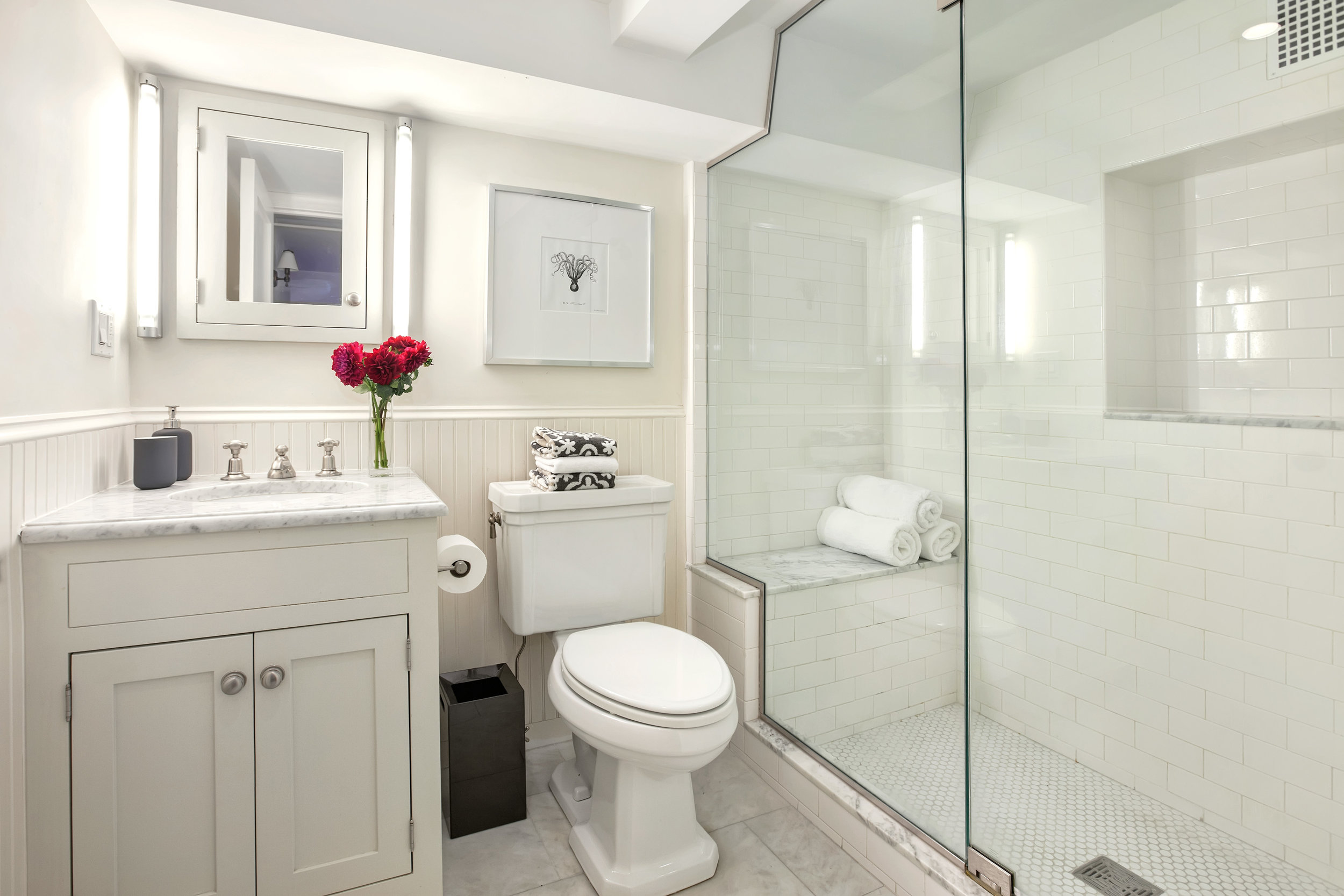
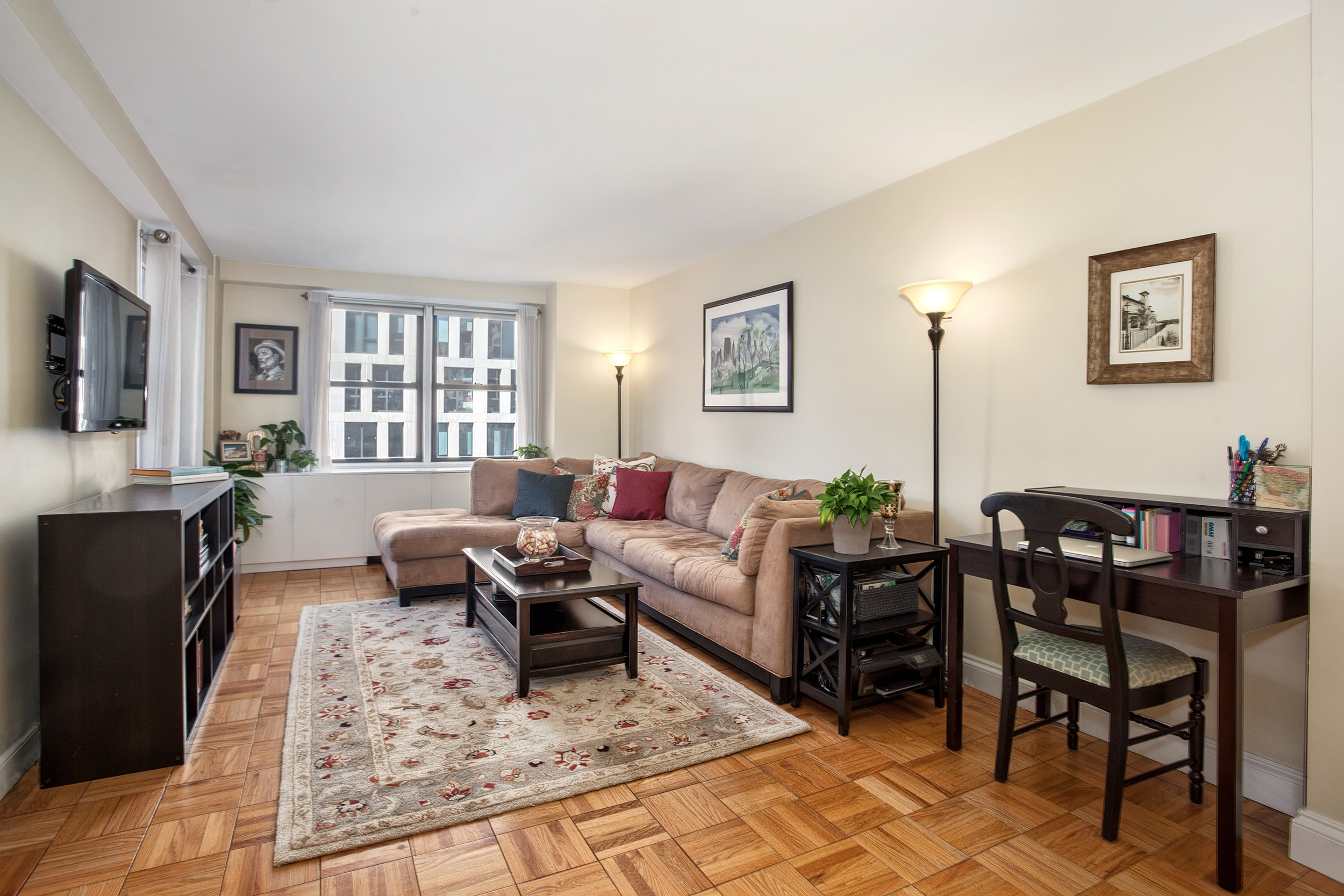
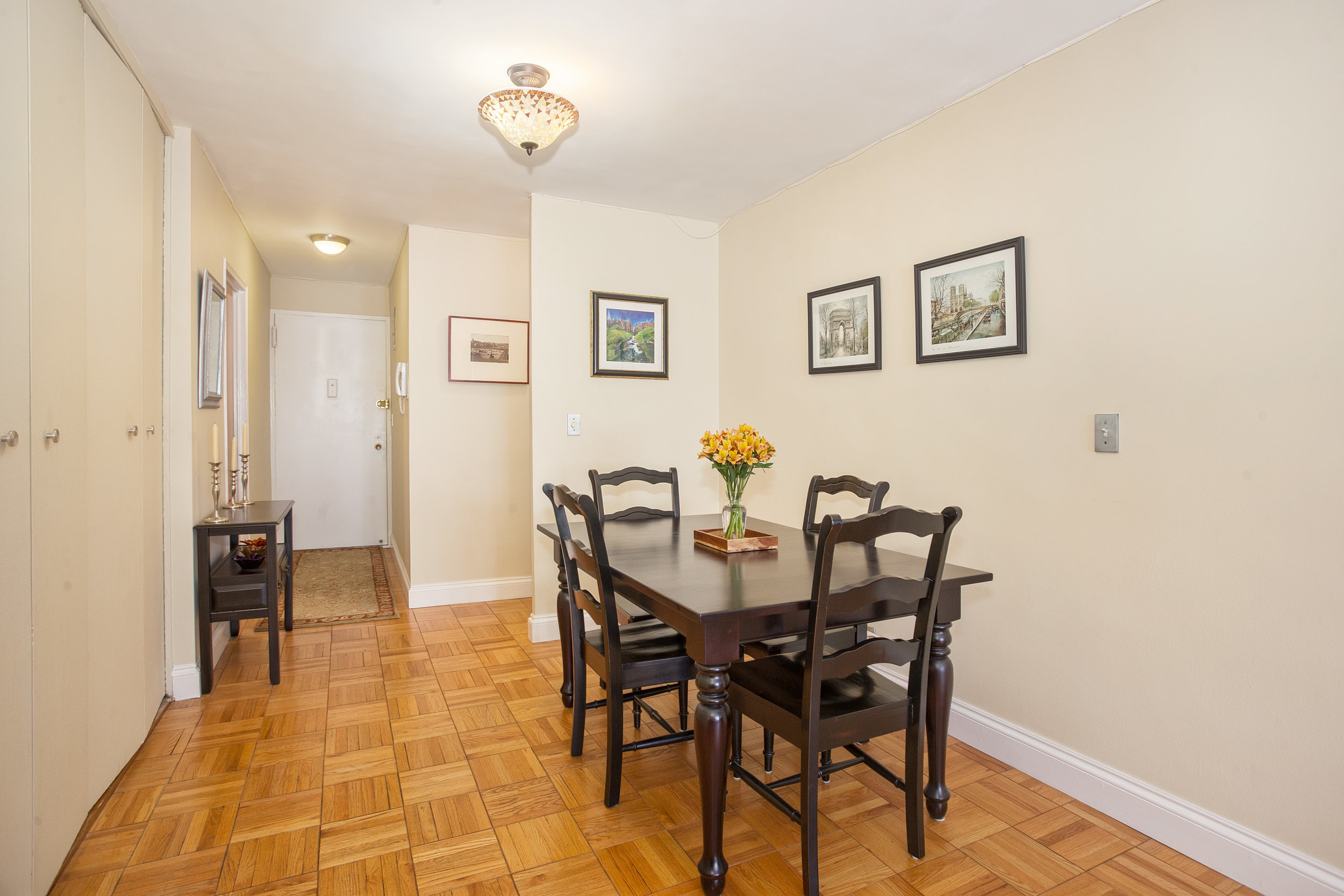
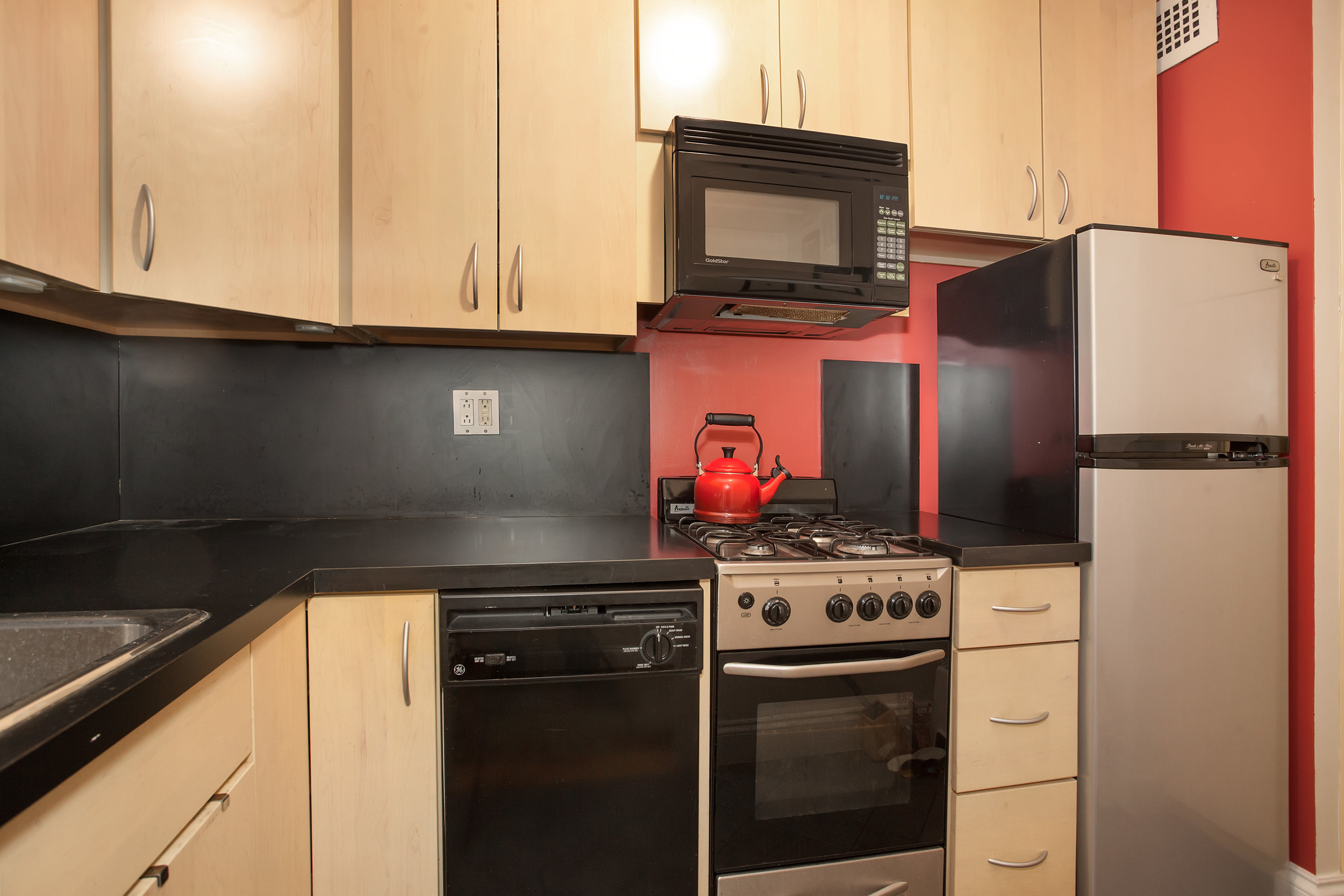
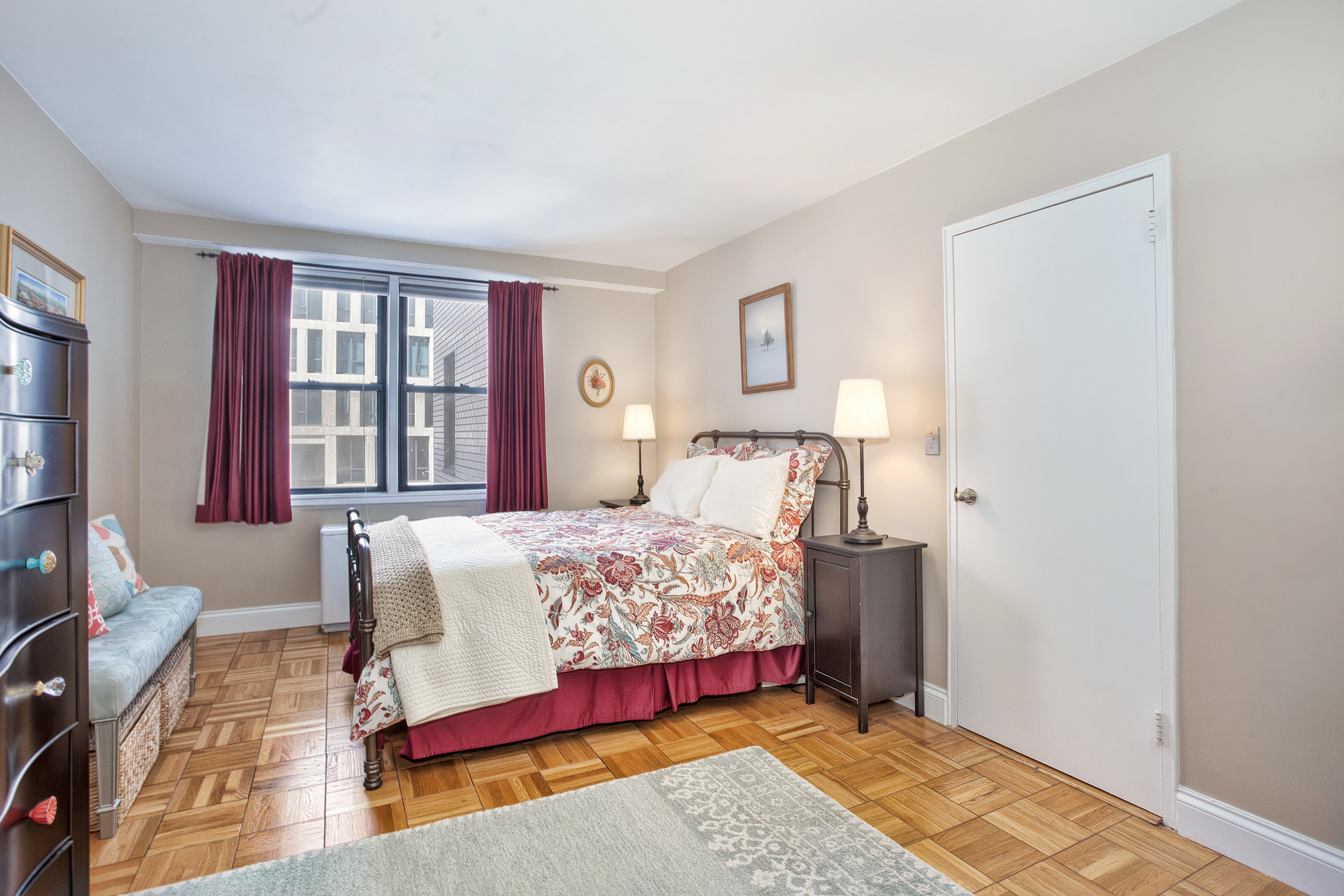
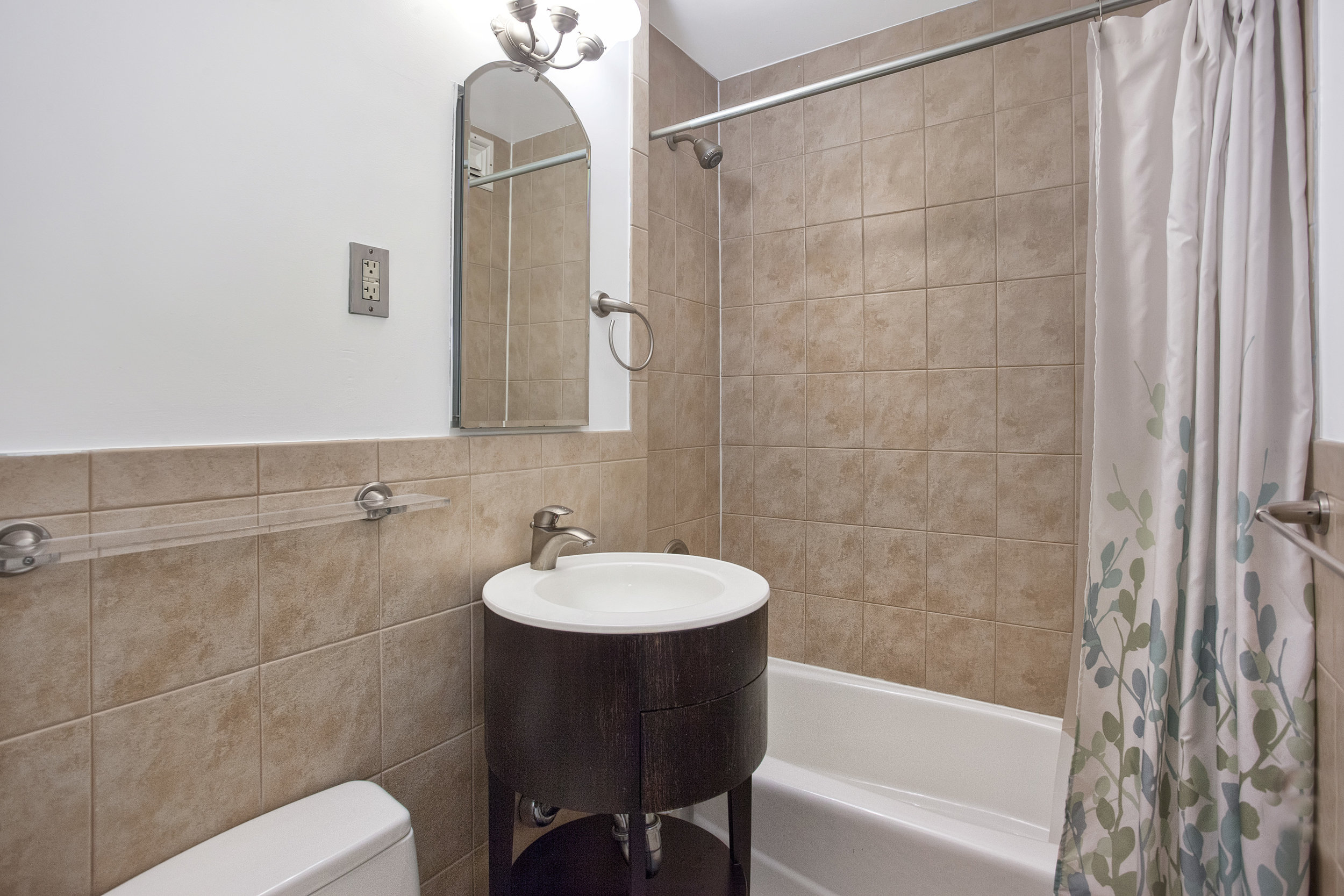
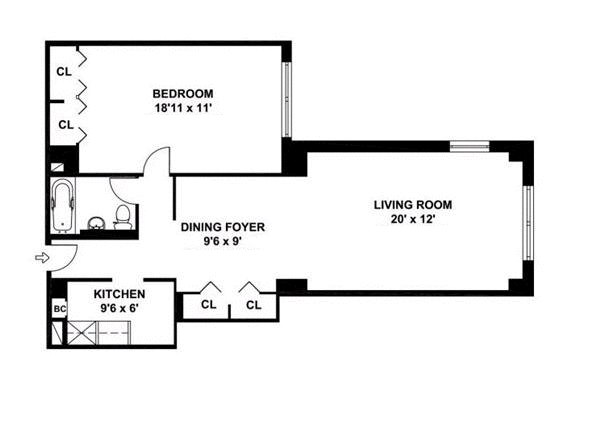
For $3.95 million, you can live in this perfectly adequate, (but nothing special) two-bedroom, two bathroom apartment on 53rd Street. Or! You can live in this castle in Yonkers that is the perfect mixture of French castle meets Eastern European discotheque. We know what we choose.

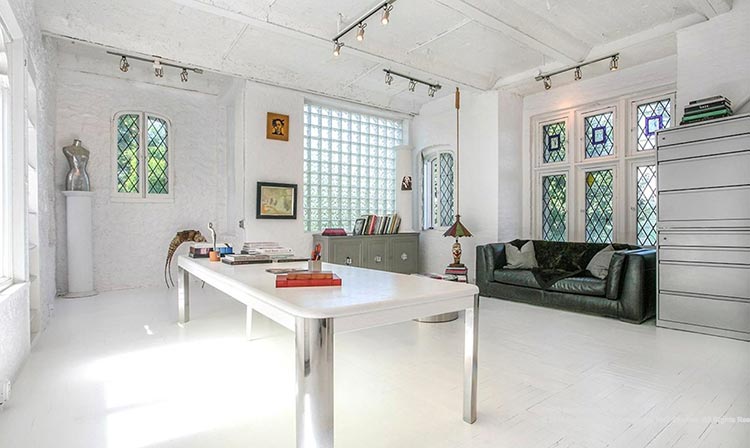
The castle at 170 Shonnard Terrace (known as Greystone Court) is currently owned by Kohle Yohannan, a writer and museum curator, who bought the home when it was a wreck in 2000 for $469,000 and proceeded to deck the bejeezus out of it. He imported actual historic rooms from Europe (from the 16th-18th centuries) and installed them in the castle, restoring it to its former glory. It has six bedrooms, seven bathrooms, eleven fireplaces, an octagonal ballroom with Hudson River views, a formal dining room with a six-foot chandelier, a conservatory, a morning room, a billiard room, an observatory and — because you should pray if you own this house — a private chapel. Phew.

The home was first listed in 2011 for $4.95 million, but has recently been re-listed for $3.95 million.

MTA Brings Select Bus Service 23rd Street

Going crosstown can be a nightmare, and often it’s faster to abandon public transportation altogether in favor of walking. But today, the DOT and Mayor Bill de Blasio launched Select Bus Service (SBS) along the notoriously slow 23rd Street corridor in Manhattan, with the goal of hopefully speeding up crosstown commutes.

The M23 serves as a key connector between multiple other subway and bus routes but has historically been bogged down by long wait times and large ridership—it currently serves 13,000 commuters daily. The newly added SBS route, which goes from Chelsea Piers to Turtle Bay with restricted turns, will, in theory, ease that congestion while improving traffic flow.

Like other SBS routes, the M23 SBS will have off-board fare collection and dedicated bus lanes. These features have been shown to reduce travel times by 10 to 30 percent, according to the MTA.

“Communities with limited subway options will now learn that SBS has a winning formula to transform bus commutes,” Mayor de Blasio said in a statement, adding that “SBS saves commuters precious time while also making streets—including the newly added 23rd Street route—much safer.”

This marks the 12th SBS corridor in the city, one step closer to de Blasio’s OneNYC goal of equitable and sustainable transit expansion.

This Week’s 5 Most Expensive Listings

In the past seven days, 10 new listings priced at $10 million and above hit the market, according to StreetEasy. From that list, these are the crème de la crème, otherwise known as the five most expensive residential listings.


1 Central Park South #1809

Address 1 Central Park South #1809
Price $58,900,000
Type/Size Condo: four bedrooms and four-and-a-half bathrooms
The most expensive listing this week comes courtesy of Tommy Hilfiger. The designer has just relisted his duplex at the Plaza for $58.9 million — more than a 25% price cut from the $80 million he was asking for when it first hit the market in 2013.


293 Lafayette Street #PHIV

Address 293 Lafayette Street #PHIV
Price $35,000,000
Type/Size Condo: four bedrooms and five-and-a-half bathrooms
This sprawling penthouse at the Puck Building entered contract back in 2013 for $27.5 million. StreetEasy sheds no light on whether the sale was ever completed, but here it is again, with a $35 million asking price. Just like Penthouse I, which LLNYC toured earlier this year, this pad comes with barrel-vaulted ceilings, floor-to-ceiling windows, and a private terrace.


240 Centre Street #Ph

Address 240 Centre Street #Ph
Price $35,000,000
Type/Size Co-op: four bedrooms and four-and-a-half bathrooms
A few weeks ago we featured the Police Building penthouse at the top of our Most Expensive list; today little has changed — it’s still not new to the market, it still doesn’t have a new price-tag, but, once again, it does have a new broker. The spread comes with a bucket-load of character, a spiral staircase, an elevator and a circular living room, all of which we got to witness for ourselves when we toured the pad back in March.


53 Leonard Street #Ph

Address 53 Leonard Street #Ph
Price $18,000,000
Type/Size Condo: three bedrooms and three-and-a-half bathrooms
Down in Tribeca you’ll find this sizable spread. It’s been on and off the market a few times since it was first listed earlier this year, but the $18 million price tag remains. It comes with multiple terraces, a wood-burning fireplace, a skylight and some very shiny floors.


325 West Broadway Penthouse-West

Address 325 West Broadway Penthouse-West
Price $17,500,000
Type/Size Condo: four bedrooms and four-and-a-half bathrooms
In Soho, and on the site of a former chocolate factory, is Xoco 325. The building is a individual looking one, and this penthouse comes with direct elevator access, a private terrace, walk-in closets, and city views.

5 Myths About Daylight Saving Time

By Rachel Feltman Reporter March 6, 2015

Daylight saving time strikes again Sunday at 2 a.m., at least for every state outside Hawaii and Arizona. Though DST has been part of life in the United States since World War I, its origin and effects remain misunderstood, even by some of the lawmakers responsible for it. Here are some common myths.


1. Daylight saving time was meant to help farmers.

Many of us heard, at some point in elementary school, that DST was developed because of farming. The idea that more daylight means more time in the field for farmers continues to get airtime on the occasional local news report and in state legislatures — “Farmers wanted it because it extends hours of working in the field,” Texas state Rep. Dan Flynn offered after filing a bill that would abolish DST. Even Michael Downing, who wrote a book about DST, has said that before researching the subject, “I always thought we did it for the farmers.”

In fact, the inverse is true. “The farmers were the reason we never had a peacetime daylight saving time until 1966,” Downing told National Geographic. “They had a powerful lobby and were against it vociferously.” The lost hour of morning light meant they had to rush to get their crops to market. Dairy farmers were particularly flummoxed: Cows adjust to schedule shifts rather poorly, apparently.

Daylight saving time, in this or any other country, was never adopted to benefit farmers; it was first proposed by William Willett to the British Parliament in 1907 as a way to take full advantage of the day’s light. Germany was the first country to implement it, and the United States took up the practice upon entering World War I, hypothetically to save energy. How did farmers end up being the mythical source of DST? Downing suggests that because they were such vocal opponents, “they became associated into the popular image of daylight-saving and it got inverted on them. It was just bad luck.”

2. The extra daylight makes us healthier and happier.

That additional vitamin D is good for us, right? Sen. Ed Markey (D-Mass.) thinks so. “In addition to the benefits of energy savings, fewer traffic fatalities, more recreation time and increased economic activity, Daylight Saving Time helps clear away the winter blues a little earlier,” he said in a statement last year. “Government analysis has proven that extra sunshine provides more than just smiles. . . . We all just feel sunnier after we set the clocks ahead.” Gwyneth Paltrow agrees, opining to British Cosmopolitan in 2013: “We’re human beings and the sun is the sun — how can it be bad for you? I think we should all get sun and fresh air.”

A little more vitamin D might be healthy, but the way DST provides it is not so beneficial to our well-being. Experts have warned about spikes in workplace accidents, suicide and headaches — just to name a few health risks — when DST starts and ends. One 2009 study of mine workers found a 5.7 percent increase in injuries in the week after the start of DST, which researchers thought was most likely due to disruption in the workers’ sleep cycles. An examination of Australian data found a slight uptick in male suicides in the weeks following time shifts, to the effect of half an excess death per day, which the researchers blamed on the destabilizing effect of sleep disruption on people with mental health problems. And some physicians warn that changes in circadian rhythm can trigger cluster headaches, leading to days or weeks of discomfort.

The literature on these health effects is far from conclusive, but spring sunshine does not outweigh the downsides of sleep disruption across the board.

3. It helps us conserve energy.

Congress passed the Energy Policy Act — which extended DST by a month — in 2005, ostensibly to save four more weeks’ worth of energy. “An annual rite of spring, daylight saving time is also a matter of energy conservation. By having a little more natural daylight at our disposal, we can help keep daily energy costs down for families and businesses,” Rep. Fred Upton (R-Mich.), who co-sponsored the legislation along with then-Rep. Markey, said in a 2013 statement.

But in a follow-up study on the effects of the extension, the California Energy Commission found the energy savings to be a paltry 0.18 percent at best. Other studies have indicated that people may use less of some kinds of energy, such as electric lights, but more of others. More productive daylight hours might be meant to get you off the couch and recreating outside, but they’re just as likely to lead to increased air-conditioner use if you stay home and gas guzzling if you don’t.

A study in Indiana actually found a slight increase in energy use after the entire state adopted DST (for years, only some counties followed it), costing the state’s residents about $9 million; the researchers believed that more air conditioning in the evening was largely to blame. That’s a far cry from the $7 million that Indiana state representatives had hoped residents would save in electricity costs.

4. DST benefits businesses.

We know that businesses think daylight saving time is good for the economy — just look at who lobbied for increased DST in 2005: chambers of commerce. The grill and charcoal industries, which successfully campaigned to extend DST from six to seven months in 1986, say they gain $200 million in sales with an extra month of daylight saving. When the increase to eight months came up for a vote in 2005, it was the National Association of Convenience Stores that lobbied hardest — more time for kids to be out trick-or-treating meant more candy sales.

But not all industries love daylight saving time. Television ratings tend to suffer during DST, and networks hate it. “Come March, when daylight savings time and the HUT [households using television] level goes down in the early evening, it really takes its toll on the 8 o’clock hour, particularly for comedies,” Kevin Reilly, then chairman of Fox Entertainment, said in 2014, explaining his decision to cut the network’s 8 p.m. comedy hour.

Airlines have also complained loudly about increased DST. When DST was lengthened, the Air Transport Association estimated that the schedule-juggling necessary to keep U.S. flights lined up with international travel would cost the industry $147 million. DST hurts other transportation interests, too: Amtrak is known to halt its overnight trains for an hour when clocks change in November so they don’t show up and leave from their 3 a.m. destinations early. In the spring, trains have to try to make up lost time so they can stick to the schedule.

DST might also cost employers in the form of lost productivity. A 2012 study found that workers were more likely to cyberloaf — doing non-work-related things on their computers during the day — on the Monday after a DST switch. Study participants who lost an hour of sleep ended up wasting 20 percent of their time.

5. Standard time is standard.

Guess what time we’re on for eight months of the year? Daylight saving time. In what universe is something that happens for only one-third of the time the “standard”? Even before the 2007 change, DST ran for seven months out of 12.

In fact, some opponents of DST aren’t against daylight saving time per se: They think it should be adopted as the year-round standard time. Because it basically already is.

12 Billionaires Could Buy All Of Manhattan's Real Estate

New York City is so expensive it can sometimes feel like only the richest 15 people in the world can actually afford to live here. Well Property Shark crunched the numbers, and found that in fact if they wanted to, the richest 12 people in the world could afford to buy all of Manhattan real estate — and still have some money left over.

To be fair this claim, which is pretty stupendous, only includes residential real estate and does not take into account commercial spaces or infrastructure (both of which are significantly more expensive). Property Shark did their calculations by multiplying the average sales prices in neighborhoods for 2016 by the total number of residential units in that neighborhood. That gave them an approximate value for each neighborhood, which they appropriately divvied up between the twelve wealthiest people on Forbes billionaire list. According to their calculations, Manhattan residential real estate is worth a total of $578 billion. Here’s how it works out:

This Week’s 5 Most Expensive Listings

In the past seven days, 10 new listings priced at $10 million and above hit the market, according to StreetEasy. From that list, these are the crème de la crème, otherwise known as the five most expensive residential listings.


70 Vestry Street #9N

Address 70 Vestry Street #9N
Price $25,700,000
Type/Size Condo: six bedrooms and seven-and-a-half bathrooms
The most expensive property this week comes courtesy of the celeb filled 70 Vestry. The 5,384-square-foot home comes with two terraces, a private elevator landing, and river views. While the building comes with a porte cochere, and charging stations for electric vehicles. Plus, Tom Brady and Gisele Bundchen will be on hand if you ever need to borrow a cup of sugar.


3 East 95th Street #Ph

Address 3 East 95th Street #Ph
Price $25,000,000
Type/Size Condo: five bedrooms and four-and-a-half bathrooms
This Upper East Side spread belongs to Jimmy Choo co-founder Tamara Mellon. It comes with more than 5,000-square-feet of outdoor space, an enclosed solarium and — of course — a walk-in closet that is currently filled with shoes. The home, which was first listed in 2014 for $34 million, is also available as a $85,000-per-month rental.


45 East 22nd Street #55FL

Address 45 East 22nd Street #55FL
Price $20,000,000
Type/Size Condo: four bedrooms and four-and-a-half bathrooms
Crane your neck and glimpse skyward and you might spot the 55th floor of Madison Square Park Tower. That’s where you’ll find this full floor, 4,651-square-foot spread. It has floor-to-ceiling windows (through which you can enjoy all four of the apartments exposures), and access to amenities including a golf simulator, basketball court, children’s playroom, library, and cards room.


4 Sutton Square

Address 4 Sutton Square
Price $19,500,000
Type/Size Townhouse: three bedrooms and three-and-a-half bathrooms
Sutton Square is home to just six houses, and this one is up for grabs. It’s owned by the contentious former CEO of Abercrombie & Fitch, Mike Jeffries. Between 2005 and 2008 the home was restored and renovated by architect Daniel Romualdez (who is also doing the interiors for big-name projects like 70 Vestry), and now it comes with East River views, a two-story mahogany paneled sitting room, and a whole lot of mirrors.


50 Wooster Street #5N

Address 50 Wooster Street #5N
Price $15,950,000
Type/Size Condo: three bedrooms and three-and-a-half bathrooms
Not only does this Soho apartment have a tunnel specifically designed for cats to journey from the kitchen to the litter box, but it was also the former home of legendary musician and crocodile-rocker Elton John. He sold it in 2010 to art consultant Sara Tecchia, and she added features like the color-changing walls in the powder room, the motorized headboard, and the two single beds that slide together to form a king-size bed.

Amy Schumer Just Bought A $12M UWS Penthouse

America’s comedy darling remains an uptown girl.

Amy Schumer’s search for a new New York City home appears to have come to an end with the purchase of a $12.15 million penthouse at 190 Riverside Drive on the Upper West Side, according to a source familiar with the deal.

The duplex, a 4,500-square-foot, five-bedroom home, is perched atop a turn of the century building and features a wall of glass doors, coffered glass ceilings, a custom stone and glass gas fireplace, a wrap around terrace and a separate bedroom wing.

The comedian and actress appears to have gotten a sweet deal, since the property was first listed for $18.9 million last April.

The digs are certainly a massive step up from Schumer’s old home, a townhouse apartment on West 80th Street that’s currently on the market for $1.63 million with broker Adam Modlin .

Schumer and boyfriend Ben Hanisch have reportedly been scouting new properties for over a month, and also checked out a $15 million mansion at 352 Riverside Drive.

Though it’s unclear if Hanisch is moving into the building with Schumer, he should count himself lucky that it has two floors.

“I’ve been here for two and a half years and for a while had my comedian boyfriend move in with me, but sharing a studio is a bad idea,” she told Brick Underground in 2011 of her first Upper West Side pad. “We broke up for a month just because of that and we are now happily together living separately. I don’t think I ever want to share an apartment with anyone again, although it would be nice if he lived upstairs.”

Lisa Lippman and Scott Moore of Brown Harris Stevens had the Riverside listing. Lippman declined to confirm the deal, and a representative for Schumer did not immediately respond to a request for comment.

68 Jane Street, Unit 1E


68 Jane Street, Unit 1E

WEST VILLAGE, MANHATTAN

3 Bed  |  2.5 Bath  |  Duplex  |  Co-op

Offered At $5,250,000


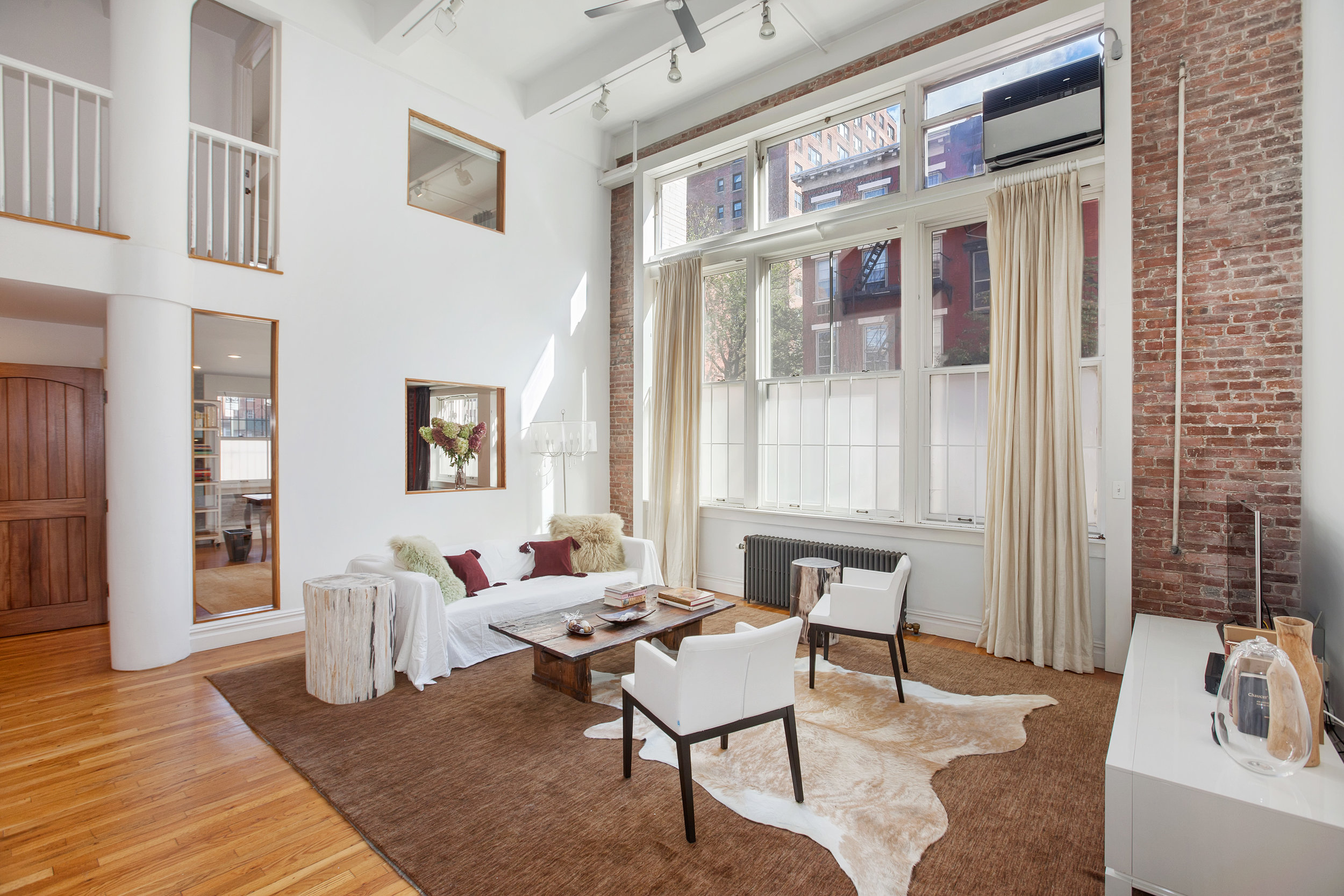
This one-of-a-kind, renovated duplex provides a rare opportunity to own an exceptional maisonette on Jane Street’s most valuable and charming tree-lined block, between Washington and Greenwich Streets. This corner duplex loft offers a dramatic, sun-splashed living room featuring 18-foot tall ceilings lined with professionally designed lighting and surrounded by custom windows. There are 16 windows in total throughout this bright and airy unit. A spacious dining room and oversized corner bedroom/office round out the first level, while the second floor houses two bright bedrooms, two white marble Waterworks bathrooms and a bonus laundry room/kitchenette with Sub-Zero refrigerator and stainless steel countertops. Perfectly restored exposed brick details run throughout this lovely home set in a gorgeous, 1900 Romanesque building in the heart of the Greenwich Village Historic District. Located on a quintessential cobblestone block, 68 Jane Street is a well-established luxury co-op surrounded by the gorgeous High Line,the new Whitney Museum, Bleecker Street boutique shopping, galleries and much more. Transportation is unbeatable with A/C/E, B/D/F/M, 1 and L trains at your disposal.

Monthly Update - November 2016

October started with depressing news that the Q3 New York real estate numbers were 15 to 20 percent lower year over year compared to Q3 2015, according to a Bloomberg article and numerous reports.

This caused an already skittish September to decline into an outright dead first two weeks of October. But as news of a dead and/or dying New York City market spread, buyers picked up on the trend and started to get active again and fast! It was quite interesting to see the talk around the water cooler go from, "How are you finding this market?" to "Isn’t this market great?!"

I do, however, have to balance this renewed interest from sellers with the fact that prices and transaction numbers are still lower, but at least this isn’t the stand still that was happening in September and the early part of October.

Was it election blues or something else that is triggering buyers to hold off and sellers to panic a bit? Hard to tell, and although the market is moving again, this year's unpredictable twists and turns make November and December’s performance anyone's guess. Interest rates have been inching up as of late, and although it's unlikely the Fed will raise rates at this week's meeting, a rate hike will come eventually.

The markets seem delicate, like anything might set them into a tailspin. But always remember, "Where there is a will, there is a buyer!" Meaning, if you're a seller, and you want to sell, buyers are out there competing for property. And if you're a buyer, sellers are out on the market ready to go. And I'm out there encouraging transactions at every turn, because the fact remains that New York City real estate, over a 10-year period, beats Wall Street by double-digit returns on average.

So, get out there and become a property owner — it’s well worth it, even when things may seem shaky.


Just Released! 

Q3 2016 Manhattan Report

October's Inventory Numbers

Hot Off The Press!

COMPASS Q3 Market Report
Request A Copy HERE

From a 47% increase in September, October saw a dip of new inventory of 25% month over month. However only 7% of October's new inventory went into contract over Septembers 18%.


The Hoffman Team's Active Listings


Two Compass agents just sold an amazing $21.8M property in SF’s Pacific Heights. 


Team Press

  • Fit to Print: An Industrial Chic Aesthetic in the West Village
    New York Observer |  Read Full Article

Out TODAY!


Fresh off the press today, The Gathering Issue of The Compass Quarterly.


Request Your Copy HERE


Think You Know What Your Home Is Worth?
Lets see about that, click HERE and receive a comprehensive up-to-date CMA Valuation Report.

Bobby Flay’s Famous Cat Found A $22K/month Renter For Their Pad

Chef Bobby Flay and his Instagram-famous cat, Nacho, have rented out their former Chelsea digs.

Bobby Flay may be an Iron Chef, but it’s his cat, Nacho, who’s gaining heat — with more than 70,000 followers on Instagram.

The chef and his orange Maine Coon have finally rented out their eighth- and ninth-floor duplex at 252 Seventh Ave., where they lived in happier days with Flay’s ex-wife, “Law & Order: SVU” actress Stephanie March.

The apartment’s original asking price dropped from $7.95 million to $6.99 million in May, while also being on the rental market for $22,500/month (with listing brokers Meris and Kenny Blumstein of Corcoran).

The three-bedroom, three-bathroom, 3,256-square-foot duplex in the Chelsea Mercantile (erstwhile home of Katie Holmes) comes with a chef’s kitchen, natch.

See their apartment HERE

201 East 21st Street, Unit 7D


201 East 21st Street, Unit 7D

GRAMERCY PARK, MANHATTAN

1 Bed  |  1 Bath

Offered At $835,000


Don't miss this bright and oversized one-bedroom apartment offering a spacious layout, thoughtful updates and ample storage space, all located in one of Gramercy's most sought-after buildings.

This home's open layout, which is lit by large west and south-facing windows in every room, lends a sense of airy spaciousness throughout. The great room stretches nearly 30 feet from the entry to the sunny windows, providing ample room for living and dining areas, and lending great access to the nearby kitchen.

The renovated bathroom features updated tile and vanity while the 11-foot by 17-foot master bedroom provides plenty of space for a king bed and additional furniture. The abundant closet space is not to be missed with four large closets throughout, all extra deep to maximize storage.

The Quaker Ridge is known for its stellar financials and low maintenance, not to mentions its prime location, close to Gramercy Park.
 The co-op includes a full-time doorman, live-in superintendent, new laundry facilities, bike storage and a residents-only parking garage with direct access to the building. The building allows co-purchasing and pets, but does not permit guarantors or pied--terres.

Listing Information

Delivery Robots In Apartment Buildings Now

Building porters are the in-house delivery men of the 1 percent. And they might soon become a thing of the past.

Ten Thousand, a forthcoming 283-unit Los Angeles rental tower, won’t use human power to bring sundries — like parcels or food — to residents’ doorsteps. Instead, tenants of the building will have these items brought by a robot, The Post has learned.

Relay, a delivery robot built by California-based robotics company Savioke, will make its way through the entire 40-story building to bring inhabitants whatever they need. It’s even able to operate elevators on its own.

This makes Ten Thousand, which stands on the cusp between Beverly Hills and Century City, among the very first residential developments to deploy robot servants. The building anticipates a January 2017 opening and has prices from $9,000 per month.

Here’s how it works: Residents use the building’s app — available on the iPad Minis that come included in each dwelling — to order from a menu of items, which also includes drinks and flowers. Their requests are received by a team of butlers, who then put the goods inside the robot’s interior compartment for transport.

Items are loaded into the robot’s internal storage compartment, then delivered to tenants’ doorsteps.

It’s not the only futuristic amenity to be included in this development. Ten Thousand also has predictive technology. For example, syncing up with tenants’ phones and tablets will let building staffers know when to make morning cups of coffee before they jet off to work for the day.

There are cosmetic amenities, too — literally. The building will house a wellness studio, where on-call doctors can deliver Botox injections.

Ten Thousand, aptly, is located at 10000 Santa Monica Blvd.

5 Body Language Mistakes That Make You Look Weak

No one ever wants to come across as weak — especially in a professional setting.

However, some of us just can't help it. That's because your body language might be giving off subtle signs that warp how others view you.

Business Insider spoke with Dr. Lillian Glass, a communications and body language expert and author of "Toxic People," to get her ideas on which body language mistakes make you look like a pushover.


Here are her top five picks:

1. Hunched shoulders

Your parents were right to constantly nag you to sit up straight. Not only will a slumped posture cause others to view you as weak, it could harm your own self-perception. This 2015 study published in Health Psychology found that a perpetual slouch can increase negative moods and lower self-esteem.

2. Bowing your head

This one's pretty self-explanatory. If you're constantly looking down like Jean Valjean at the beginning of "Les Misérables," you probably look a bit beaten down.

3. Speaking in a soft, timid voice

No one will view you as a strong leader if they can't hear you. If you're a naturally quiet person, make an effort to speak up in order to gain more respect in the office. In an article for the Telegraph, psychologist Rob Yeung gives tips on how to speak loudly and clearly.

4. A frightened expression

Some people just have "resting scared face." However, you don't want to appear anxious or worried in the workplace, especially when you're communicating with others.

5. A shifty gaze

This one's also the worst body language mistake you can make in general, according to Glass. Don't avert your eyes when people are speaking to you, unless you want to look nervous — or worse, dishonest.

Uber's Entire 98-Page Plan To Make Flying Cars A Reality Within Ten Years

Uber has a new plan for making commuting faster: flying cars. 

The company debuted its new project for electric aircraft that takes off and lands vertically in a white paper it published Thursday. Dubbed Uber Elevate, the project aims to have the aircraft in cities by the year 2026. 

The aircraft would be used to shorten commute times in busy cities, without the noise and pollution of helicopters. The vehicles would be able to travel at about 150 mph for up to 100 miles and carry multiple people, including a pilot, according to a piece about the project from Wired's Alex Davies. While the first vehicles will be ready by 2021, the expected roll-out date is 2026.

Uber doesn't plan to make their own vehicles, but will instead partner with other companies and the government to make it happen. 

Uber's plans for the project are published in a 98-page document that outlines the feasibility of bringing the planes to market, how the vehicles will work from a technical standpoint, and how Uber plans to work within other constrains like weather conditions and government regulations.

You can read it in full by clicking HERE

Uber & Lyft Drivers Share 17 Things They Wish You Would Stop Doing

Driving for a ride-hailing app like Uber or Lyft is a bit of a gamble.

Earnings can vary significantly from one hour to the next, and then there's the question of who exactly is getting into their car.

On some occasions, drivers can have genuine conversations with complete strangers. But, then, of course, they also come across their fair share of stinkers.

To find out which passenger behaviors rub drivers the wrong way, we asked them to chime in.

Here are 17 annoying things you should probably stop doing right now:

Leaving one-star reviews for no reason

"One thing that might surprise people about the job is that even a four-star rating is bad. The whole system is set up so anything less than five stars is terrible for the driver."

—Lyft and Uber driver

Making your driver wait

"Don't ask for a ride unless you're ready to walk outside the second you order the ride."

—Lyft and Uber driver

Eating in the car

"I wish passengers would stop eating food in my car without asking. In order to drive for Uber or Lyft, you have to have a new car. Therefore your nachos in my new car causes undue stress."

—Lyft and Uber driver

Canceling rides, especially when the driver is already en route

"There's not much more frustrating than spending 10 minutes getting to my fare only to have them cancel the ride. I end up wasting a lot of valuable time when that happens."

—Lyft and Uber driver

Sitting in the front

"It's distracting."

—Uber driver

Lack of drive-thru courtesy

"I wish passengers who ask that I stop at a fast-food drive-thru would offer to buy me something. I usually turn them down — I've accepted a water once — but it just feels like common courtesy."

—Lyft and Uber driver

Being entitled, belligerent drunks

"I'm a sober person getting you home. I'm on your team, not your servant. A 'please' goes a long way."

—Lyft and Uber driver

Calling people

"I wish passengers wouldn't call people in my car. I turn the radio off so they can hear better and then I'm just awkwardly eavesdropping. Just text."

—Lyft and Uber driver

Not wearing your seat belt

"I wish passengers would put their seat belts on. It's still a car. You can still die."

—Lyft and Uber driver

Touching

"Please don't touch me. Ever. At all. That's super uncomfortable. Don't mistake my cheerful demeanor for flirting. I'm just a nice human."

—Lyft and Uber driver

Cramming people in

"Stop asking to fit more people in this car than it can legally fit."

—Lyft and Uber driver

Changing the music

"I always hated when people would change the radio station or try to play their own music without asking first. It's pretty distracting to have a passenger you don't know reach across the front console to mess with your media settings."

—Uber driver

Not knowing where you are going

"Many drunk and high passengers don't know where they are or where they are going."

—Lyft driver

Not moving the pin to exactly where you want to be picked up

"If someone is on the back side of a property when they request a ride but want to be picked up in front, this causes navigation to send you possibly to the next street over. Google Maps may say that a person is miles away from their actual location. So it is up to the passenger to confirm that the location is correct, but many don't."

—Lyft driver

Drinking in the car

"Don't get into my car with open alcoholic drinks."

—Anonymous driver

Leaving trash behind

"I always hated when people would leave trash in my car."

—Uber driver

Being demanding

"Don't expect water and candy on a $5 ride that I drove across town for."

—Lyft driver

NYC Is Yet To Tax Foreign Buyers — Changing Soon?

(The long view is a new biweekly column that analyzes big-picture real estate issues through a global lens.)

When China’s property market took off in the years following the 2008 global financial crisis, so did Hong Kong’s. The city was an ideal target for the growing class of wealthy Chinese apartment buyers: geographically and culturally close, yet still somewhat safe from the ruling Party’s reach. As Chinese investors flocked in, prices ballooned. In the two years leading up to the first quarter of 2011, the average price for a mid-sized apartment rose by 65 percent, according to Hong Kong government data.

By October 2012, regulators had had enough. The Hong Kong government imposed a 15-percent tax on property purchases by anyone who wasn’t a permanent resident. “This is an extraordinary measure introduced under exceptional circumstances,” Hong Kong’s financial secretary John Tsang told the Wall Street Journal at the time.  In the two years since the tax was introduced, the average price of a mid-sized apartment grew by just 5.3 percent.

Since 2012, several cities with a heavy influx of foreign – and especially Chinese – apartment buyers followed Hong Kong’s model. Singapore imposed a 15-percent tax on foreign apartment buyers in 2013. That same year, Switzerland set a 20-percent cap on the number of pieds-à-terre in any community.  This April, Britain introduced a “stamp tax” on pieds-à-terre. In June, the Australian states of Queensland and New South Wales (which include Sydney, Brisbane and the Gold Coast) introduced 3- and 4-percent taxes on foreign homebuyers.  And in August, Vancouver set a 15-percent tax on foreign property buyers.

One glaring exception to this trend is New York. What’s up with that?

On the surface, New York deals with similar challenges as Hong Kong, Singapore, Zurich, London, Sydney and Vancouver: rising global wealth and low interest rates have led to a spike in foreign property investors, pushing up apartment prices and making neighborhoods less affordable for long-term residents. In other cities, this trend has created political pressure to stem the influx of foreign money. In New York, however, a tax on foreign buyers is yet to pick up serious political momentum, and subtle differences between it and these other cities may help explain why.

One is tax aversion. “In this city, raising taxes is generally abhorrent to elected officials and there are no strong feelings against foreign investment,” said George Arzt, a veteran Democratic political consultant. “In fact, many people feel that raising taxes would wound the golden goose that may be fueling the economy.”

That’s certainly the sentiment among real estate industry professionals.

“I can’t imagine that given how incredibly profitable foreign investment has been in elevating the Manhattan market to a new historical high that this would be regarded as a wise idea,” said John Burger, a top luxury broker at Brown Harris Stevens , said in September 2014 when Democratic State Senator Brad Hoylman proposed a pied-à-terre tax.

In Britain, it was the ruling Conservative party that introduced the stamp tax. In the age of Tea Party and congressional anti-tax pledges, Republicans are unlikely to follow suit. Hoylman’s proposal won support from the City Council, but fizzled because the Republican majority in the State Senate would not go along.

Another explanation may be concern over New York’s image. “New York brands itself as the capital of the world,” said Jonathan Miller, CEO of appraisal firm Miller Samuel. It’s this image as the alpha-alpha city that brings in investment and tourism, making it “pretty hard to single out foreign buyers of real estate and still keep the city’s brand consistent.”

And finally, in a market as large as New York’s, foreign buyers may not move the needle on prices as much as they might in other markets.

“Our foreign investment is fairly well below 15 percent (of apartment sales) as a whole,” said Edward Mermelstein, a real estate attorney who works with overseas real estate investors. “We’re not as affected by foreign investment driving the prices up.”

Anti-discrimination laws prevent brokers and city agencies from collecting data on the share of foreign apartment buyers, meaning no one knows for sure how many there are. But it’s clear prices in New York haven’t risen as dramatically as in some other cities. In Hong Kong, prices rose 65 percent in two years. In Vancouver, prices rose 31 percent in the first eight months of 2016 alone. In Manhattan, meanwhile, the average apartment price rose by a more modest 13 percent over the past year, according to Douglas Elliman, and the market shows signs of slowing down. Slower price growth may mean even less political pressure to curb foreign buyers.

But New York might not lag behind forever. The city always had two major drawbacks compared to other global hubs: geography and visa restrictions. Hong Kong and Vancouver are significantly closer to China, while London is a short flight from Russia and the Middle East. It’s also far trickier for Chinese and Middle Eastern nationals to get visas for the U.S. than these countries. But taxes on foreign buyers in those cities could tilt the balance in favor of New York in the medium run, Mermelstein argued. “Any time you’re putting up barriers you’re driving investment to other locations,” he said. “We’re just starting to get many more checkmarks in our column.”

As other cities impose taxes on foreign buyers, more of them may choose New York, putting upward pressure on prices. That could in turn increase political pressure to limit the influx of overseas money. In October 2014, the New York Times cited census data showing that more than 50 percent of apartments in a three-block stretch of Midtown East were vacant the majority of the year.

State Senator Liz Krueger told the Times about a developer who was talking about how his buyers would never be around, so they wouldn’t take up resources.

“He said it like this was a positive thing,” Krueger said. “You can’t make this stuff up.”

For now, the city is resisting the global trend of taxes on foreign property buyers. But it may become harder and harder to do so.

Indoor Pools May Sink Your Chances Of A Top-Dollar Resale

While having an indoor pool in one’s home may seem like the ultimate luxury, real estate experts warn that it could affect the resale value of the home.

Everyone’s favorite NYC-based real estate appraiser, Jonathan Miller explains, “It’s a highly personalized amenity that requires a lot of maintenance.”

While the number of luxury property listings with indoor pools is small — about 0.7 percent — the WSJ reports that properties priced over $1 million were asking only 4 percent more per square foot than homes without a pool and 2 percent less than homes with outdoor pools, according to data from Realtor.com.

There are other drawbacks as well: installing an indoor pool can be costly, ranging from about $150,000 to seven figures. Costs don’t stop there. Indoor pools also require dehumidification systems, which can cost another $50,000. Pool covers are in the thousands. Safeguarding one’s home from smelling of chlorine and becoming damp and humid is also a factor.

Oftentimes other things are added to the mix such as an indoor poolside bar, changing area, hot tubs, saunas, dedicated bathrooms, waterfalls, custom lighting and tiling, and floor-to-ceiling windows or sliding doors. A bathing hole can quickly turn into a money pit.

Ruth Aveta of Creative Master Pools, says that an estimated 60 percent to 70 percent of the indoor pools she builds involve a theme, such as a recent project meant to resemble a Roman bath. “They’re typically looking to evoke some kind of feeling with it,” she said.

Then there is the time it takes to get it all right. The installation can also be quite time-consuming — a project might take three to four months, a few more weeks than an outdoor pool.

A new owner may not want the headache of maintaining so such a pricey amenity.

Overall property owners should look at all factors before taking the plunge on installing an indoor pool if they want to stay afloat in the turbulent real estate market. 

Fit to Print: An Industrial Chic Aesthetic in the West Village


Fit to Print: An Industrial Chic Aesthetic in the West Village

The duplex at 421 Hudson Street also features a personal catwalk

By Morgan Halberg • 10/27/16 9:55am

“It’s very grandiose, very different, and not cookie cutter at all,” COMPASS broker Dylan Hoffman declared, entering a seventh-floor unit at 421 Hudson Street.

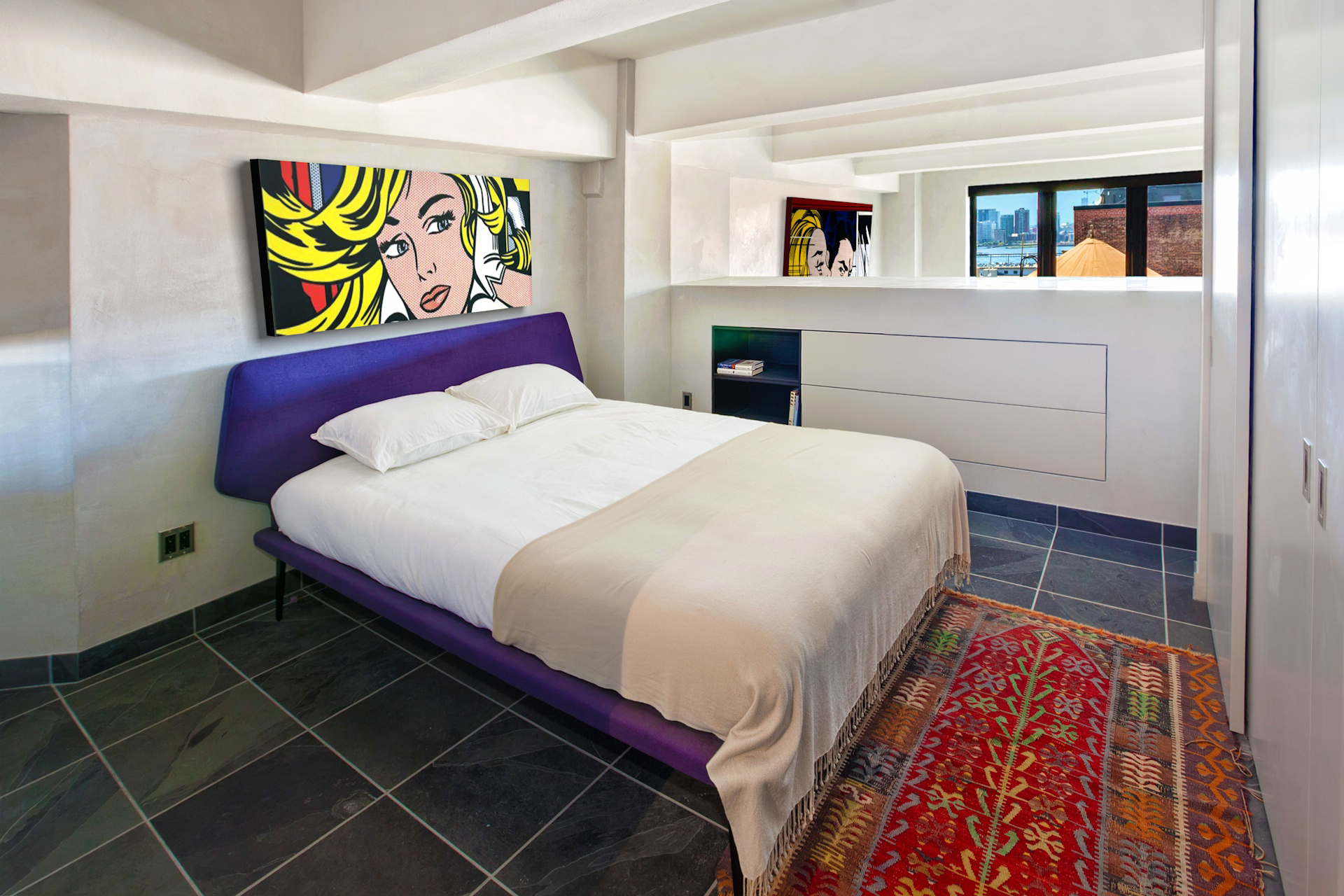
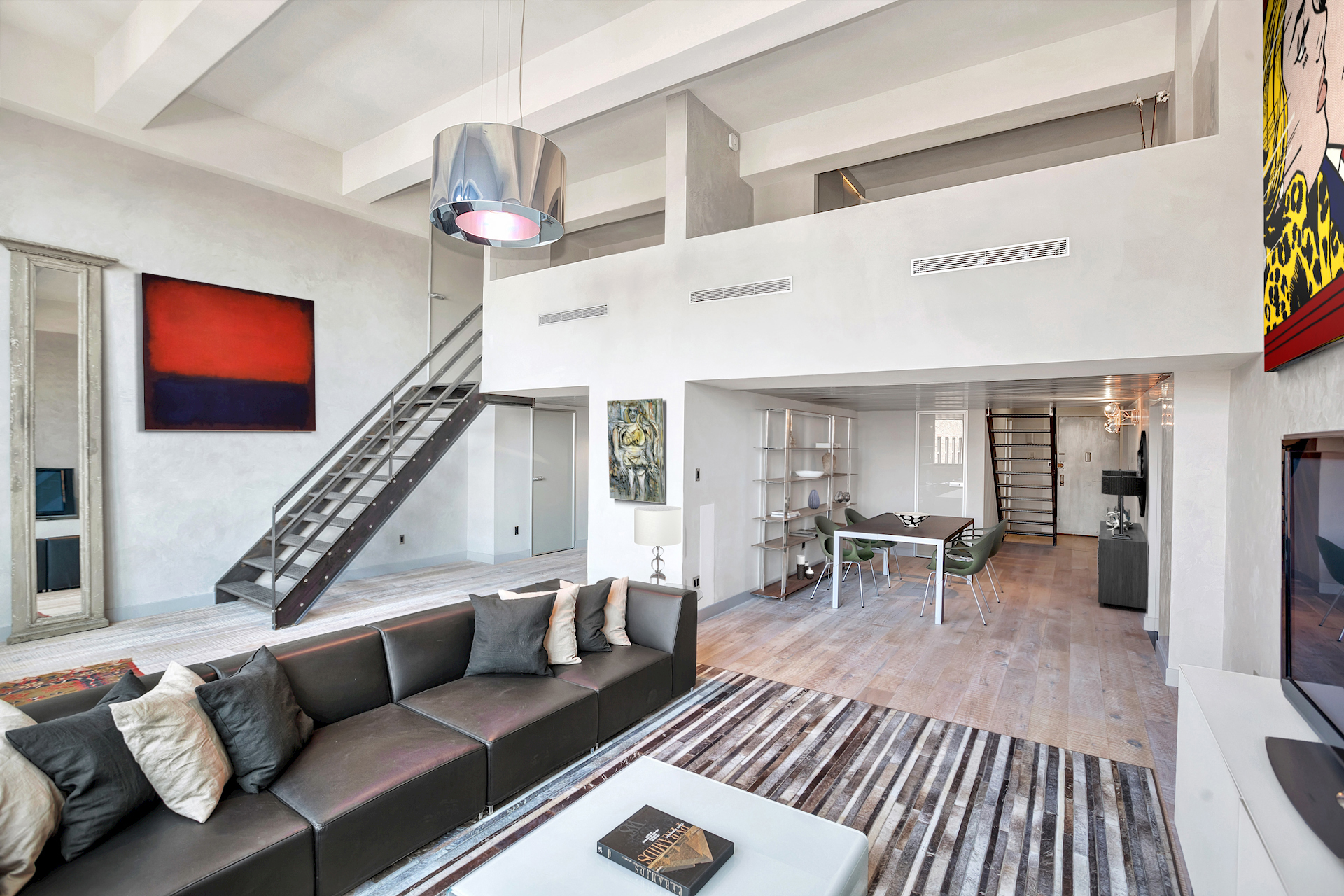
Indeed, the 2,000-square-foot layout of the duplex is the result of a two-unit combination, and it stays true to the industrial theme of the Printing House—that is, with an abundance of gray slate, stainless steel and frosted glass doors. 

A metal staircase just off the entry staircase leads directly up to the guest bedroom, which has a full, private en-suite bath with a distressed wood vanity, slate floors and bathtub, as well as a wall of closets.

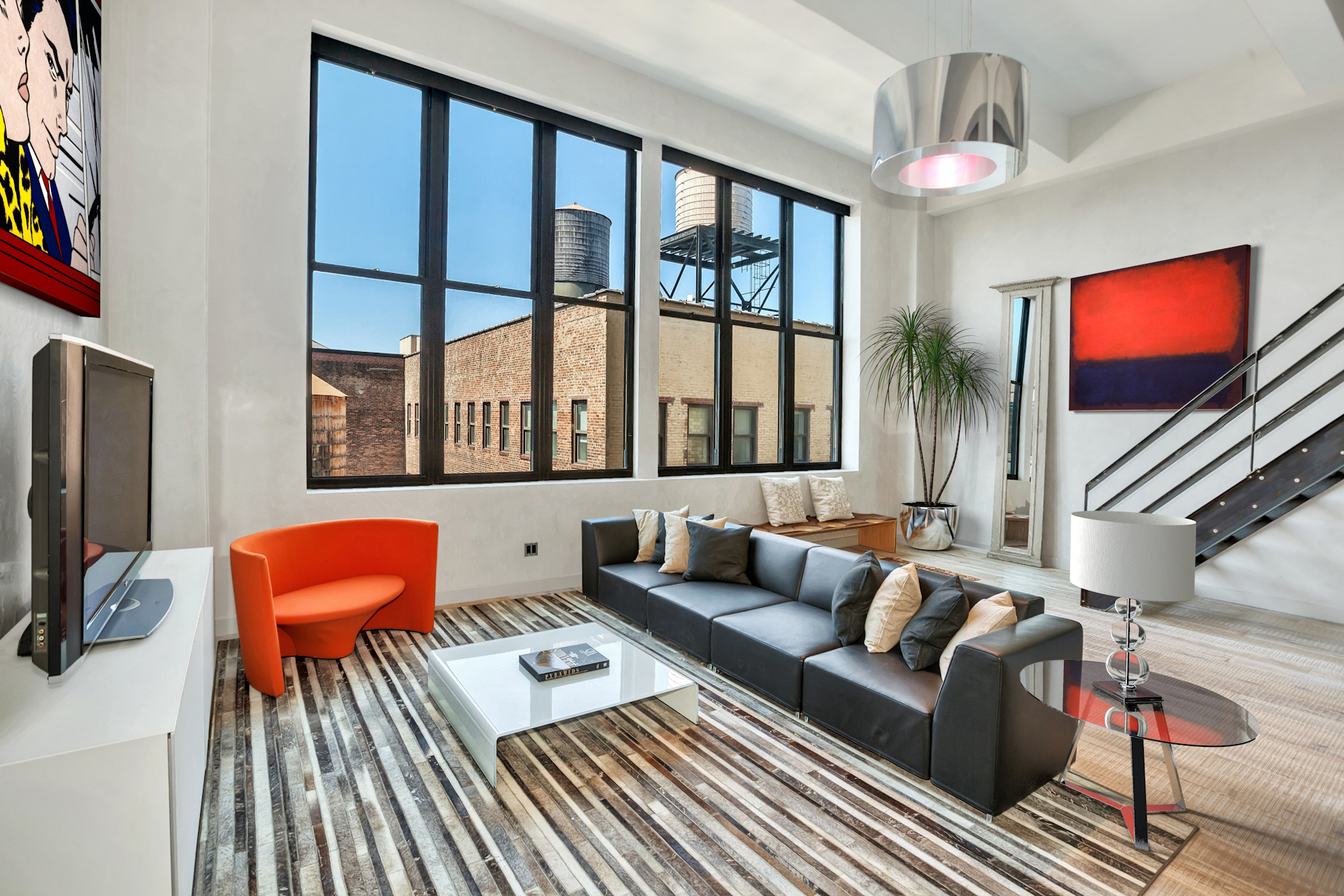
“The entire apartment is unique—this kind of avant-garde, industrial-slash-modern kind of feel to it,” Hoffman said, leading us into the living room of his $4.25 million listing, where double-height ceilings reach 15 feet and west-facing windows provide river views.

Venetian plaster and stucco walls complement the distressed white oak floors, which have “been run through a mill to create this grade,” Hoffman informed us. “It feels like it’s exfoliating!”

In contrast to popular open layouts, the stainless-steel-outfitted kitchen is closed off from the living area. An additional den is open to the living room, though it “could definitely be dedicated to a sitting room or another guest bedroom,” Hoffman opined, noting the full third bathroom for the area, as well as a powder room off the entryway.

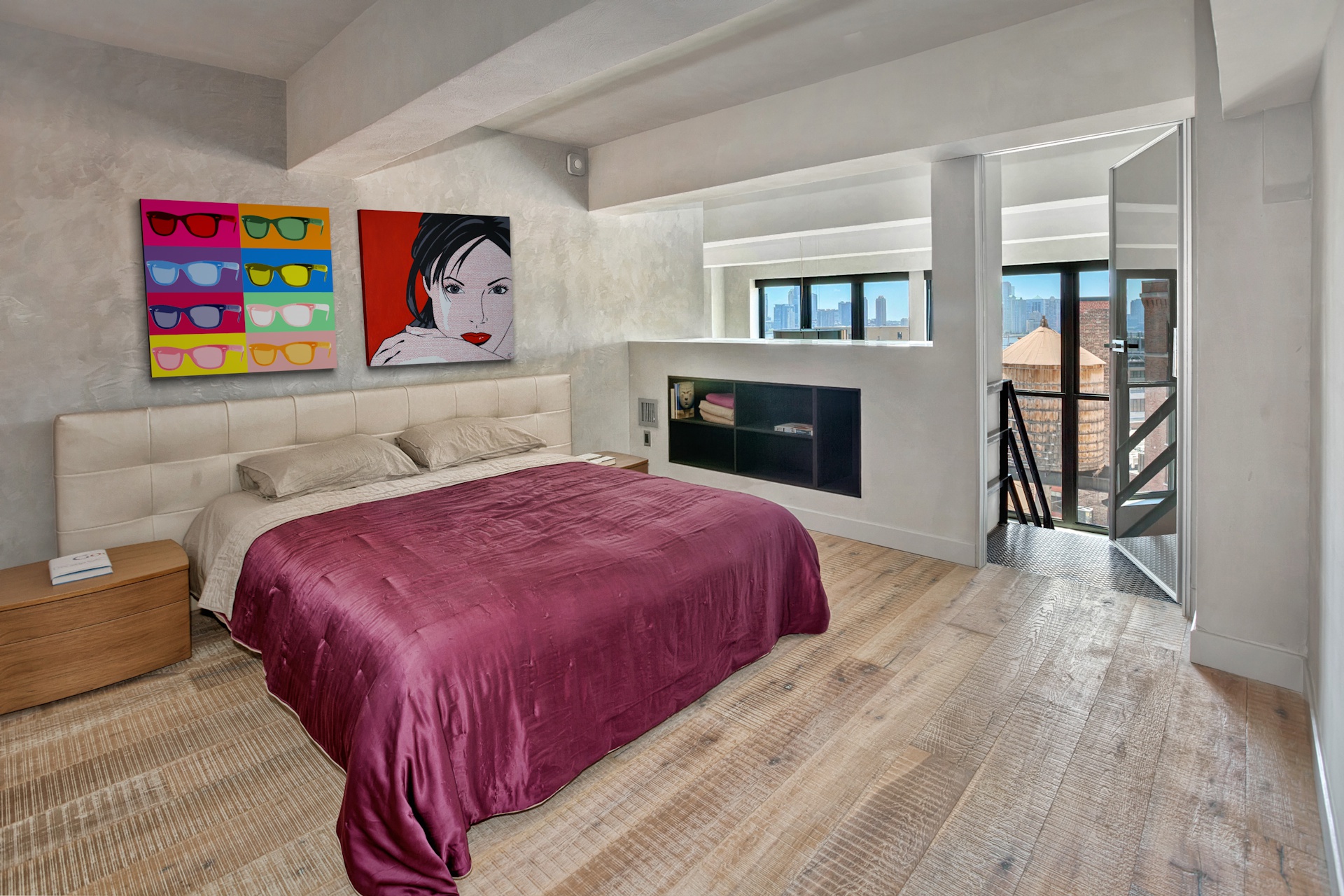
The master suite is accessed by another staircase and is complete with a four-fixture bath. “This is my favorite part,” Hoffman said excitedly, opening the door to the walk-in closet and revealing a “catwalk” over to the rows of custom shelves. Given the sidewalk grate-like nature of the catwalk, Hoffman said that heels are perhaps best kept toward the front.

“It might not be for everyone,” Hoffman admitted, descending the stairs and admiring the modern silver light fixture hanging from the ceiling, “but we’ve had every walk of life come through here, and they’ve all appreciated the property for what it is—the work, art and love put into it.”

Listing Information