Meg Ryan's Stunning SoHo Loft Just Came To Market For $10.9M

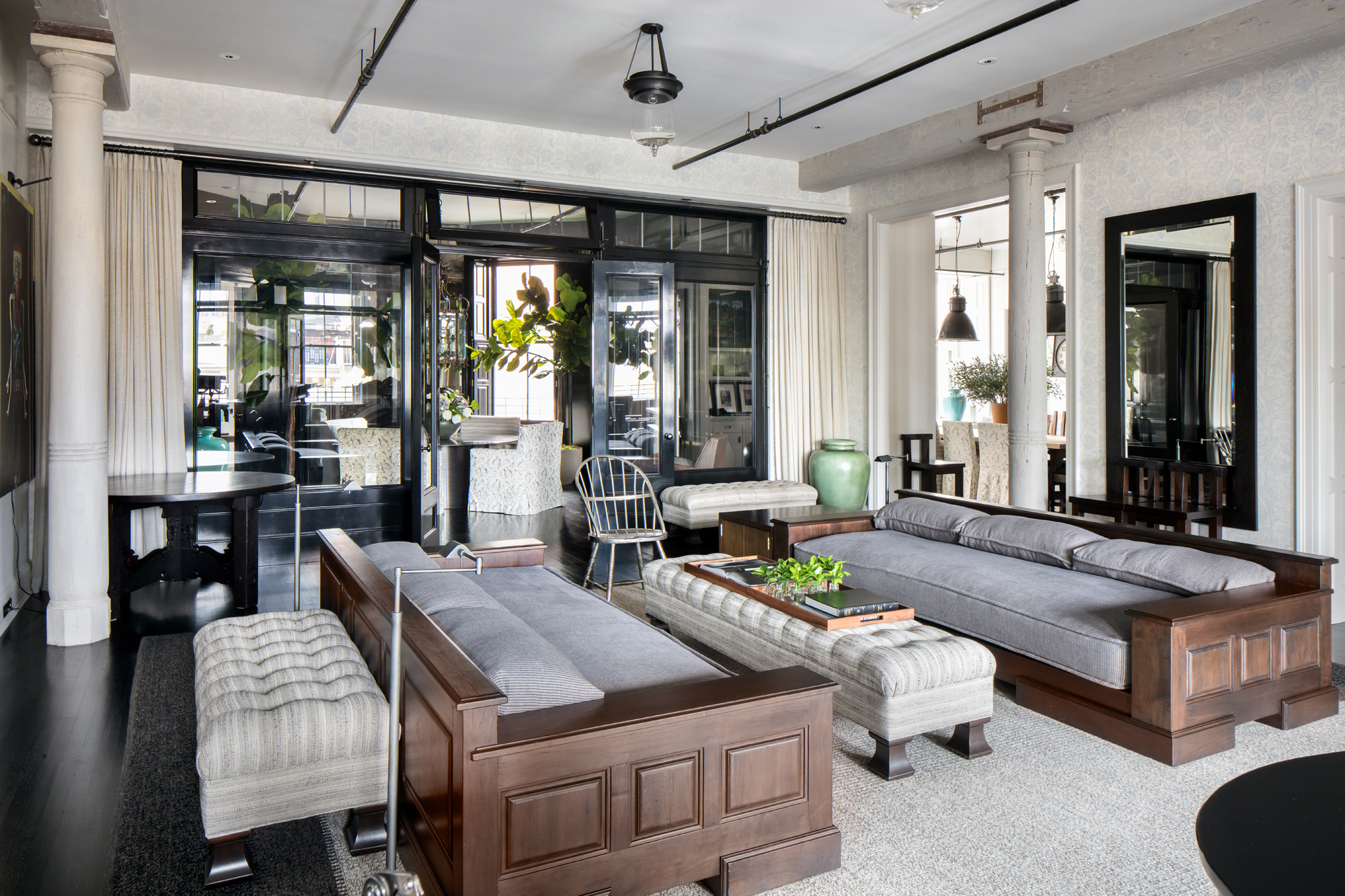
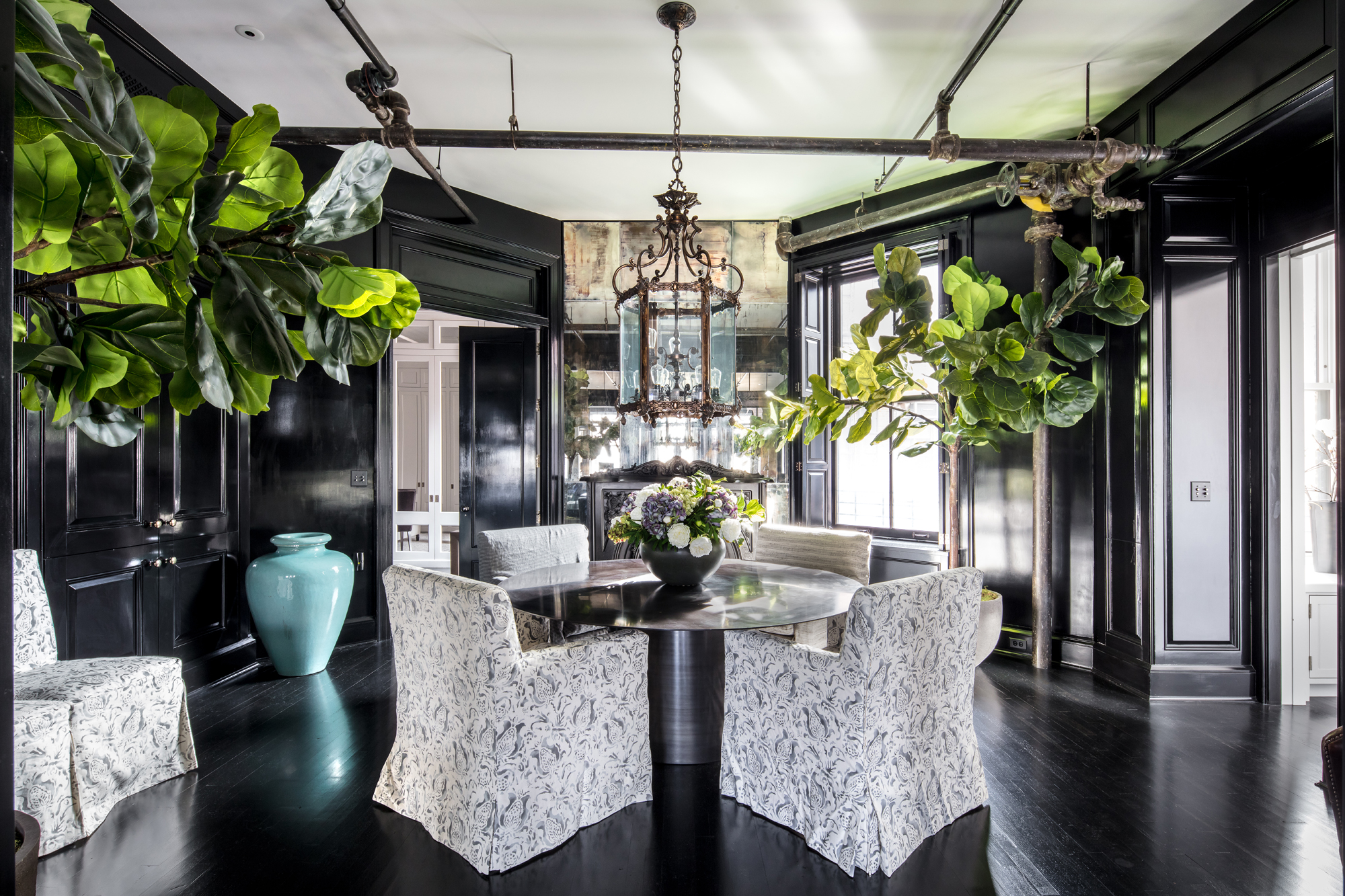
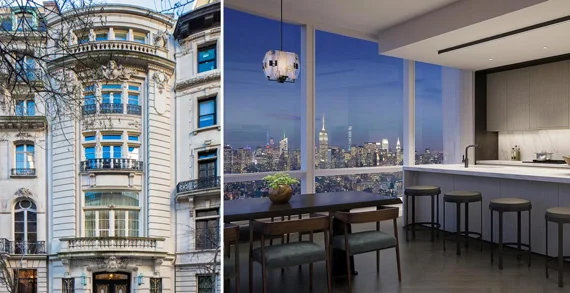
Fresh off a cover feature in the holy tome of celebrity interiors, the impeccable Soho loft of actress Meg Ryan has hit the market for $10.9 million. Ryan purchased the apartment from fellow celeb Hank Azaria in 2014—and he from artist Cindy Sherman—dropping $8 million on the 4,100-square-foot abode on Mercer Street. The classic loft was fine in its own right when Ryan moved in, but its been elevated with a gut renovation by architect Joel Barkley and designer Monique Gibson.

Ryan’s no stranger to redesigning spaces. The When Harry Met Sally actress told Architectural Digest that the loft is the ninth home she’s renovated. “I know it sounds crazy to most people, the idea of renovating that many houses. But I love renovating,“ she said. “I think it’s tied to living the actor’s life. As an actor, you are so rarely in control. [W]ith decorating I am in control; it’s a chance for me to bring my vision into the world.” She does it so often, in fact, that her son Jack has a name for it: the Megan-ize effect.

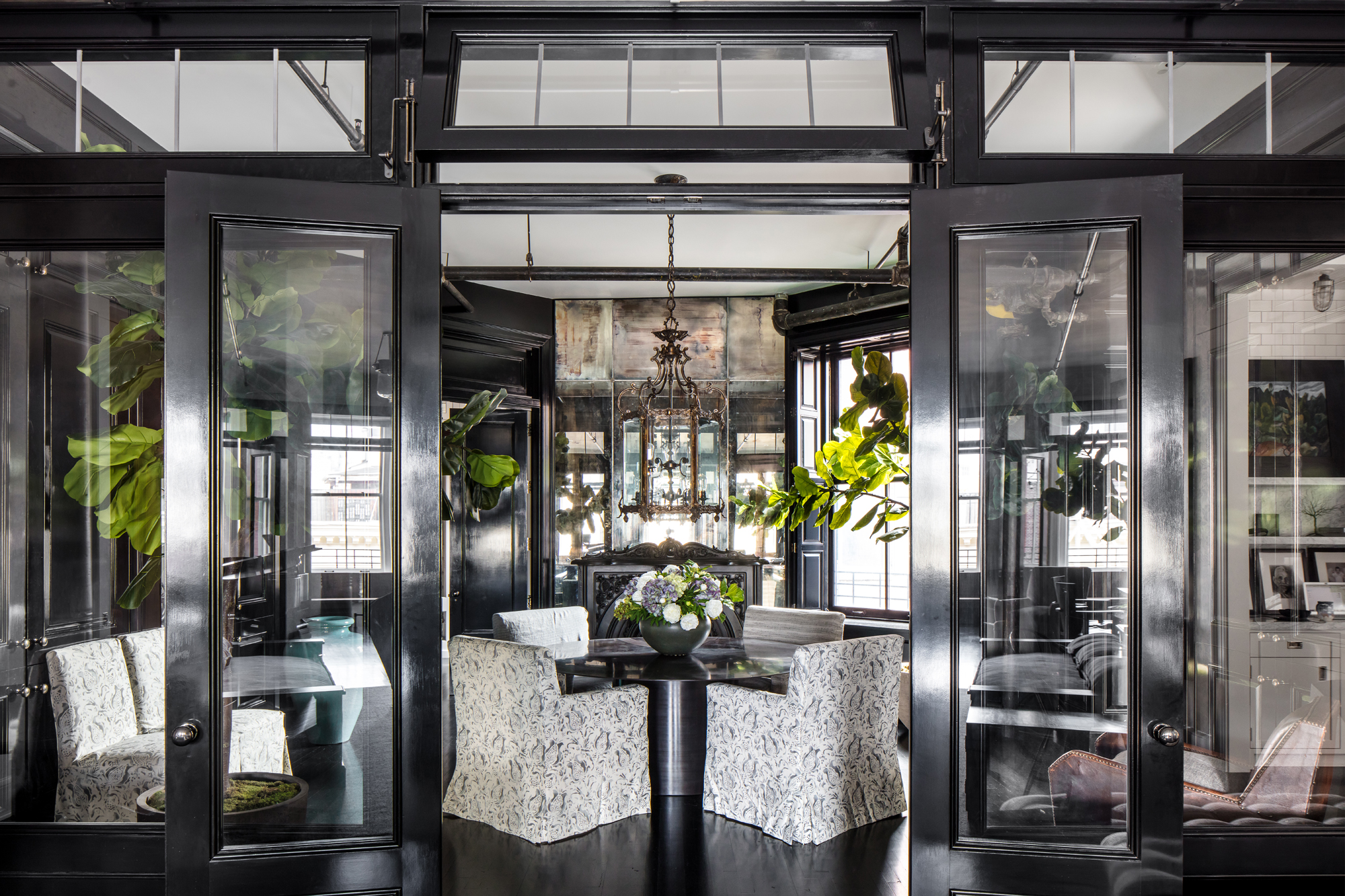
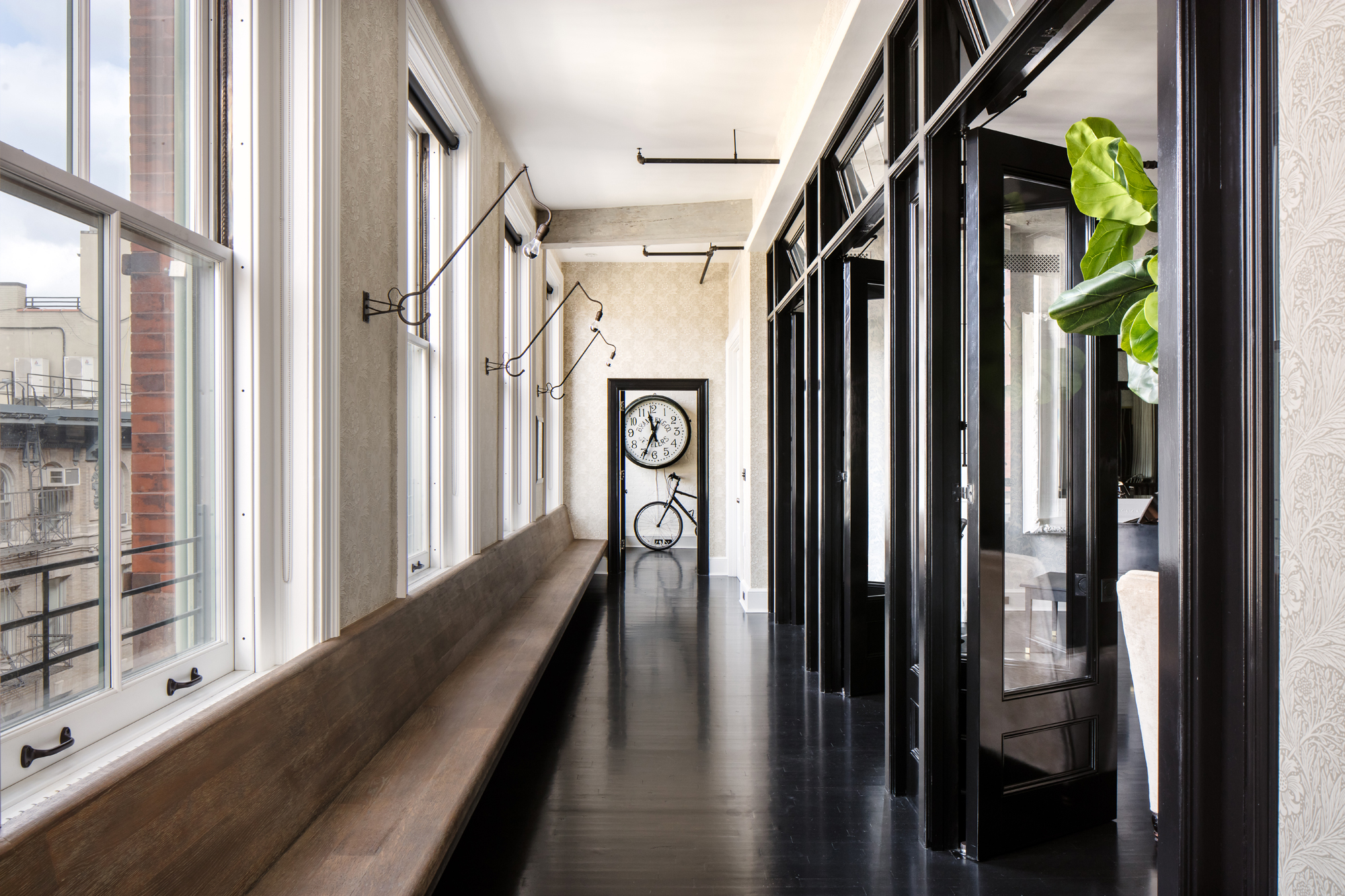
The Megan-ize effect is on full display on Mercer Street, where brooding hues and antique finishes meet. The apartment is a classic loft in that it has a flowing yet funky layout suspended by seven architectural columns. The keyed elevator opens up onto a 40-foot entry hall with five windows overlooking Mercer Street on one side, and a set of high gloss black french doors that lead into the living area on the other. A separate formal dining area with a marble mantled decorative fireplace can be found behind another set of french doors at the far end of the living room.

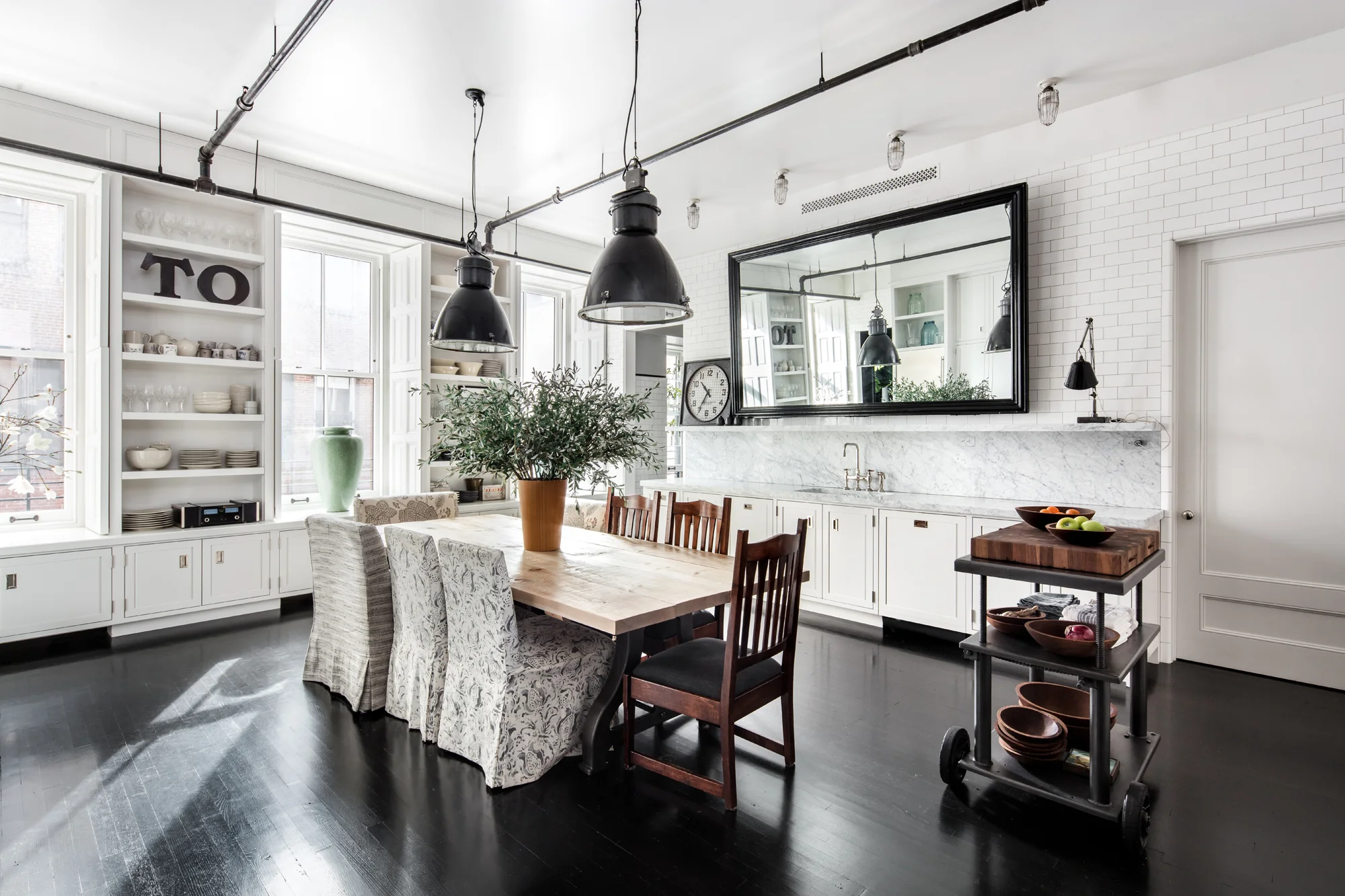
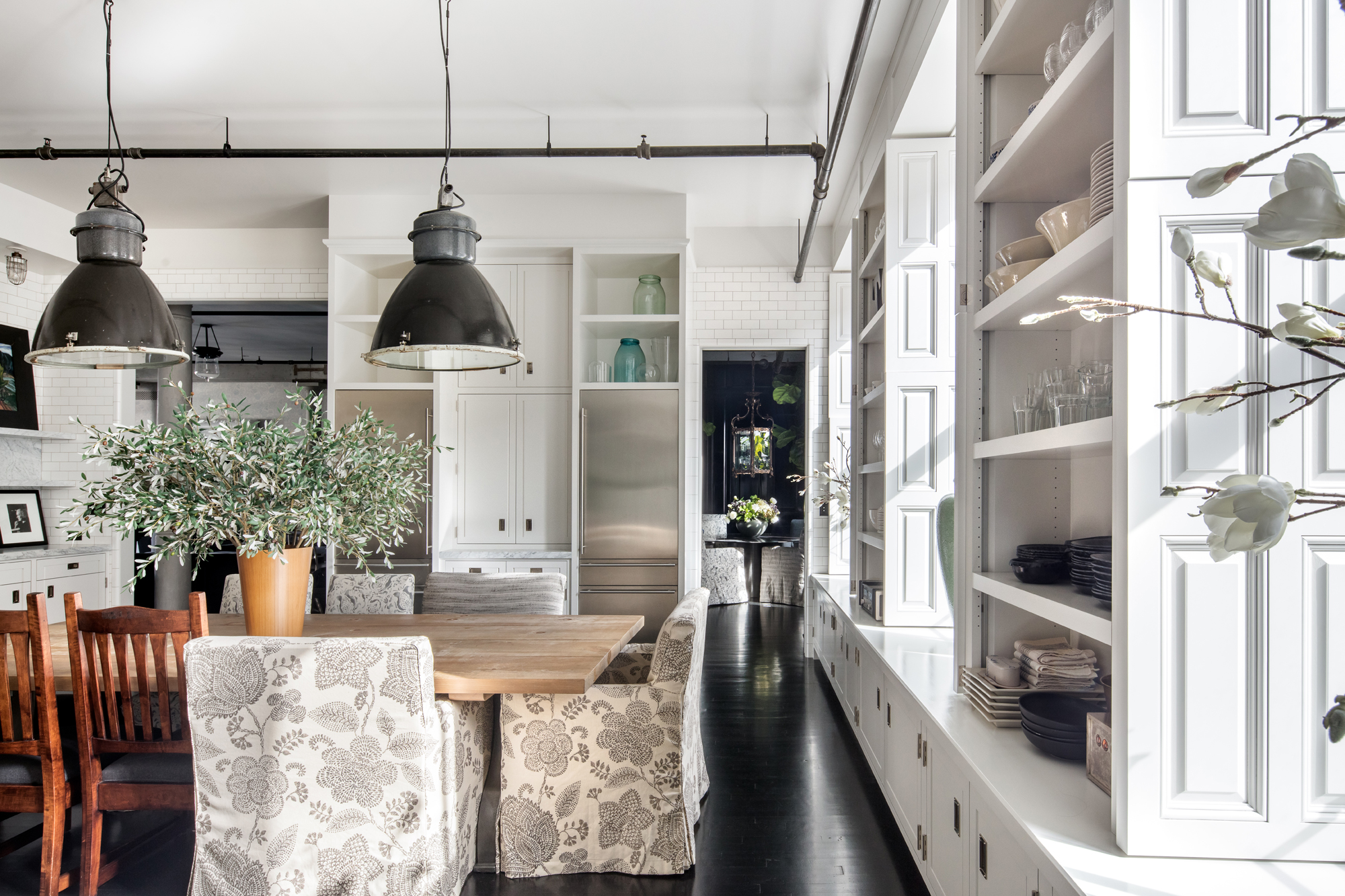
The loft’s kitchen includes custom cabinetry by Fine Woodwork, marble shelving and countertops, subway tile, and tons of built-in shelving. The appliances are what one would expect: a six-burner Viking range with a grill, two stainless steel refrigerators, and a Bosch dishwasher.

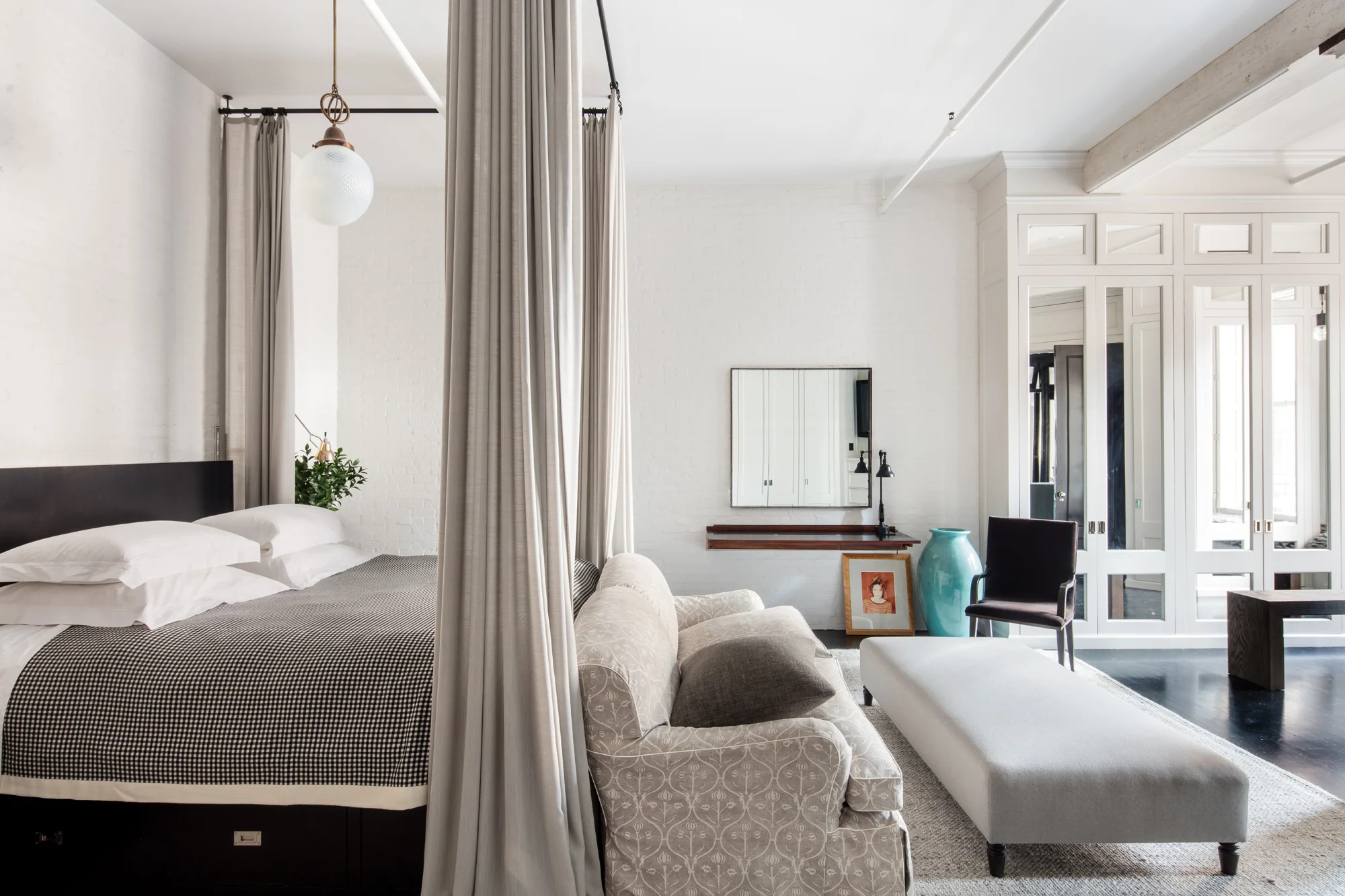
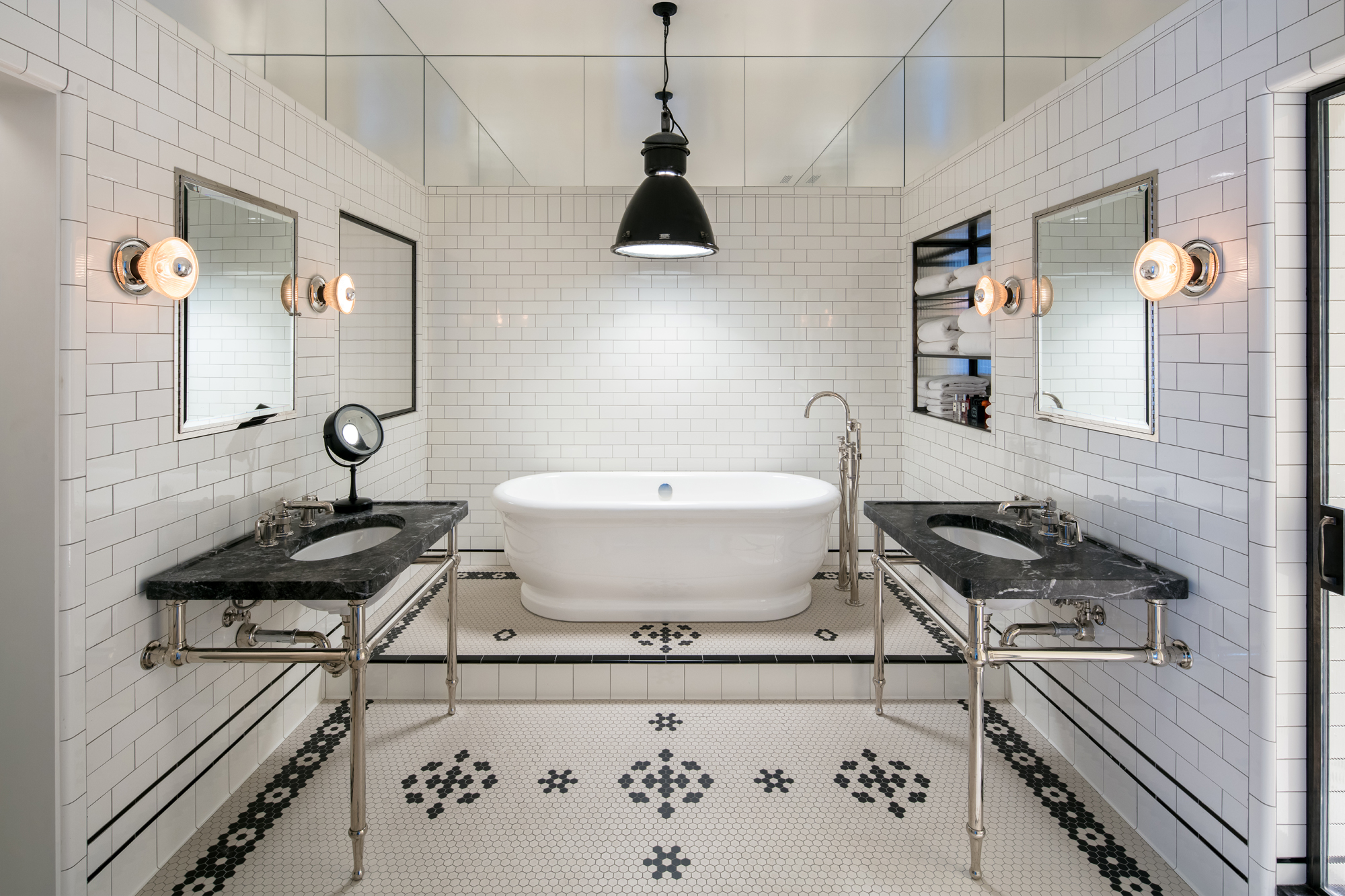
The master bedroom is found off of the formal dining room, and doesn’t include the oversized walk-in closet that has become so desired, but has eight smaller closets as well as a massive en suite bathroom with a free-standing tub designed by Water Monopoly and vanities by Urban Archaeology. The two additional bedrooms are smaller, each with their own bath. A media room can be found off of the living room.

Welcome To The Team!

Welcome To The Team!

Jaclyn B. Treinkman

Licensed Associate Real Estate Broker

jtreinkman@compass.com

M: 646.678.1889

For Jaclyn Treinkman, New York City real estate is a natural fit. She hails from a family of shrewd real estate investors and agents, and her parents are NYC natives. "Both of my parents are from the city, and my grandparents lived in the Village my whole life," she explains. 

With that solid base of city and real estate know-how, Jaclyn is devoted to thoroughly educating clients and calmly guiding them through the challenging New York real estate landscape. That means being accessible 24/7 and always striving to be the hardest working agent around. 

Former roles in ad sales and hospitality have honed Jaclyn's marketing savvy and elite customer service skills, but at its core, her hands-on approach is all about getting to know people's wants and needs, and matching them with the perfect New York City home. Known for her perseverance and meticulous nature, she gives 100 percent to every client interaction and prides herself on the long list of clients who have become close friends. 

A graduate of Penn State University, Jaclyn is an artist and maker at heart. In her free time, you'll find her indulging her passion for painting, travel, and flea markets.

Yellen Says More Interest-Rate Hikes Might Be Coming

Federal Reserve Chair Janet Yellen said more interest-rate increases will be appropriate if the U.S. economy meets the central bank’s outlook of gradually rising inflation and tightening labor markets.

“At our upcoming meetings, the committee will evaluate whether employment and inflation are continuing to evolve in line with these expectations, in which case a further adjustment of the federal funds rate would likely be appropriate,” she told the Senate Banking Committee in prepared remarks Tuesday.

Yellen’s semiannual report on monetary policy is her first since Donald Trump became president vowing to boost U.S. growth, which could push the Federal Open Market Committee to pick up the pace of rate hikes if such steps fan higher inflation. She reiterated that falling behind on inflation could harm to the economy and possible cut short the expansion.

“Waiting too long to remove accommodation would be unwise, potentially requiring the FOMC to eventually raise rates rapidly, which could risk disrupting financial markets and pushing the economy into recession,” she added.

Read Yellen’s Opening Statement

Yellen gave no indication of the timing of the next hike in her prepared remarks. Investors see about a 34 percent chance of an increase at the next meeting of the FOMC on March 14-15, up from about 30 percent before she spoke. Treasuries fell, U.S. stocks pared losses and the dollar rose.

The Fed, which has only raised rates twice since the recovery began in 2009, has penciled in three quarter-point rate increases in 2017, as the economy closes in on the central bank’s goals for maximum employment and 2 percent inflation.

Moderate Growth

Yellen said the Fed panel’s outlook for a “moderate pace” of growth is based on continued stimulative monetary policy, and a pick-up in global activity. She did not mention Trump administration proposals as a key element in the central bank’s forecast.

In response to questioning, Yellen said Fed policy makers will be discussing in coming months their strategy for the balance sheet, which swelled to about $4.5 trillion after the crisis from less than $900 billion in 2006 as the central bank sought to hold down long-term market rates.

She said she expects the balance sheet to end up being “substantially smaller” than it is now, with policy makers wanting to shrink in an “orderly and predictable way.” The Fed doesn’t want to use the balance sheet as an active policy tool and it should eventually be comprised primarily of U.S. Treasuries, she said.

On the economy, she said in her opening statement that consumer spending has continued to rise at a “healthy pace,” supported by gains in household income and wealth, favorable sentiment and low rates. The recent rise in mortgage rates “may impart some restraint” on housing markets, she said.

The Fed chief said changes in fiscal and economic policies could affect the outlook, though she declined to speculate how, adding that it’s “too early to know” what policy changes will be put in place. She urged lawmakers to focus on investments that would improve living standards and raise productivity while noting that she hoped any changes would keep fiscal accounts “on a sustainable trajectory.”

Reform Push

Trump’s victory could expose the U.S. central bank to reforms favored by his Republican party, which still controls both chambers of Congress. Yellen could previously rely on President Barack Obama, a Democrat, to shield with his veto any perceived encroachment on Fed independence.

The shift in power may force her to engage more with lawmakers than in the past. Republicans want to roll back post-crisis banking regulations enshrined in the Dodd-Frank Act, arguing it hurts growth by making credit scarce for small businesses. While Yellen did not mention financial regulation in her remarks, lawmakers had many questions on the issue as the hearing progressed.

In his opening remarks at the hearing, Senate Banking Committee Chairman Mike Crapo said “it is time to reassess what is working and what is not” with financial regulations, which need to “strike the proper balance” between the safety of the system and economic growth.

Trump’s opportunity to influence regulatory policy improved last week when Fed Governor Daniel Tarullo, who oversees bank regulation, announced his departure in early April. It also means that Trump can fill three of the seven Fed Board seats, where there are two existing vacancies, while Yellen’s own term as chair ends in February 2018.

Yellen gave an upbeat description of the labor market saying gains in recent years “have been widespread.” The unemployment stood at 4.8 percent in January.

The personal consumption expenditures price index, the Fed’s preferred price benchmark, rose 1.6 percent in the 12 months through December.

110 Third Avenue, Unit 10D


110 Third Avenue, Unit 10D

East Village, Manhattan

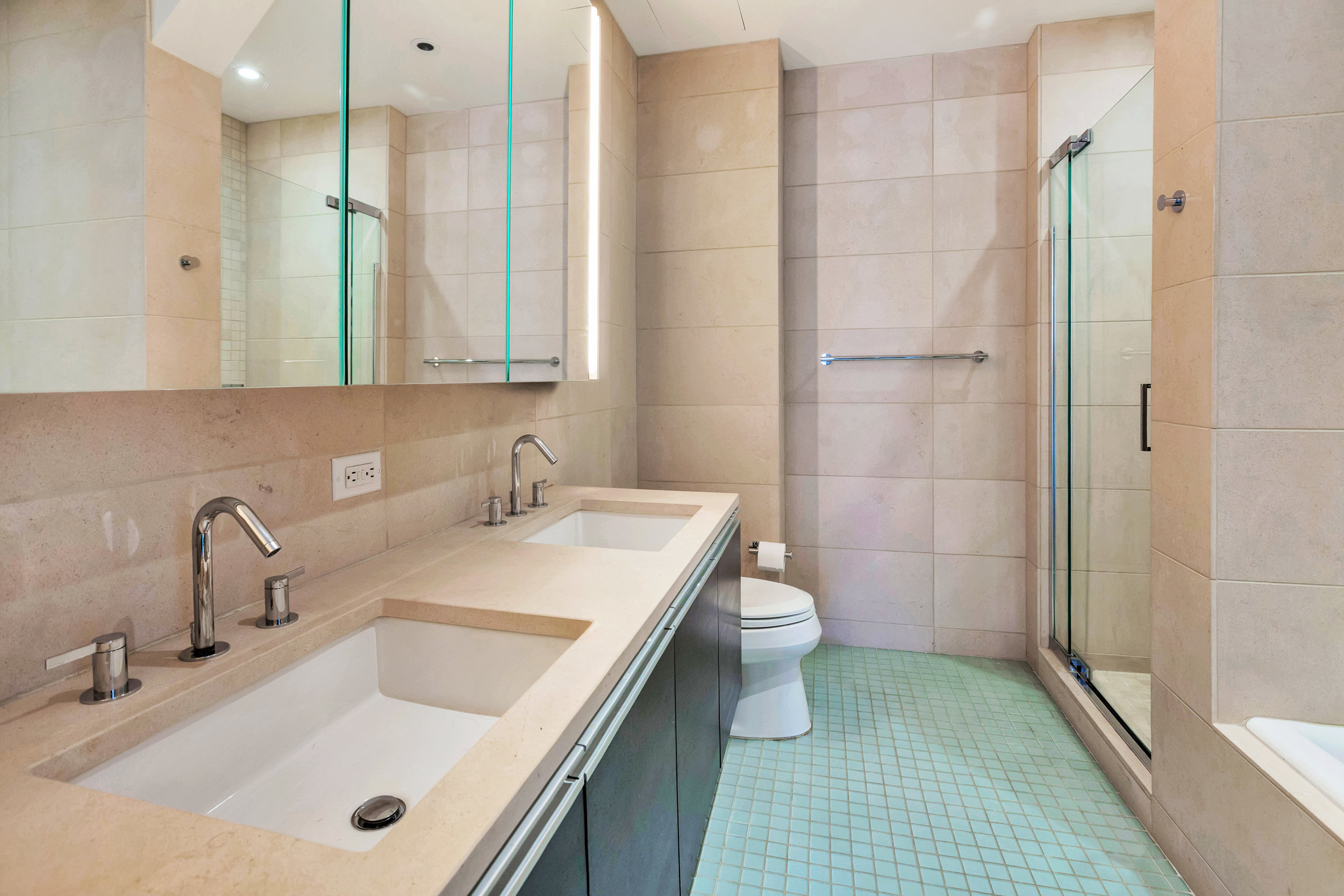
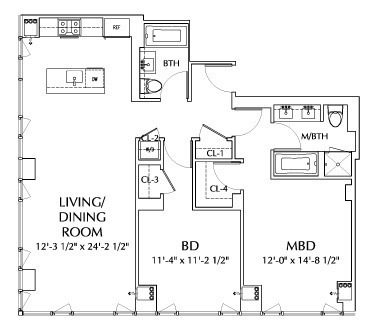
2 Bed  |  2 Bath  |  1,103 SqFt

Offered At $7,900 / mo.

Condo  |  Doorman  |  Gym  |  Roof Deck  


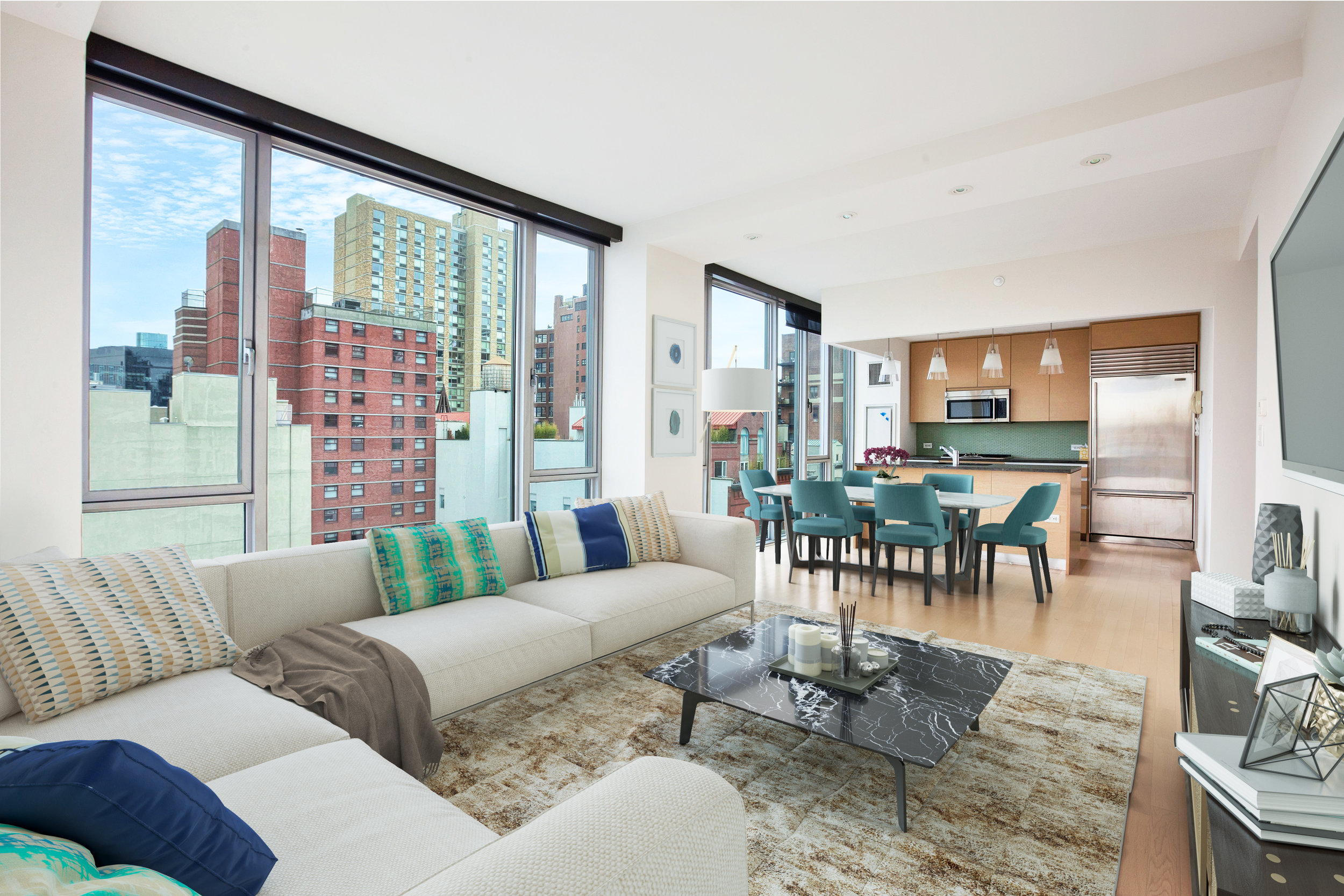
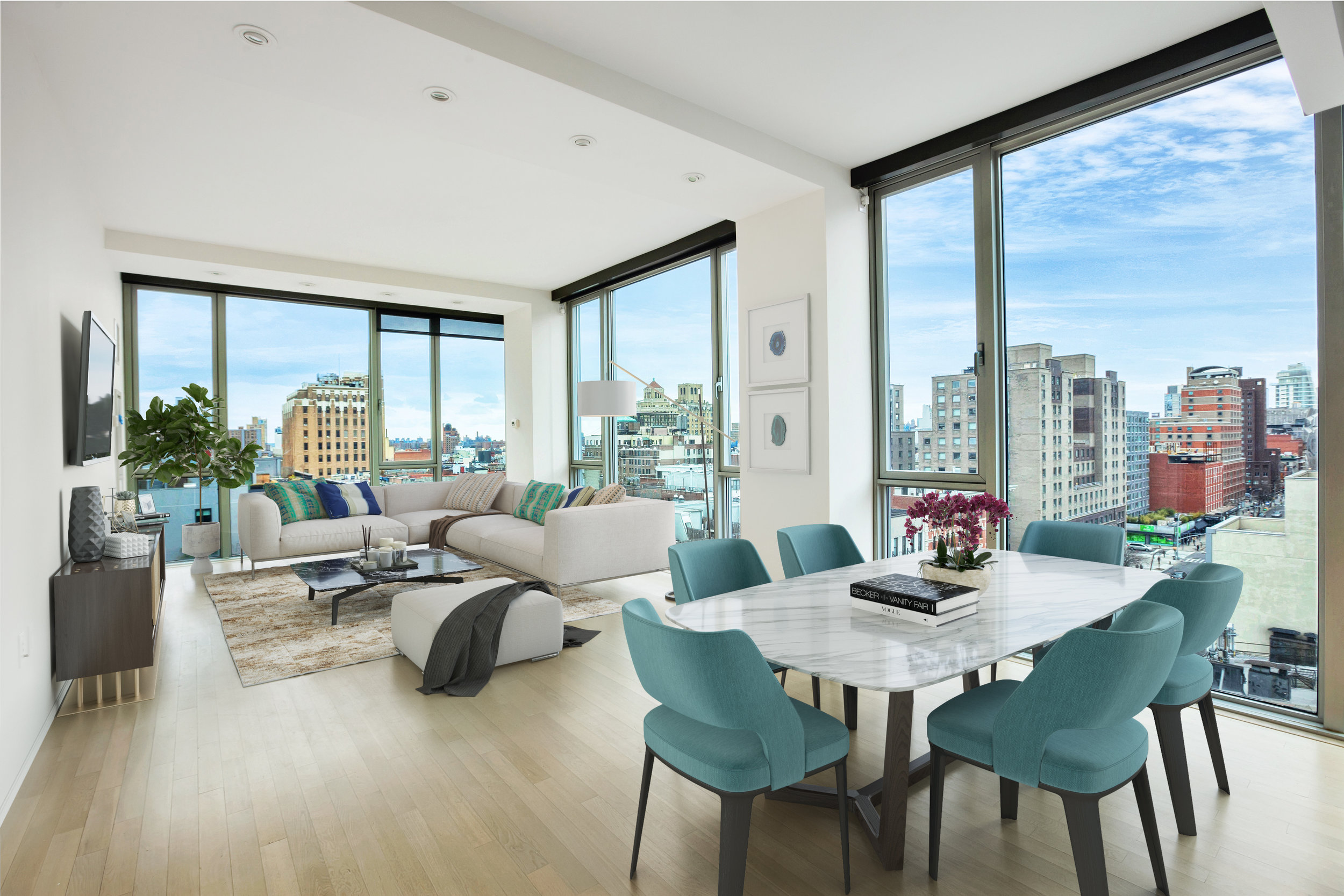
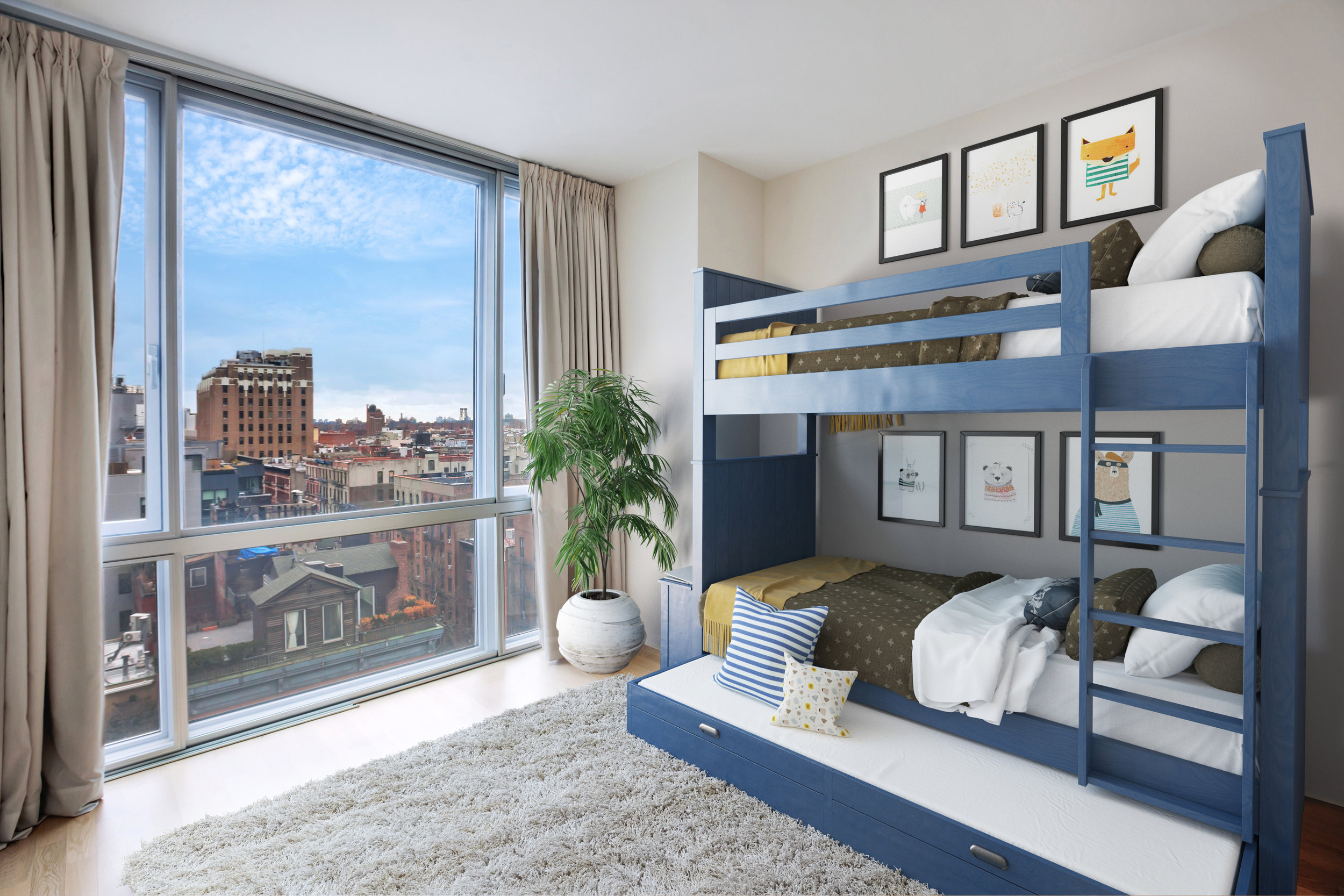
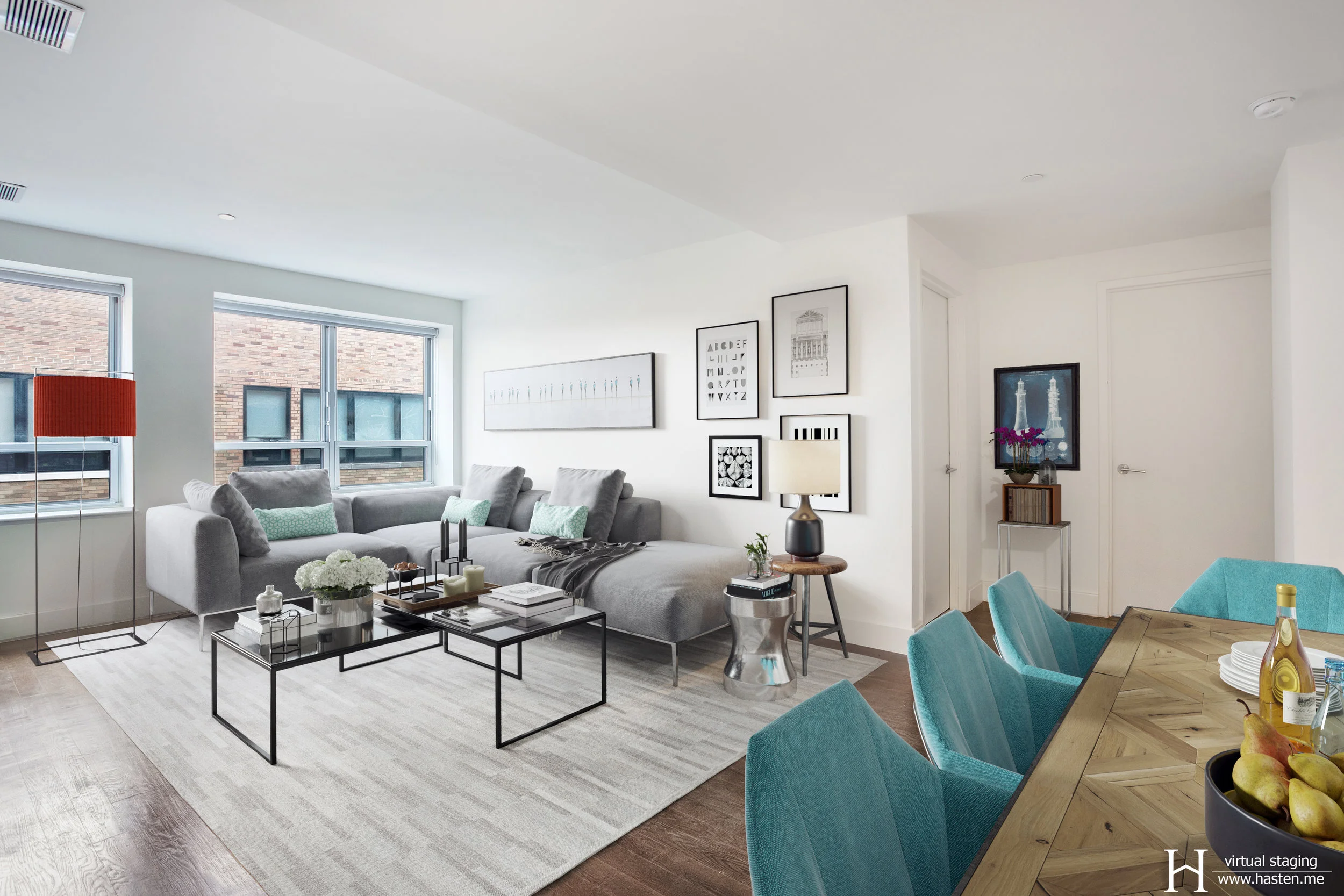
Enjoy open city views south and east from this corner unit with floor-to-ceiling windows.

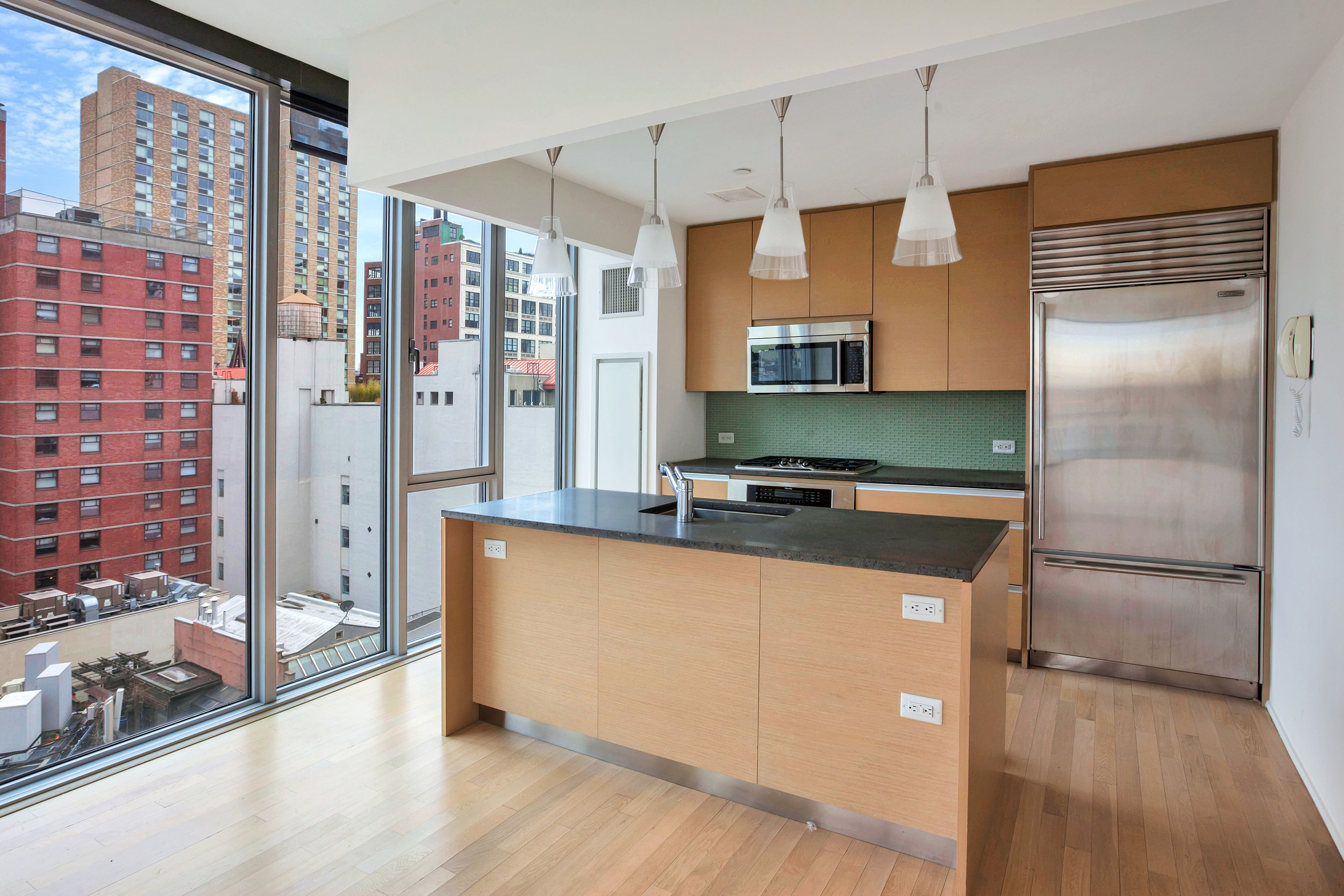
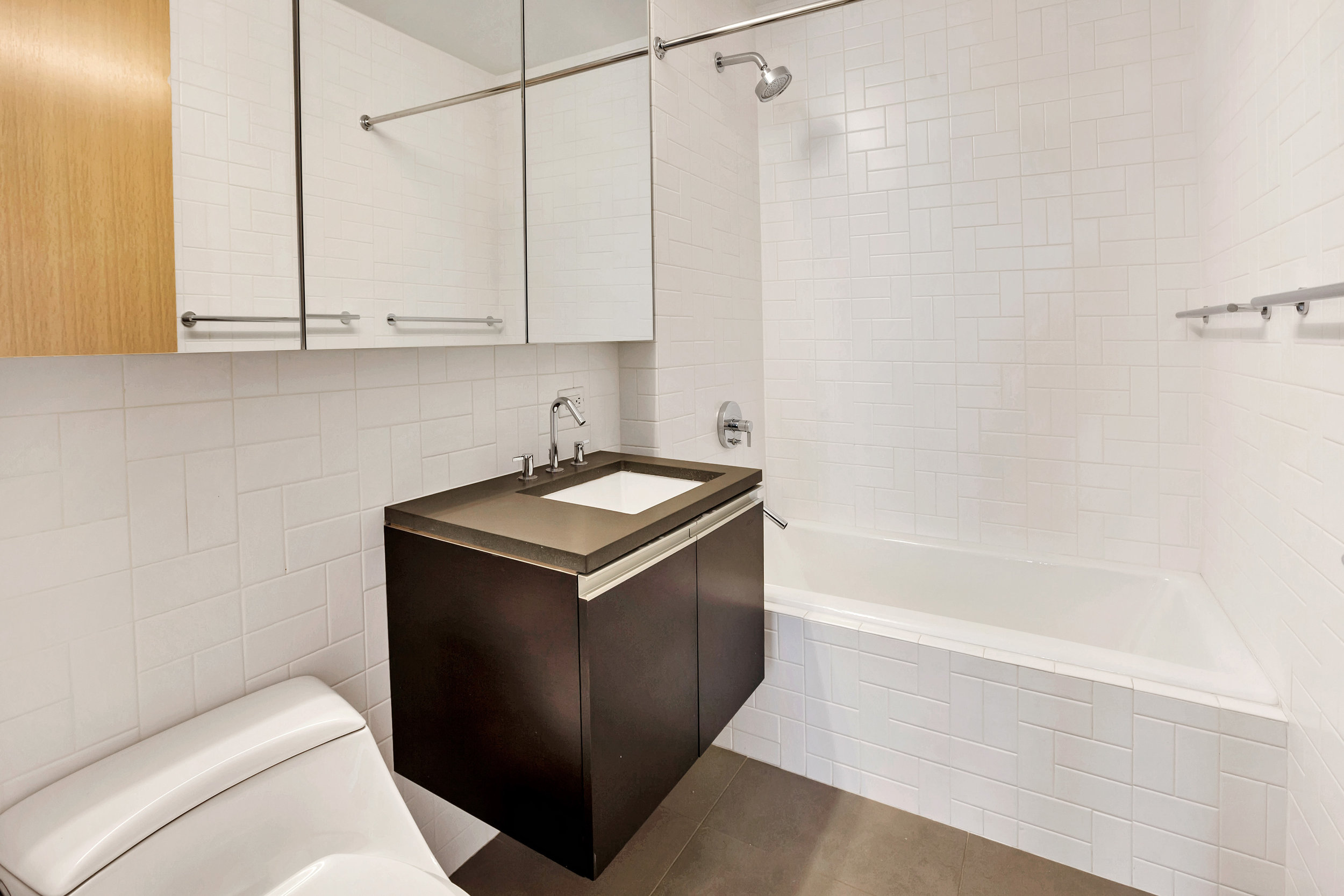
This open and modern unit features upgraded quite soundproof windows as well as motorized blinds. The beautiful oak floors run throughout the entire apartment. The true chef style kitchen opens to the dinning area and living room which creates a downtown loft feel to the apartment. Perfectly located between Union Square and the East Village. With amenities such as a fully equipped fitness center, landscaped common rooftop terrace, Fresh Direct certified refrigerated storage, full time concierge, and bike storage, its a perfect a fit. 


One-third Of All Manhattan Apartment Leases In January Included Concessions

New York City residential landlords are continuing to rely on renters’ incentives to keep vacancies at bay, a trend that is expected to become more widespread throughout 2017.

The number of leases with concessions reached new highs in January, according to the monthly rental report from Douglas Elliman. In Manhattan, 31 percent of all new leases included some form of concession last month, nearly double what it was a year ago. In Brooklyn, 18 percent of leases had concessions, compared to just 5 percent last year.

“Landlords are trying to strike a balance and that means fine tuning rents to fit market conditions,” said Jonathan Miller, CEO of appraisal firm Miller Samuel and author of the report. He predicts landlords will use concessions even more aggressively in 2017.

“I don’t think we’re at the end of this — nothing is changing and there’s a lot of product coming in,” he said. “The rental market is going to get weaker before it gets stronger.”

In Manhattan, the vacancy rate fell slightly from 2.3 percent from 2.8 percent in January 2016. That’s a sign concessions are working, although they are “painful for landlords,” said Miller.

The borough’s median rental price, after concessions, was $3,259, essentially the same as January last year. Softening in the market continues to be particularly acute at the high end. The median rent of a Manhattan studio was $2,600, a negligible change from last year. But for three-bedrooms, the median price was $5,500, a drop of almost 7 percent. While non-doorman median rent went up 2.8 percent to hit $2,800, the median price for doorman rentals fell back 1.2 percent to $3,750.

Luxury rentals, which account for the top ten percent of the market fell again this month, dropping 5.5 percent year-over-year to a median price of $7,595.

In Brooklyn, the effects of vast amounts of luxury rental product is also being felt. The median rent in the borough was $2,702, after taking concessions into account. That’s a fall of 2.8 percent compared to January 2016, when median rent was $2,779. Just like in Manhattan, the lower end of the market held firm or saw modest gains. But the two-bedroom median rental price was $3,025, a fall of 4 percent year-over-year. For three-bedrooms, it was $3,318, a fall of 8 percent. The luxury market dropped just under one percent to $5,119.

“In the last six months in 2016, you started to see a run-up in Brooklyn in the use of concessions,” said Miller. “Even though the concessions are still less than in Manhattan, the amount of concessions tripled over the year, whereas in Manhattan it doubled.”

The market in northwest Queens continues to be “choppy,” according to Miller. The median rent fell 2.4 percent year-over-year to $2,700. Out of all the leases signed last month, 38 percent included concessions. The concessions are driven by the uptick in new development rentals, which had a market share of 34 percent last month, more than double what it was this time last year.

It Might Cost The City $28M To Clean Up Yesterday’s Storm

For fiscal year 2017, the city budgeted $88 million for snow removal and has already spent $26 million. But yesterday’s dump of the white stuff could bring that number up to $54 million. DNAinfo reports that Comptroller Scott Stringer estimates it could cost NYC taxpayers between $19.9 and $27.9 million to dig out from Winter Storm Niko, which is based on the average of $1.99 million per inch of snow that the city has paid over the past 14 years.

Though parts of Queens got close to eight inches of snow, Central Park saw only five and most of Brooklyn between five and seven. Taking a median of six inches, this leaves the city with enough money to dig out 24 more inches of snow before the end of the year based on the average of $1.99 per inch. However, in fiscal year 2016, it cost an average of $3.28 million per inch of snow, and in 2014, removal costs hit an all-time high of $130.6 million.

These costs come in addition to the $21 million the city spent purchasing new equipment like smaller salt spreaders and snow haulers to accommodate narrow streets in Queens and Staten Island, bringing the total number of pieces of snow equipment to 2,300. In a statement Stringer said, “It’s always important to remember that snowstorms cost money, and the more transparent we are about those costs, the better we’re able to budget in the future,” Stringer said in a statement.

Biggest Price Cuts On Luxury Units This Week

Price chops in the city’s ultra-luxury market are showing no signs of slowing down.

In total, 15 properties in the over-$10 million market saw a discount of more than 5 percent in the period between Jan. 31 and Feb 6, according to data provided by StreetEasy. 

The biggest reduction was at One Madison Park, where a two-floor condominium had its asking price slashed by a whopping $5.5 million, or 17 percent.

Here’s a look at the biggest price cuts in New York City’s luxury market last week:


23 East 22nd Street, 55/56

23 East 22nd Street, 55/56
Previous Price: $32 million
Current Price: $27 million ($4,070 per square foot)
Percentage Drop: 17 percent

This five-bedroom, five-bathroom “showcase” apartment at One Madison Park was first listed in May 2015, asking $37 million. It was pulled from the market just a few days later, and returned in April last year with a $32.5 million price tag. Last week, the apartment at the Related Companies, CIM Group and HFZ Capital Group-developed property was reduced by $5.5 million, or 17 percent.

The 6,620-square-foot apartment, offered as raw space only, spans across two full floors, according to the listing. If you do happen to have $27 million to spare, buying this apartment would put you in pretty close proximity to Rupert Murdoch. In 2014, the media mogul paid $57.3 million for the four floors above this particular pad, including a triplex penthouse and a three-bedroom on the 57th floor. He listed the penthouse for $72 million in 2015, but yanked it from the market a year later.

CORE’s Jim St. Andre has the listing. He wasn’t available for comment.


151 East 58th Street, 47A

151 East 58th Street, 47A
Previous Price: $13.9 million
Current Price: $12 million ($3,922 per square foot)
Percentage Drop: 14 percent

The owner of this One Beacon Court condo is Scott Kurnit, chair of shopping website Keep.com. But if this recent discount is anything to go by, he may be keeping this 3,000-square-foot home.

Kurnit put the pad up for sale last November with a $13.9 million asking price. Last week, $2 million, or 14 percent, was lopped off the asking price.

The three-bedroom, three-bathroom apartment has floor-to-ceiling windows, 11-foot-high ceilings, custom flooring, views of the city and Central Park, a kitchen outfitted with top-of-line appliances and custom closet spaces.

The Vornado Realty Trust-developed building is also home to another notable price reduction. Billionaire hedge funder Steven Cohen has been trying to find a buyer for his apartment there since 2013. Its asking price has been dropped from $115 million down to $72 million over the years.

Compass’ Victoria Shtainer and Gabriel Zapata have the listing. The brokers could not be reached for comment.


535 West End Avenue, HiFlr

535 West End Avenue “Hiflr” 
Previous Price: $22.7 million
Current Price: $20 million ($2,366 per square foot)
Percentage Drop: 12 percent

This high-floor apartment — as it’s known for privacy reasons — spans 8,450 square feet across seven bedrooms and seven bathrooms, and features custom herringbone hardwood floors, a corner library, a formal dining room and a butler’s pantry. First listed in August last year, according to StreetEasy, the apartment at the Extell Development building was slashed by $2.7 million last week.

Adam Modlin of the Modlin Group has the listing. He declined to comment.


56 East 66th Street

56 East 66th Street
Previous Price: $17.9 million
Current Price: $16 million
Percentage Drop: 11 percent

This 8,000 square foot townhouse has eight apartments across five floors. It could, however, be turned into a single-family mansion with a limestone facade, six bedrooms, five bathrooms and an eat-in kitchen. There’s also potential for fireplaces, a “dramatic” open staircase, a private garden and an elevator, according to the listing.

Built in 1905, the townhouse was on the market for $17.9 million in October, but was dropped down to $15.9 million. It’s claim to 15 minutes of fame? Andy Warhol lived close by at number 57.

The current owner used an LLC to buy it for $14 million in 2015, records show.

Lisa Simonsen and Kristin Lukic of Douglas Elliman have the listing. Neither brokers were available for comment.


720 Park Avenue, #23C

720 Park Avenue, 23C
Previous Price: $22.5 million
Current Price: $20.1 million
Percentage Drop: 11 percent

The chance to own a pad in one of the city’s most exclusive co-op buildings just got a little cheaper — but it’ll still set you back $20 million. Apartment 23C at 740 Park Avenue is a six-bedroom, six-bathroom duplex spanning nearly 7,000 on the second and third floors. The apartment is owned by Mark Magowan, the president of publishing house Vendome Press, and his wife Nina, according to the New York Times. They bought the apartment in 1986. It features a circular staircase, four reception rooms, a gourmet kitchen and breakfast room.

It’s not the first time a expensive pad at the building has been slashed in price. In November, hedge funder David Ganek cut the price of his place at 6/7A, where a young Jacqueline Bouvier lived with her parents in the 1930s, back to $29.5 million. It’s still on the market, according to StreetEasy.

The Trump boost has been helping lately, so I’m encouraged,” said Kirk Henckels, of Stribling, who has the listing with colleague Jennifer Callahan. “The ultra-luxury market has not been good for the last six months or more, but we had as many showings in the past ten days as the first ten days after it hit the market.”

$60 Iceberg Water

Harrods, the famous department store in London, is a cabinet of curiosities when it comes to luxury. Now it is preparing to launch Svalbarði “luxury water”, at £50 ($63) a bottle if there ever has been such a thing. 

The product was conceived by Jamal Qureshi, a Norwegian-American Wall Street businessman when he visited a remote Norwegian island in the Svalbard archipelago in 2013 and brought back melted iceberg water as a gift for his wife.

A few years later, he got an approval from the governor of Svalbard and now charters an icebreaker and harvests the icebergs in Kongsfjorden, 1,000 kilometers from the North Pole. Once 15 tons of ice is collected by the crew, it’s melted and bottled by hand. The company says that only micron filters and UV light are used to preserve the water’s natural composition and pure taste. The water is almost entirely mineral free, with no nitrates or pollutants.

There are two expeditions per year, producing 13,000 bottles each time. Each batch will be sold as a limited edition.

The aerial view of Svalbard.

The 750ml bottle looks more like a bottle of wine than water. The mint-colored ring around the top symbolizes the polar rings and the wooden bottle top symbolizes drift wood.

Harrods was chosen as the first store to stock this product and the global launch is scheduled for February 15.

If you’re looking for something unusual other than packets of tea or chocolates on your next visit to the Harrods Food Hall, the Svalbarði water is certainly uncommon. Can a bottle of water be worth £50 ($63)? That’s for you to try and decide.

Svalbarði will be exclusive to Harrods for now but can be shipped worldwide.

Samantha Bee Gets New $3.7M Riverside Drive Co-op

Now that political commentator Samantha Bee is into her second season hosting “Full Frontal” it looks like she wants to put down some permanent roots near the show’s west side studio at CBS. According to city records, she and her husband, fellow comedian Jason Jones, dropped $3.7 million on a somewhat basic Riverside Drive co-op.

The top-floor home home has lovely details like beamed ceilings, picture moldings, and hardwood floors. A bright living space is anchored by a marble mantle that was original to the Plaza Hotel. Through glass-paneled French doors is a less formal den, which features a custom walnut wall unit.

Directly adjacent to the living room is the dining area, which is open to the eat-in kitchen.  Here you’ll find granite counters, a large island with a table attachment, high-end appliances, and a farmhouse sink.

Glass-paned French pocket doors lead to the other wing where there are four bedrooms–perfect since Bee and Jones have three children. The master has another custom built-in walnut wall of cabinetry and its own half bath.

It appears that the co-op is move-in ready, so Bee will have plenty of time to work on her Not the White House Correspondents’ Dinner.

Most Beautiful NYC Homes To Hit The Market Last Week

Every week, Curbed covers dozens of market listings that vary in price, location, size, grandeur, quirkiness, and other distinct characteristics. If they managed to capture our attention, that means there’s definitely something special going on. But some of these homes are so lovely that they warrant a special kind of notoriety as some of the prettiest homes currently up for sale in New York City. And so, here it is: five listing that have that special "je ne sais quoi" that separates them from the rest. Happy gawking!

↑The brokerbabble calls this Williamsburg two-bedroom duplex “the ultimate loft space, a rarity these days,” which, okay, sure. The apartment itself is pretty nice, if not the ultimate loft space: it has positively enormous 18-foot ceilings, with exposed brick walls that hark back to the building’s past as a former factory, and pretty stellar views of Manhattan and Brooklyn.

↑Designed by Parish & Schroeder and built in 1898, this magnificent Upper East Side mansion, asking a whopping $45 million, has six bedrooms, more than seven bathrooms, two galleries, a wine cellar, solarium, and even a card room linked to the library via a secret passageway.

↑With striking details, a celebrity pedigree, and views of the Met, the park, and the Chrysler Building, this $4.295 million pre-war co-op is about as Upper East Side as it gets. It was also once the home of pioneering TV personality Julia Meade.

↑$35 million buys you this 10,000 square foot Upper East Side townhouse featuring “elegant yet comfortable modern day living.” That means six bedrooms, including a master suite with his- and hers- dressing areas; endless living spaces; a grand spiral staircase; eight and a half bathrooms; and a caretaker’s apartment on the cellar floor. The home also boasts a “lush” rooftop garden, centrally controlled sound, heat, and lighting systems.

↑A Chelsea townhouse that we’ve previously labeled one of Chelsea’s strangest homes, and the Wet and Wild ‘Pool House’ is now back on the market for the umpteenth time, and it’s asking $13.8 million for its quirky spread. So what makes this six-bedroom townhouse so over the top? Take for instance the the saltwater swimming pool in the middle of the living room, into which an 18-foot high waterfall drains, or think of the double height solarium that leads to a manicured garden, and there’s more...

Best Countries To Live In If You’re Super Rich

Even the super rich are feeling a bit down on America right now. So for anyone with a spare million or billion dollars who is looking for an escape route, the folks at Lotto Land have put together this handy-dandy infographic that shows the best places to live for the super rich.

The typical contenders are all there: Saudi Arabia, Australia and Norway all take top slots. But there are also few surprises thrown in like Bahrain, Canada, Brunei and even the United States in a few categories (we’re number 10 for purchasing power, wahoo?). Scandinavia swept the rug in the Better Life category, while the Middle East took most of the slots in the best tax rates for the rich bracket.

Overall, the best country for the super rich to live in is Australia, followed by Switzerland, Saudi Arabia, Norway, Denmark, Canada, New Zealand, Brunei, Bahrain and Germany. See below for all of the rankings.

De Blasio Pushes Again For New 2.5% ‘Mansion Tax’ On Sales Over $2M

Mayor De Blasio will renew his call for a “mansion tax” before this state Legislature in Albany today, reports Politico. In support of rent subsidies for 25,000 low-income senior citizens, the mayor has detailed a proposal that will raise the property transfer tax to 2.5 percent for any sale above $2 million. “We are asking for some basic tax fairness from the wealthiest New Yorkers so low-income seniors can afford their rent and continue to call the greatest city in the world their home,” the mayor said in a statement.

As Politico is quick to point out, the proposal is expected to struggle for Legislative support in the state capital. In 2015, the Mayor asked a similar tax be rolled into negotiations of the 421-a tax abatement that expired early last year, where sales over $1.75 million would be taxed 1 percent, and sales over $5 million would see a 1.5 percent tax. The increased rates would have provided another $200 million a year in revenue to be directed towards affordable housing initiatives, but the idea was rejected by state lawmakers.

As it stands, home sales over $1 million are subject to a 1 percent tax. The city’s Office of Management and Budget estimates 4,500 homes will sell for $2 million or more in the upcoming fiscal year, which would mean another $336 million in revenue for the city if the proposal were to be adopted.

Regardless, flop or not, the call alone will do a lot to enliven De Blasio’s supporters.

“DOA,” said one real estate official to Politico. “But it works for the mayor in terms of running for re-election and is a red meat issue for much of his base.”

Indeed, the mayor is up for re-election this year, and similar to his first campaign, he’s taken on affordable housing and income equality as his mantles. De Blasio also counts seniors as one of his most reliable voting blocs, many of whom have organized to support his previous housing proposals.

[Via Politico]

Map Reveals How Manhattan’s Working Population Moves From Home To Work In 24 Hours

Odds are if you’re reading this post right now, you’re probably at work in Midtown.

Created by Joey Cherdarchuk, “Breathing City” is a hypnotic visualization that tracks Manhattan’s working and resident population as they move from their home to their office.

To build the map, Cherdarchuk pulled population, employment, land use and building footprint data from the U.S. Census Bureau and New York City Planning, and plotted it against a breakdown, hour by hour, of what the Bureau of Labor Statistics deems a “typical” workday for the average American (“Manhattan probably has a different profile than the US average, but close enough,” he admits).  

Per Cherdarchuk, the roughly 1.5 million people living in Manhattan and 2 million people working in Manhattan were assigned the schedule. And as you’ll see ahead, New York is truly the city that never sleeps. 

Apartment or Townhouse: Which Was The Better Investment To Make Back In 2007?

Who’s getting the most bang for their buck: Manhattan’s townhouse investors — or those who went the apartment route?

Since 2007, townhouse prices in the borough increased significantly more than apartment prices, according to an annual decade report from Douglas Elliman. The median price of a townhouse last year was $4.9 million, compared to $3.1 million in 2007 — a jump of 59 percent. By comparison, condominiums and co-ops collectively had a median sale price of $1.1 million in 2016, an increase of 28 percent from the $860,000 median price in 2007.

While the figures look dramatic, it’s worth remembering that townhouses make up just 2.6 percent of total Manhattan residential sales.

“It’s a luxury niche market,” said Jonathan Miller, CEO of Miller Samuel and author of the report. “Whereas the apartment market is the market that’s expanding, particularly on the condo side.” Miller said the past decade was characterized by a significant uptick in new development and, up until the past year, an “insatiable demand” for high-end real estate.

The median price of a co-op last year was $771,000, a 14 percent jump from $675,000. For condos, the median sales price rose 58.5 percent between 2007 and 2016, going from just over $1 million to nearly $1.7 million in 2016. Over the past decade, the average price per square foot for apartments jumped significantly, going from $1,120 in 2007 to $1,771 in 2016.

There were 11,459 apartments sold last year, compared to 13,430 in 2007, an all-time record, according to Miller’s figures. Last year, 5,435 condos sold compared to 5150 in 2015, a jump of 5.5 percent year-over-year. However, the co-op sales numbers fell significantly, going from 6,805 to 6,024 between 2015 and 2016, a drop of 11.5 percent.

While overall sales for apartments have been drifting down since 2014, Miller said he expects the number to stabilize and potentially increase in 2017. He added the notion that rising interest rates will cool the market is an “incomplete” characterization.

For luxury townhouses, which is the upper 10 percent of all Manhattan townhouses, the median price was $19.3 million. That figure represented a 29 percent jump from $14.9 million in 2007.

For townhouses Downtown, the median sale price last year was $7.5 million, a 75 percent jump from $4.3 million in 2007. On the east side, the median price for townhouses was $8 million, a 15 percent jump from 2007. The median sale price on the west side last year was $7.1 million, a 52 percent jump from a decade ago.

Most townhouse sales occur in northern Manhattan, where the median price last year was $2.1 million, a 55 percent jump from the $1.3 million median price nearly a decade ago.

The Monthly Update - February 2017

With one month under our belts, we're seeing a brisk start to the new year, and all indicators are looking positive for a robust 2017 in the New York City real estate market.

Our new administration's plans to deregulate and cut taxes have Wall Street — and pretty much all other key economic indicators — predicting continued growth for business, and the Dow finally topped the much anticipated 20,000 mark in the last full week of January.

Gordon Gollob, managing director at Compass’s world headquarters in New York, said he’s seeing (dare we say it) "bidding wars" back on the table for apartments priced in the $2 million to $3 million range. Further solidifying the positive press we’ve been seeing recently, in the first week of January, the weekly luxury market report from Olshan Realty tracked 50 contracts signed at$4 million or higher, matching the record set back in 2014. But, as our market still pulls itself out of the doldrums of 2016, some wavering is to be expected, and the third week of January saw the lowest number contracts signed at $4 million or higher — only three more than the slowest third week of January on record. As the saying goes: Two steps forward, one step back.

While things do seem to be outpacing 2016, many in the industry still feel the current market climate is a shifting one and that only well-priced properties, marketed strongly and effectively, will reap the benefits being forecasted by the elite market indicators of the world.


Now Out


Download your copy HERE


Think You Know What Your Home Is Worth?
 

Lets see about that, click HERE and receive a comprehensive up-to-date CMA Valuation Report.


The Numbers
↑815

In Manhattan January saw 1,262 new properties come to the market, which is an increase over December's 447 new listings. 


Beautiful Apartments That Came To Market Last Week

Every week, Curbed covers dozens of market listings that vary in price, location, size, grandeur, quirkiness, and other distinct characteristics. If they managed to capture our attention, that means there’s definitely something special going on. But some of these homes are so lovely that they warrant a special kind of notoriety as some of the prettiest homes currently up for sale in New York City. And so, here it is: five listing that have that special "je ne sais quoi" that separates them from the rest. Happy gawking!

↑After several years off the market, one of the units in the American Express Carriage House—so known because it was built in 1866 as a stable for horses used by the American Express Company—has returned to the market, with a $4.75 million price tag. Exposed brick walls in the living room nod to the building’s history, though there are ultra-modern touches, like the chef’s kitchen, or a hallway “illuminated by artistic neon blue lights.”

↑This immaculate Upper East side co-op is so stylish it’s hard to imagine, you know, actually living there, but $8.5 million would get you the privilege. The listing doesn’t include a floor plan, so it’s not exactly clear what’s going on here, but what we do know is that there are the five bedrooms spanning across 3,825 square feet, and the apartment is dripping in pre-war details.

↑It may be thoroughly modern, but there’s nothing generic about this two-bedroom duplex loft, which has an dreamy rustic-industrial vibe going. Priced at $1.469 million and “pin-drop quiet,” the loft comes with plenty of covetable design elements.

↑A Brooklyn Heights co-op with a million-dollar view just hit the market asking shockingly less than that. This New York City anomaly is a one-bedroom, one-bathroom apartment within an Art Deco building and sports lovely views onto New York Harbor, the Manhattan skyline, and Brooklyn, all for just $840,000. The apartment itself isn’t too shabby either.

↑This charming early-20th-century home in Brooklyn’s Fiske Terrace-Midwood Park Historic District comes with six bedrooms a huge wraparound porch and gable roof with dormers. The original details include a mahogany-covered parlor, stained-glass windows, carved wood mantels, and a balcony off the master bedroom. It’s asking $2.48 million.


28 East 10th Street, Unit 10H


28 East 10th Street, #10H

GREENWICH VILLAGE, MANHATTAN

3 Bed  |  3 Bath  |  2,004 SqFt

Offered At $6,300,000

Taxes: $1,791 / mo.  |  CC:$2,558 / mo.  |  Condo  |  Doorman  |  Gym  |  Roof Deck  


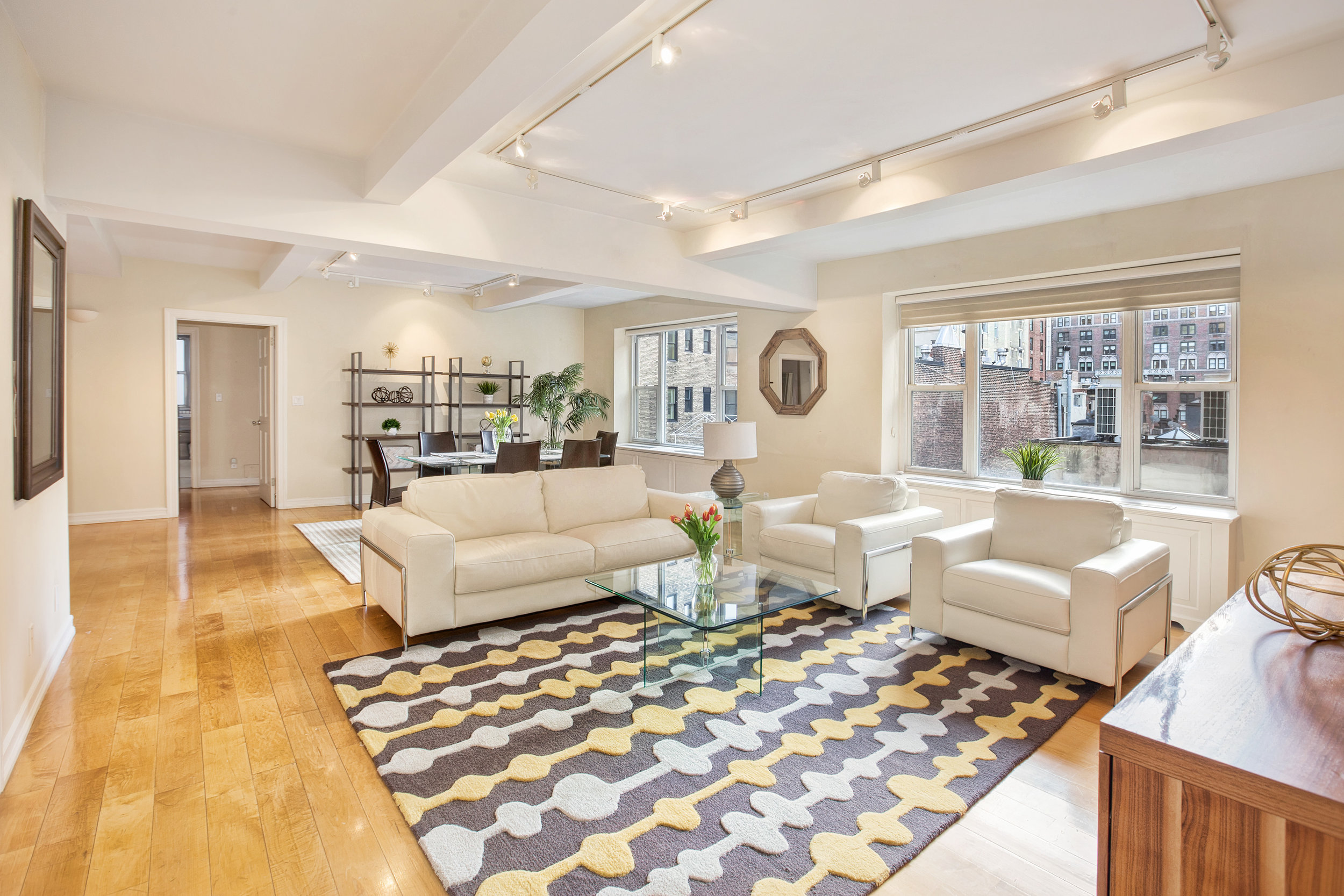
Classic millwork and thoughtful details abound in this gorgeous three-bedroom, three-bathroom residence in Greenwich Village's esteemed Emory Roth-designed Devonshire House.

Spanning 2,004 square feet, this elegant home's split-bedroom layout offers a well-planned backdrop for gracious entertaining and serene daily living. Interiors by Victoria Hagan beckon you inside to enjoy an oversized living room, offering a relaxing and intimate environment on a grand scale. Beamed ceilings guide you toward the adjoining dining room — separated from the living room by lovely built-ins, desk space and a wet bar — where sumptuous meals arrive from the refined open kitchen. This marble-lined and windowed cookery delights with state-of-the-art appliances by Wolf, Bosch and Sub-Zero surrounded by ample cabinet space and a massive island/breakfast bar.

Escape to the expansive master suite to enjoy rows of large closets and a well-appointed en suite bathroom. At the opposite end of the home, you'll find another well-crafted bedroom with en suite bathroom and two immense closets, while a third bedroom sits adjacent the home's third luxurious full bathroom, outfitted with an in-unit washer-dryer.

The Devonshire House is a pre-war condominium designed by the revered Emory Roth. Residents enjoy full-time doorman, superintendent, gym, common room, central laundry and a bike room. Set on 10th Street near University Place, the building is on a quintessential tree-lined street in the literal heart of Greenwich Village. Within steps, you'll find the amazing restaurants, nightlife and entertainment this exciting district is known for, and iconic Washington Square Park is just minutes away. Transportation is unbeatable with nearby N/Q/R/W, 4/5/6, L, A/C/E, B/D/F/M and PATH trains waiting to whisk you to your destination.

Bowery Wall’s newest mural by PichiAvo

The Bowery Wall stands as one of the city's most coveted spots for public art, with a history that stretches back to 1982, when Keith Haring cleared out piles of trash from the sliver of a lot and gave the city one of his iconic, day-glo murals.

Haring's original piece was destroyed, but in 2008 developer Tony Goldman (who owned the lot) and downtown gallery owner Jeffrey Deitch hired an artist to replicate the work on the site, and a succession of commissioned murals have followed. Among the all-star street artists who have put their stamp on the highly visible corner are Futura 2000, Swoon, Shepard Fairey, Os Gemeos, Revok and Pose, Aiko, Cope2, Retna, JR, Faile, Maya Hayuk, and Kenny Scharf.

And now it's PichiAvo's turn, and their piece, mostly finished yesterday afternoon after a full week of work, is a stunner. The mural follows the Spanish duo's signature "Urban Mythology" style: they spray on a layer of old-school tags and throw-ups, then lay down an epic Greco-Roman-looking classical scene, then finish up with more graffiti on top.

At the moment, the never-ending construction along that stretch of Houston Street has turned the space directly in front the wall into a parking lot, but you can still get a good view of PichiAvo's piece from the sidewalk. It will be on display for at least another three months.

When Will Fannie, Freddie Switch To New Credit-Scoring Model?

Borrowers probably know that their credit score is a crucial factor in their ability to qualify for a mortgage. They might also know that their score can vary depending on the type of scoring model their lender uses. If it’s an old, outdated version, they might get a lower score. If it’s a newer, more advanced model, they’ve got a better shot at being scored more fairly.

That brings up a long-festering controversy: The two behemoths of the mortgage business — Fannie Mae and Freddie Mac — continue to use a credit scoring model that even its developer, FICO, says is not as “predictive” as its much newer models. Worse yet, Fannie and Freddie require that all lenders who want to submit loan applications to them must use the same, outdated technology.

The net result, agree critics from the lending industry, consumer groups, civil rights organizations and even a bipartisan coalition of legislators in Congress, is that many applicants don’t get the credit scores they deserve. Meanwhile, many other consumers — estimates put the figure at more than 30 million — aren’t even scoreable using the models currently employed at Fannie and Freddie. Disproportionately, critics say, these are people who don’t make heavy use of the credit system or are young and don’t yet have much information in the files of the national credit bureaus. Large numbers of them might qualify for a mortgage, say scoring experts, if they were simply given a fair shot.

Fannie’s and Freddie’s government regulator, the Federal Housing Finance Agency, acknowledged the problem two years ago, when it directed the companies to begin examining how to improve their scoring systems. The FHFA told them to “conclude [theirassessment,” and “as appropriate, plan for implementation” of a better approach in 2016.

Since it’s now December and there have been no announcements about possible reforms, it’s appropriate to ask: When are Fannie and Freddie rolling out their new and improved scoring models and what will they look like? The question is especially timely given the release in late November of a new study from the Urban Institute documenting how recent credit standards in the mortgage arena have impacted millions of would-be borrowers.

Researchers found that roughly 1.1 million home-loan applicants were turned down in 2015 because the standards used to evaluate them were much more stringent than they were in the pre-housing-boom era, when defaults were relatively low. Between 2009 and 2015, “lenders would have issued 6.3 million additional mortgages,” researchers calculated, “if lending standards had been more reasonable,” as they were back in 2001.

A major culprit: a big shift toward the highest credit scorers when it comes to mortgage approvals. From 2001 through 2015, the share of borrowers approved for mortgages who had FICO scores above 700 jumped to 66 percent from 51 percent, while those approved with scores below 660 more than halved to just 14 percent from 31 percent. Preliminary figures for 2016 showed that credit scores of approved applicants at Fannie and Freddie averaged between 752 and 754, according to loan technology firm Ellie Mae. That stands well above the average score among all Americans of just 699, according to score developer FICO. (FICO scores range from 300 to 850, with low scores indicating higher risks of default.)

In response to the question, a spokesperson for the FHFA said that Fannie and Freddie continue to discuss their plans for scoring reforms with “a broad range of stakeholders” about the “cost, operational implications, and potential impacts on access to credit.”

Who exactly are some of these “stakeholders” and how do they see this issue? Among the most directly affected are the banks and mortgage companies that deal with the two companies daily. They strongly favor a move to more advanced scoring models to broaden the base of potential home buyers and borrowers without exposing themselves or Fannie and Freddie to higher risks of default.

Michael Fratantoni, chief economist for the Mortgage Bankers Association, said in an interview that “by sticking to old models we are disadvantaging” sizable numbers of consumers. Groups such as Fratantoni’s also want to see the introduction of advanced scoring models from companies other than FICO permitted as an option by Fannie and Freddie. One possible example is VantageScore Solutions, LLC, which offers a rival system now used in most other segments of lending.

“We are on the record for more competition in this space,” Fratantoni said. “We shouldn’t be locked into just one set of scores.”

Nor should millions of potentially credit-worthy consumers.

Kenneth R. Harney is a syndicated columnist.

15 Broad Street, Unit PH3910


15 Broad Street, Unit PH3910

FINANCIAL DISTRCT, MANHATTAN

4 Bed  |  3.5 Bath  |  3,000 SqFt

Offered At $4,700,000

Taxes: $1,186 / mo.  |  CC:$2,609 / mo.  |  Condo|  Doorman  


TOWNHOUSE IN THE SKY priced to sell QUICKLY! Pre-war Condominium Duplex Penthouse Designed by the iconic Philippe Starck.

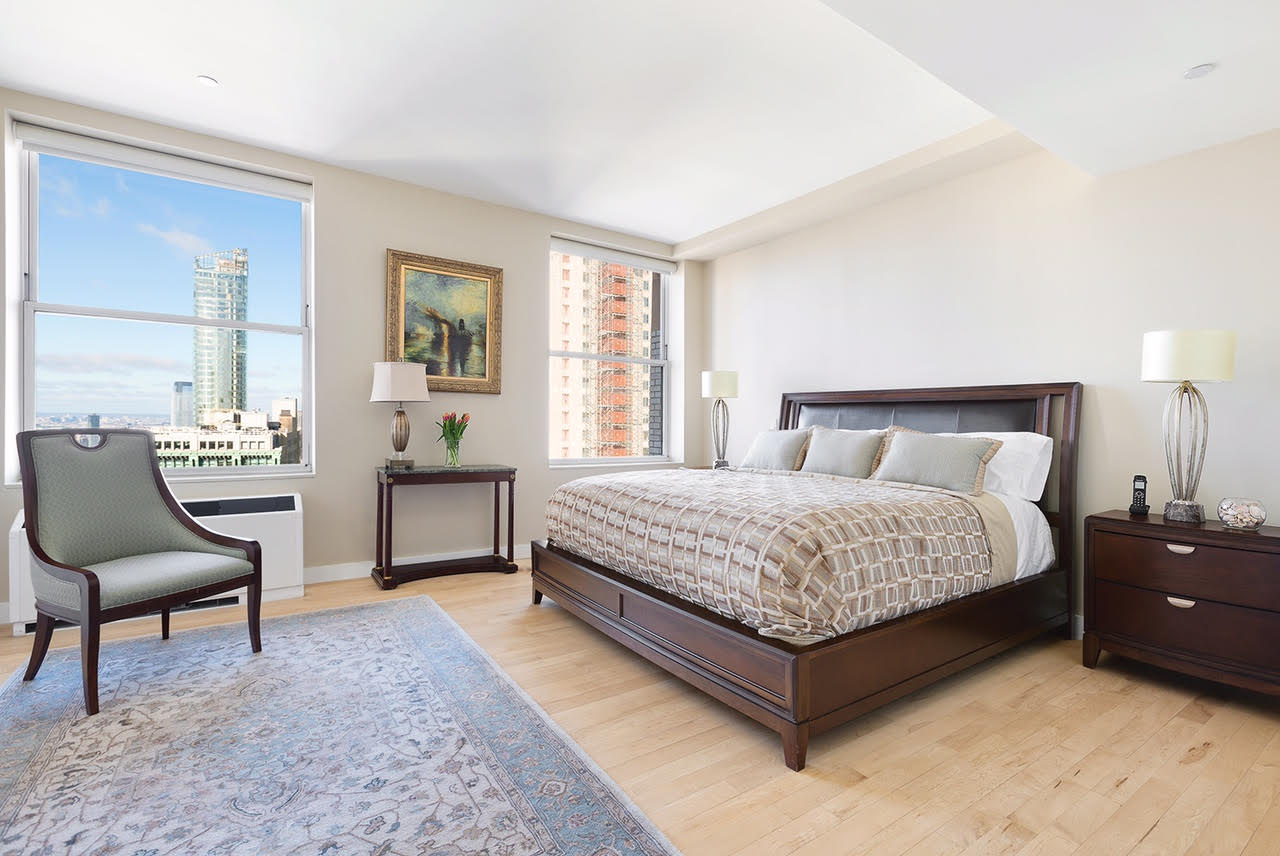
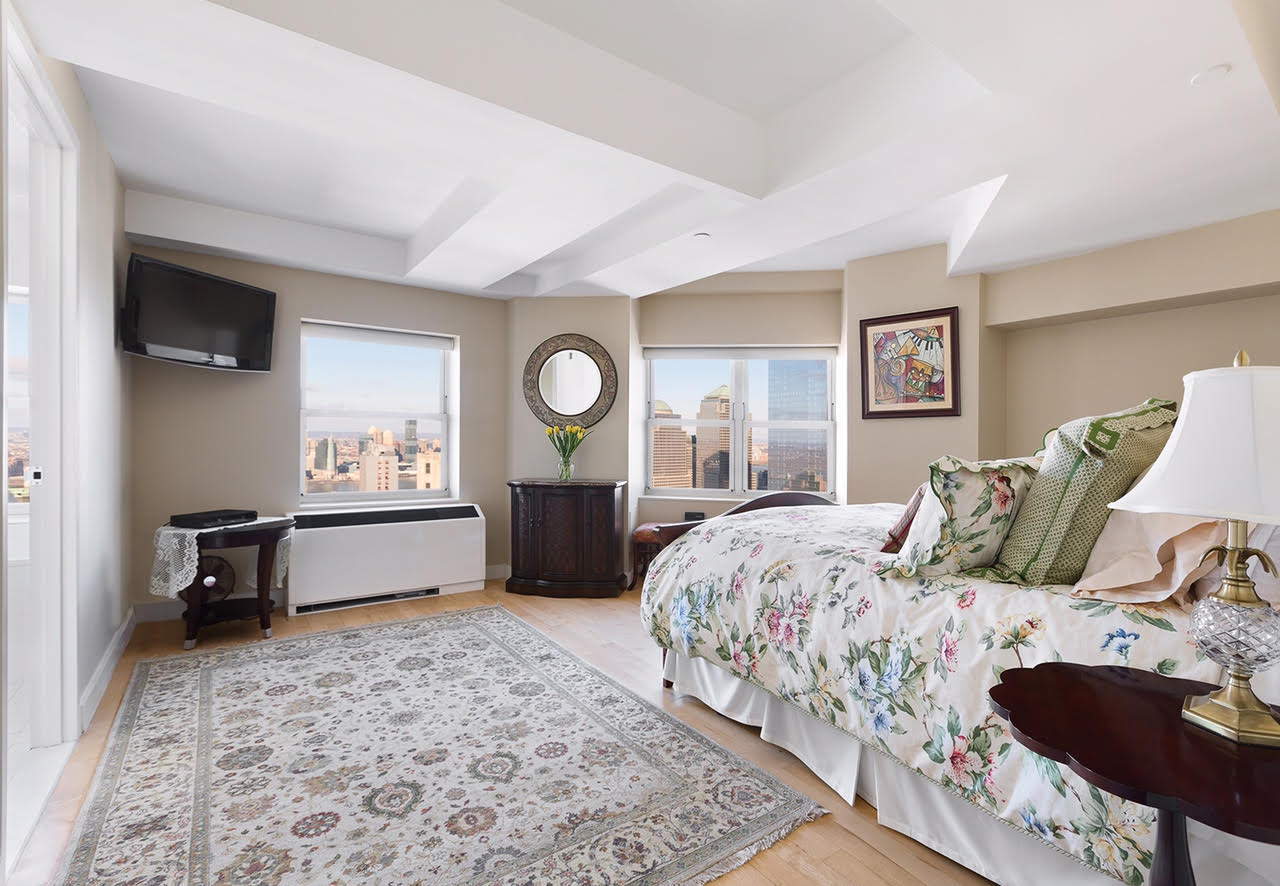
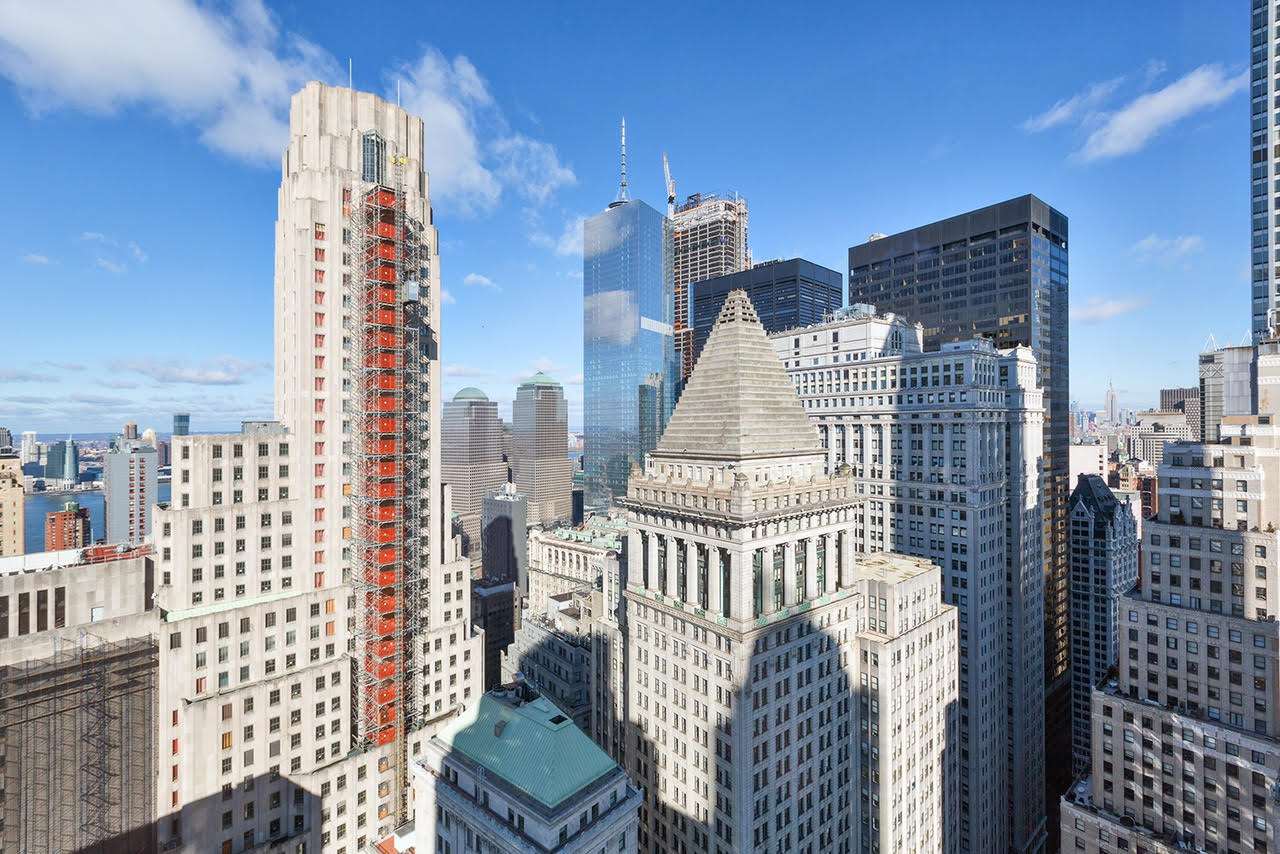
Set in a corner high above Wall Street, this four-bedroom, three-and-a-half-bathroom haven offers panoramic city and water views from rows of oversized windows wrapping the home's northern and western exposures, accentuating the towering, 11-foot-tall beamed ceilings. 
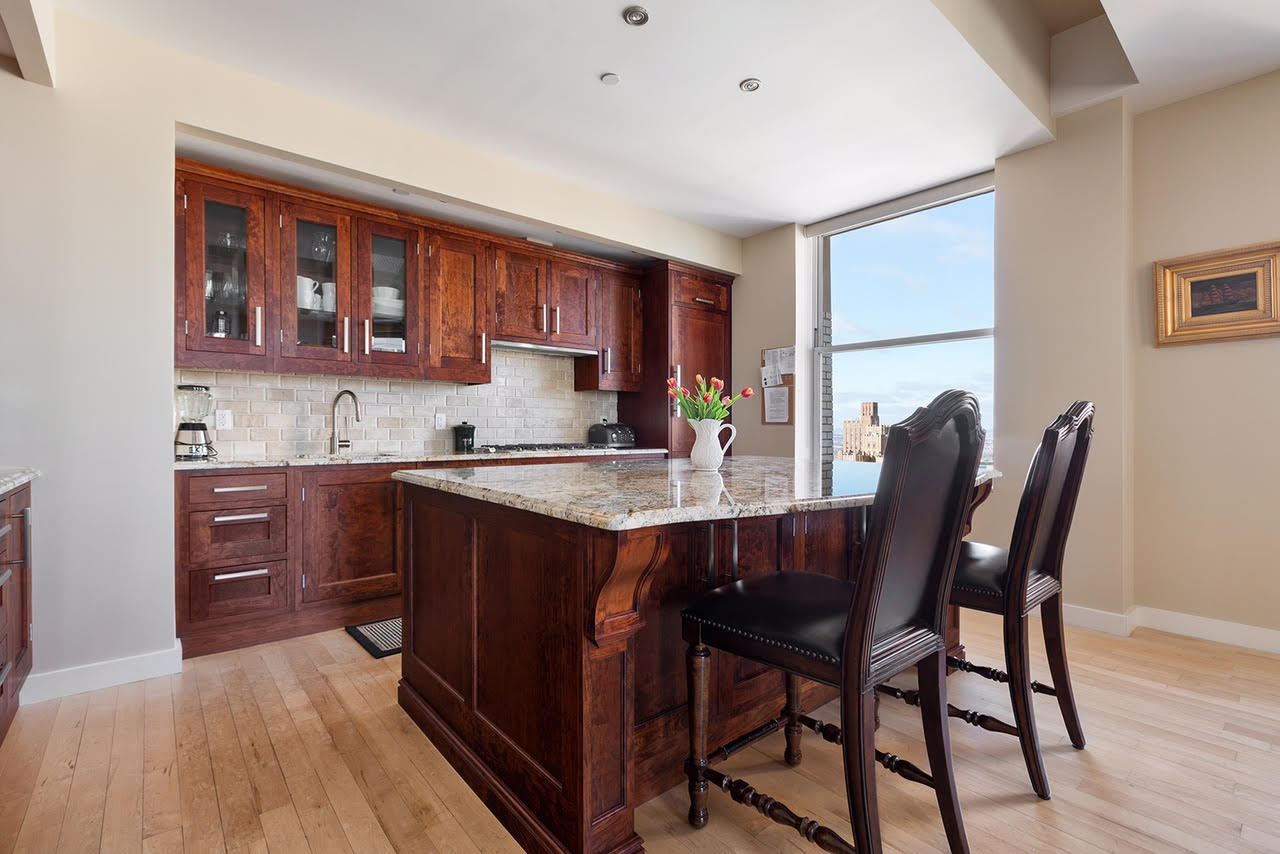
On the main level, you'll find an expansive 18-foot by 32-foot great room, providing ample room for dining and relaxing as sparkling river views and bright sunshine provide a stunning backdrop. Nearby, the open custom kitchen is expertly outfitted with custom cabinetry, granite countertops and stainless steel appliances by Miele and Bosch, and Sub-zero. A well-appointed guest suite with en suite full bathroom, plus a large foyer closet and powder room with in-unit washer-dryer complete this gracious level.
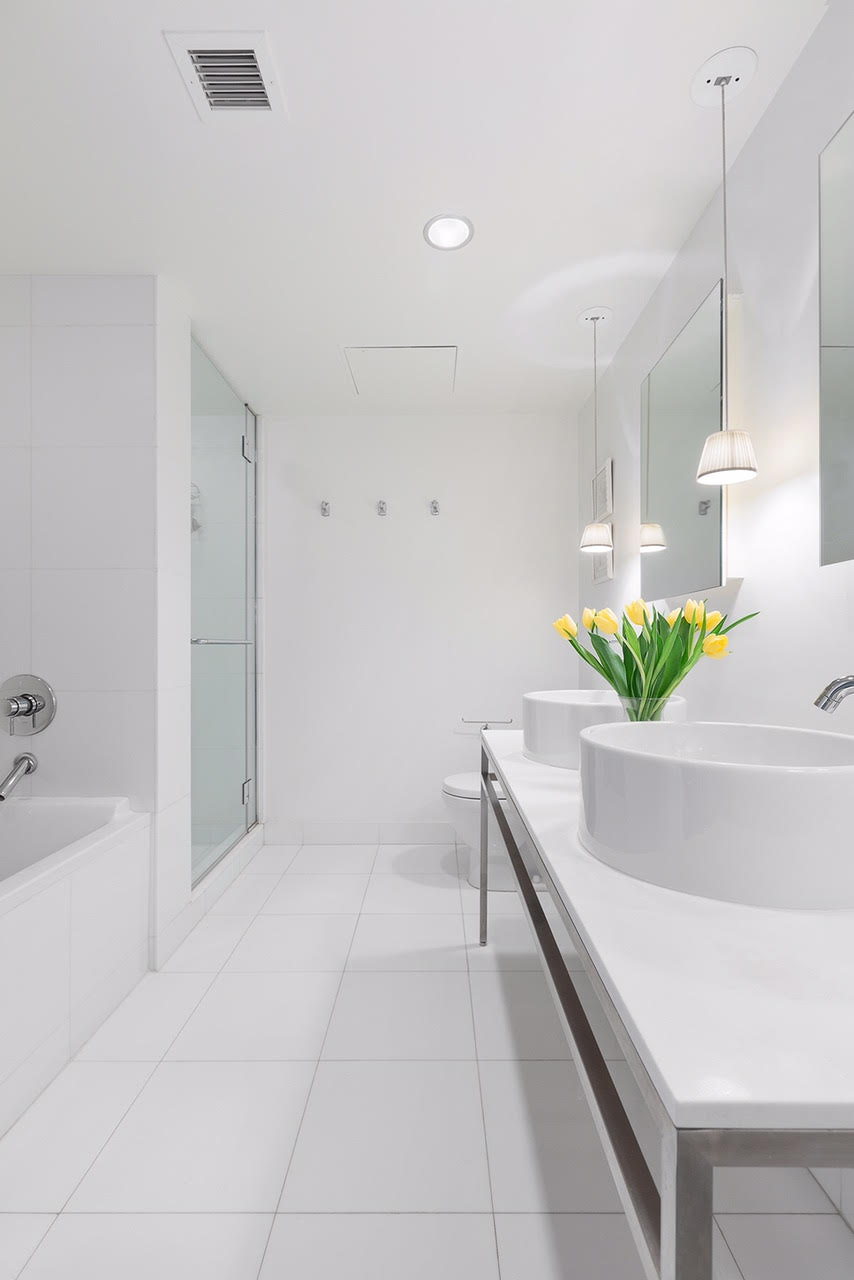
Upstairs, you'll find serene private quarters, including the impressive master suite. Two massive walk-in closets attend to wardrobe needs while the en suite bathroom boasts white Thassos marble floors, Duravit soaking tub, a walk-in shower and a marble dual vessel sink vanity. Two more spacious bedrooms one with an en suite bathroom plus additional closet space fill out the rest of this upper level.
Set at the intersection of Broad and Wall streets, 15 Broad is a 42-story white glove building offering a near-endless list of amenities including doorman and concierge services, dry cleaning/laundry, housekeeping services, lounges and children's rooms, a bowling alley, and a state-of the art fitness center with swimming pool, yoga/ballet room, basketball and squash courts. The building's crowning glory is the stunning 5,000-square-foot roof terrace. Placed in the middle of the Financial District, this home provides direct access some of the best dining the city has to offer, plus proximity to the thriving South Street Seaport neighborhood and newly unveiled Westfield World Trade Center shops. 4/5, J/Z and 2/3 are literally just outside your doorstep.