
Manhattan’s Infamous Co-op — Understanding the Maintenance (HOA) Structure
Manhattan’s cooperative, or co-op, is the largest category of apartment you can purchase in New York City, making up roughly 60 to 65 percent of all purchasable units. In many ways, buying a co-op is unavoidable if you are in the market for Manhattan real estate, and even much of Brooklyn. Unlike a condominium, when you purchase a co-op you are not technically buying real property. Instead, you are purchasing shares in a private corporation along with a proprietary lease that gives you the right to occupy a specific apartment. This ownership structure can feel confusing at first, but it dates back to the wave of rental-to-co-op conversions that took place decades ago. It also means that a co-op board has the authority to approve or reject prospective buyers, making the process more involved than a typical condo purchase.
The monthly “maintenance” in a co-op functions similarly to what many people think of as HOA fees, but it is much more comprehensive. Maintenance typically includes property taxes allocated to your shares, heat, hot water, building staff and payroll, and the managing agent who oversees the day-to-day operations of the building. Because so many expenses are bundled into one number, maintenance can appear high compared to a condo’s common charges, but you are paying for far more than just building upkeep.
One of the biggest drivers of maintenance is the number of shares assigned to each apartment when the co-op was first formed. Share allocation was determined by factors such as apartment size, floor level, views, outdoor space, layout, and even unique quirks. Those allocations were often set decades ago and still determine how much each unit pays today. Apartments on higher floors with better views or more desirable layouts typically carry more shares, which translates into higher monthly maintenance. Whether that math still feels logical today or not, it remains the primary reason why some units have significantly higher fees than others.
So what qualifies as “high” maintenance? The answer depends entirely on context. A typical Manhattan studio might have maintenance between roughly $900 and $1,300 per month, but that number can vary widely depending on the building and its services. In larger, more prestigious co-ops, especially on avenues like Park or Central Park West, the numbers rise quickly. For larger apartments, maintenance becomes even less predictable. A four-bedroom co-op might carry monthly maintenance in the high $8,000 range or climb to $16,000 or more. Importantly, maintenance does not scale in a straight line with size. A three-bedroom does not necessarily pay three times what a studio pays, because the share allocation and building structure drive the cost more than simple square footage.
The most effective way to determine whether a maintenance number is high is to compare the apartment to similar units in similar buildings. A two-bedroom, two-bath co-op on a high floor with white-glove service, a live-in superintendent, and strong amenities must be evaluated against other apartments with those same characteristics. Comparing it to a lower-floor unit, a non-doorman building, or a property with fewer services will lead to misleading conclusions. Maintenance varies dramatically based on services, staffing, taxes, and legacy share allocations, so context is everything.
It is also important to understand that high maintenance does not automatically mean a bad deal. In many cases, it reflects a well-run building with strong staffing, robust services, and properly funded reserves. Conversely, very low maintenance can sometimes indicate fewer amenities, fewer shares assigned to the unit, or a building that has deferred necessary increases to cover rising costs and capital improvements. Rather than asking whether the maintenance is too high, a more accurate question is where that maintenance falls within the range for comparable apartments. Knowing whether a unit sits above, below, or within the median for its peer group provides meaningful insight.
Co-op maintenance can seem shocking at first glance, particularly for larger apartments or those on higher floors. But once you understand the context—shares, services, building quality, and comparable units—it becomes much easier to evaluate. In many cases, what appears high is simply the result of legacy share structures and full-service living. Understanding that framework allows buyers to make informed decisions and avoids the sticker shock that often comes with encountering co-op math for the first time.
At The Hoffman Team, we’ve been selling co-op apartments for over 20 years, and many of us on the team are co-op owners ourselves. We understand firsthand the value that co-op living can offer, as well as the nuances of maintenance and how to evaluate it properly. If you ever have questions about co-op maintenance—or about your own building—we’re always here to help. We’re just a phone call away.
Sourced from: John Walkup, Forbes
Local Happenings

March 17, 2026
One of NYC’s oldest cultural traditions, this parade down Fifth Avenue honors Irish heritage with marching bands, dancers, and thousands of participants. It’s a lively, quintessential city-wide celebration perfect for community engagement. Click HERE to learn more!

March 11–14, 2026
Held at Madison Square Garden, this high-stakes college basketball tournament brings intense competition and lively crowds to Midtown Manhattan. It’s a standout sporting event and great draw during mid-month. Click HERE to learn more!
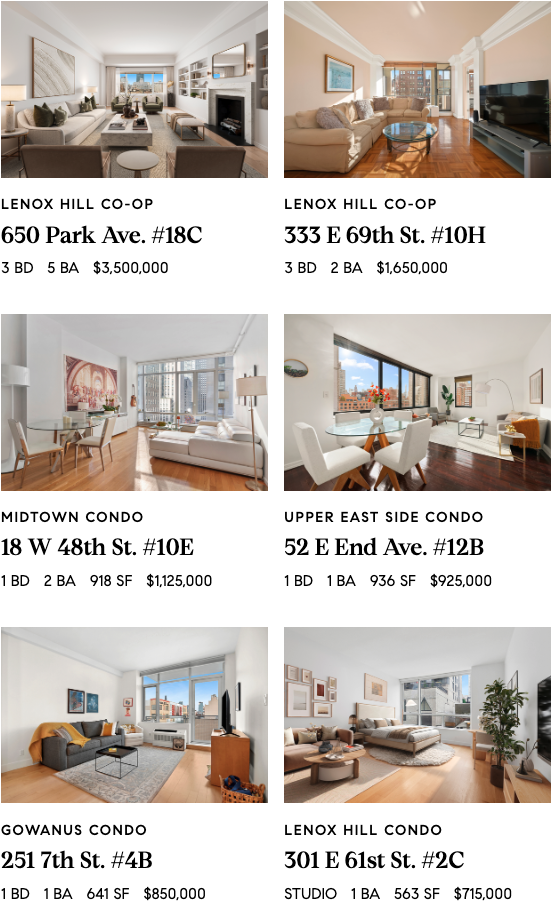
Featured Listings
Stay Connected